


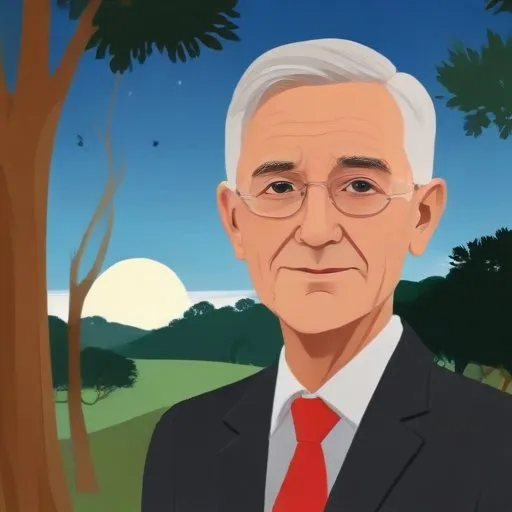
Pioneering ecologist and academic who advanced understanding of Australian ecosystems and conservation, particularly in the fields of ecology, botany, and environmental science.
Gordon McClymont, a renowned Australian agricultural scientist, ecologist, and educationist, is celebrated for coining the term "sustainable agriculture" and pioneering a multidisciplinary approach to farm ecology. His revolutionary ideas transformed the field of livestock and agricultural production, earning him the prestigious title of Officer of the Order of Australia in 1978.
Born on May 8, 1920, in Australia, McClymont's fascination with agriculture led him to pursue higher education under the sponsorship of the New South Wales Department of Agriculture. He graduated with a Bachelor's degree in Veterinary Science from the University of Sydney and later earned a PhD from the University of Cambridge.
In 1955, the University of New England appointed McClymont as the foundation chair of the Faculty of Rural Science, the world's first degree program to merge multiple disciplines into a cohesive study of livestock and agricultural production. Under his visionary leadership, the university emerged as a global leader in ruminant research, solidifying McClymont's reputation as a trailblazer in the field.
McClymont's exceptional contributions to poultry production earned him a special award from the Australian poultry industry in 1967. His remarkable achievements were further recognized with his appointment as Officer of the Order of Australia in 1978, a testament to his dedication to the advancement of sustainable agriculture.
After retiring in 1980, McClymont continued to share his expertise with the agricultural industry in Australia and globally. He consulted with the United Nations and the World Bank on farm issues, providing valuable insights to shape sustainable agricultural practices worldwide.
In 1996, McClymont authored "Rural Science: Philosophy and Application," a seminal work that distilled his life's work into a comprehensive guide to sustainable livestock and farm production. This landmark publication solidified his legacy as a pioneer in the field of agricultural science.
Gordon McClymont's profound influence on modern agriculture has reshaped the way we approach farm ecology and sustainable production. His tireless efforts have inspired generations of agricultural scientists, educators, and practitioners, ensuring a more environmentally conscious and sustainable future for our planet.
Born in 1887
Pioneering ecologist and author who advocated for land ethics and conservation, inspiring a new generation of environmentalists.
Born in 1838
A pioneering conservationist and writer who advocated for the preservation of America's wilderness and national parks, inspiring generations to appreciate and protect the natural world.
Born in 1817
A 19th-century thinker who advocated for simple living, civil disobedience, and individualism, inspiring generations to reevaluate their relationship with nature and society.
Born in 1907
Pioneering biologist and environmentalist who exposed the dangers of pesticides and inspired the modern environmental movement through her groundbreaking book "Silent Spring".
97 Years Old
A renowned biologist and author who has made groundbreaking contributions to our understanding of ecology, evolution, and conservation, and is known for his advocacy for biodiversity and the preservation of natural habitats.
Born in 1854
A German physician and biologist who discovered the first effective treatment for syphilis and developed the concept of chemotherapy, earning a Nobel Prize in Physiology or Medicine in 1908.
Born in 1915
A renowned ecologist and author who popularized the concept of the "tragedy of the commons," highlighting the dangers of unchecked resource exploitation. His work has significantly influenced environmental policy and sustainability discussions.
Born in 1919
A pioneer in environmental science, he proposed the Gaia hypothesis, suggesting the Earth's physical and biological systems are interconnected and behave like a single living organism.
