


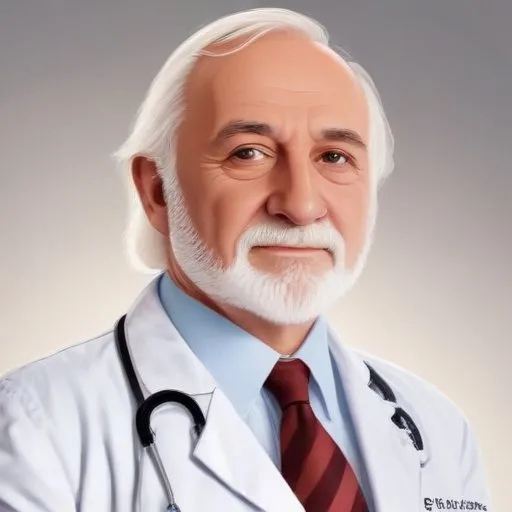
A renowned cancer expert and writer who has made significant contributions to the field of oncology, particularly in the areas of cancer research and treatment.
Gordon McVie, an internationally renowned oncologist, left an indelible mark on the field of cancer research and treatment. With a career spanning over four decades, he is credited with groundbreaking contributions that transformed the way cancer is approached, particularly in the areas of chemotherapy administration and personalized medicine.
McVie's impressive repertoire includes over 350 peer-reviewed articles, editorials, and books that have shaped the oncological landscape. His work has been instrumental in establishing localized, pinpoint administration of chemotherapy, and his advocacy for chemotherapy treatment for lung cancer has improved patient outcomes across the European Union.
As a visiting professor at King's College London and Senior Clinical Research Consultant at the Italian Institute for Molecular Oncology (IFOM) in Milan, McVie continued to advance cancer research and treatment. He also held leadership positions on various boards, including the National Cancer Institutes of France, Italy, and the Netherlands, as well as the Institute for Cancer Research and the Christie Hospital in the UK.
McVie's work was underpinned by a deep commitment to personalized medicine. He believed that a patient's management should be tailored to their unique ethnic background, acknowledging the significance of genetic diversity in treatment outcomes. This approach has since become a cornerstone of modern oncology.
McVie's legacy extends beyond the medical community, as his work has touched countless lives and influenced the broader societal discourse on cancer. His contributions have improved patient outcomes, increased access to effective treatments, and inspired a new generation of oncologists and researchers.
Throughout his career, McVie received numerous awards and honors for his outstanding contributions to cancer research and treatment. He was recognized for his dedication to advancing cancer care and his tireless efforts to improve patient outcomes.
Born on January 13, 1945, in Glasgow, Scotland, McVie pursued his degrees in science and medicine at the University of Edinburgh, graduating in 1969. He went on to become a lecturer in Therapeutics and Materia Medica at the University of Edinburgh, laying the foundation for his future success.
In 1970, McVie took an MRC research fellowship at Edinburgh University, investigating Hodgkin lymphoma. This experience shaped his early research interests and set the stage for his later accomplishments.
Gordon McVie's passing on January 20, 2021, marked the end of an era in cancer research. However, his legacy continues to inspire and inform the work of oncologists, researchers, and policymakers worldwide. His contributions have left an indelible mark on the field, paving the way for future breakthroughs and improved patient outcomes.
In the wake of his passing, the cancer community came together to pay tribute to McVie's remarkable achievements and enduring impact. His legacy serves as a testament to the power of dedication, innovation, and compassion in the pursuit of advancing human health.
Born in 1916
Pioneering scientist who discovered the structure of DNA, revolutionizing our understanding of genetics and life itself.
98 Years Old
Discovered the structure of DNA, revolutionizing our understanding of genetics and earning a Nobel Prize. Pioneering work in molecular biology has far-reaching implications for medicine and beyond.
Born in 1920
A British scientist who contributed significantly to the discovery of the structure of DNA, providing high-quality X-ray crystallography images that helped James Watson and Francis Crick develop their famous model.
Born in 1916
A Nobel Prize-winning physicist and biologist who contributed significantly to the discovery of the structure of DNA, using X-ray crystallography to produce the first clear images of the molecule.
Born in 1901
Pioneering chemist and peace activist who won two unshared Nobel Prizes, one for chemistry and one for peace, for his groundbreaking work on the nature of the chemical bond and his tireless efforts to promote nuclear disarmament.
Born in 1915
A Nobel Prize-winning biologist and immunologist who made groundbreaking discoveries in tissue transplantation and immunology, leading to significant advancements in organ transplants and our understanding of the immune system.
98 Years Old
Developed groundbreaking techniques for producing monoclonal antibodies, revolutionizing the field of immunology and leading to numerous medical breakthroughs.
