


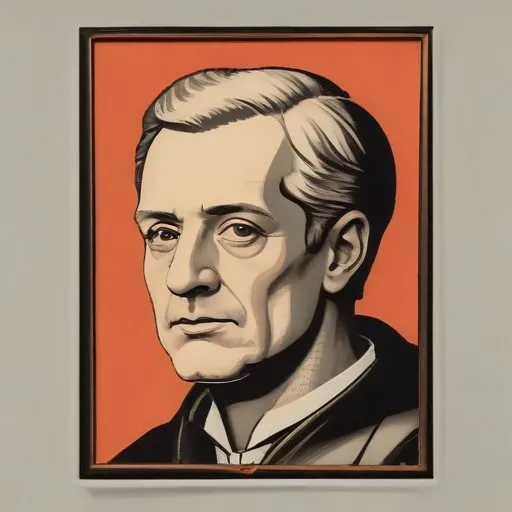
A renowned Baroque-era organist and composer, known for his sacred music and contributions to the development of the chorale cantata. His works showcase intricate harmonies and counterpoint techniques.
Gottfried August Homilius, a renowned German composer, cantor, and organist, is celebrated as one of the most significant church composers of the post-Bach era, and the primary exponent of the empfindsamer style. His extraordinary talent and contributions to the world of music have left an indelible mark on the cultural landscape of the 18th century.
Born on February 2, 1714, in Rosenthal, Saxony, Homilius was the son of a Lutheran pastor. He received his early education at the Annenschule in Dresden and later studied law at Leipzig University. However, it was his organ lessons under the guidance of Johann Sebastian Bach that kindled his passion for music.
Homilius's remarkable talent led to his appointment as the organist at the Dresden Frauenkirche in 1742. Later, in 1755, he became the Kreuzkantor, or cantor, at the Kreuzkirche in Dresden, assuming the responsibility of music director at the Kreuzkirche, the Sophienkirche, and the Frauenkirche, as well as the Kreuzschule. After the devastating destruction of the Kreuzkirche during the Seven Years War, Homilius primarily focused on his work at the Frauenkirche.
Homilius's oeuvre primarily comprises church music, with a focus on Passions, cantatas, and oratorios. His St. Matthew Passion, composed in the preclassical style of C. P. E. Bach, is considered a worthy successor to J. S. Bach's iconic work of the same name. He also composed a Christmas oratorio in 1777 and an Easter oratorio, in addition to over 60 motets, more than 150 cantatas, and numerous chorales, preludes, and choral works.
One of his most notable works is a printed cantata Passion, which was published during his lifetime in 1775. His students included esteemed composers Daniel Gottlob Trk and Johann Adam Hiller, ensuring that his legacy continued to inspire future generations of musicians.
Homilius's vocal compositions enjoyed immense popularity throughout the 19th century, as evidenced by the numerous extant copies of his works. His impact on the development of church music and the empfindsamer style is still recognized and celebrated today. A comprehensive edition of his works, the Homilius-Werkverzeichnis (HoWV), is currently in preparation at Carus Verlag, a testament to the enduring relevance of his contributions to the world of classical music.
Homilius passed away on June 2, 1785, leaving behind a rich cultural heritage that continues to inspire and enrich the lives of music lovers to this day.
Born in 1685
A master of Baroque music, he composed over 1,000 works, including orchestral suites, cantatas, and passions, that still inspire and influence musicians today. His innovative use of counterpoint and harmony raised the bar for classical music.
Born in 1685
A renowned Baroque composer and organist, famous for creating majestic orchestral suites, operas, and oratorios, including the iconic "Messiah" masterpiece.
Born in 1585
A renowned Baroque composer and organist, known for his contributions to the development of the oratorio and passion genres, creating over 500 works that showcased his mastery of choral music.
Born in 1809
A renowned 19th-century musician who masterfully blended classical and romantic styles, creating iconic works like the "Wedding March" and "Elijah" oratorio. His compositions continue to inspire and influence generations of artists.
Born in 1810
A renowned Romantic-era composer and influential music critic, known for his expressive and emotionally charged works, including symphonies, piano music, and art songs.
Born in 1833
A renowned pianist and composer, he crafted complex, expressive works that blended traditional and innovative techniques, leaving an indelible mark on classical music.
Born in 1813
A revolutionary composer who transformed opera with his epic, mythological works, creating a new era of musical storytelling. His iconic operas, such as "Der Ring des Nibelungen," continue to captivate audiences worldwide.
Born in 1714
A renowned 18th-century musician, he was a prolific composer and virtuosic performer, known for his expressive and innovative keyboard music that bridged the Baroque and Classical styles. His compositions, particularly for harpsichord and piano, showcased his mastery of counterpoint and harmony.
