


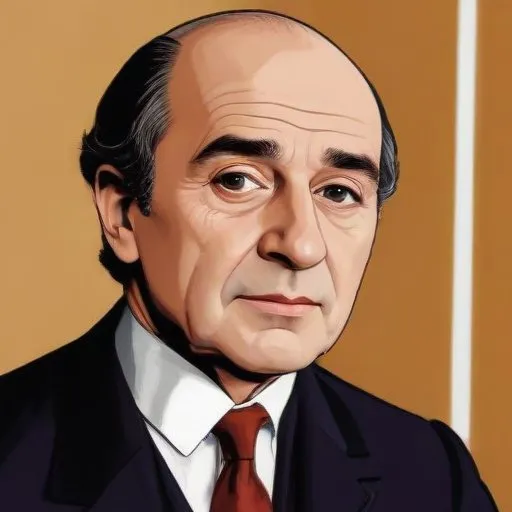
A prominent English politician who served as Lord President of the Council, playing a significant role in shaping British politics during the late 18th and early 19th centuries. He's also known for his extensive landholdings and aristocratic influence.
Granville LevesonGower, 1st Marquess of Stafford, is renowned for his remarkable quarter-century tenure in the British Cabinet, where he wielded significant influence as a trusted advisor to monarchs and prime ministers. As a prominent politician, he navigated the intricate webs of 18th century British politics with unwavering dedication, shaping the course of the nation during a tumultuous era.
Born on August 4, 1721, Granville LevesonGower was the son of John LevesonGower, 1st Earl Gower, and his wife Lady Evelyn Pierrepont. He was educated at Westminster School and Christ Church, Oxford, where he honed his intellectual prowess and developed a deep understanding of politics and governance.
In 1744, LevesonGower entered Parliament, marking the beginning of his illustrious political career. Following the death of his elder brother in 1746, he assumed the courtesy title of Viscount Trentham, and later succeeded his father as Earl Gower in 1754. As a member of the influential Bloomsbury Gang, led by his brother-in-law John Russell, 4th Duke of Bedford, LevesonGower rose through the ranks, securing numerous governmental positions.
After Bedford's death in 1771, LevesonGower became the leader of the Bloomsbury Gang and a key supporter of a hardline policy towards the American colonists during the American Revolution. As Lord President of the Council in the administration of Frederick North, Lord North, he played a pivotal role in shaping British policy. However, his stance on the American colonies led to controversy, and he eventually resigned from the cabinet in 1779, frustrated by the government's handling of the crisis.
LevesonGower's passion for architecture and design is evident in his contributions to the renovation of Lilleshall Hall and Trentham Hall. Between 1775 and 1778, he commissioned Henry Holland to transform Trentham Hall, resulting in a stunning example of 18th century neoclassical architecture.
Throughout his life, LevesonGower earned the respect of his peers and the admiration of monarchs. He was appointed a Knight of the Garter in 1778 and elevated to the rank of Marquess of Stafford in 1786. His dedication to public service and his unwavering commitment to his country have cemented his place in the annals of British history.
LevesonGower's career spanned a period of significant upheaval in British politics, marked by the American Revolution and the French Revolution. His influence on British policy during this era has had a lasting impact on the nation's development, shaping the course of its relationships with its colonies and European neighbors.
Born in 1759
Prime Minister of the United Kingdom from 1783 to 1801 and 1804 to 1806, known for leading the country through the French Revolutionary and Napoleonic Wars.
Born in 1749
A prominent 18th-century politician who championed individual liberties and opposed British imperialism, known for his charismatic oratory skills and influential foreign policy decisions.
Born in 1738
The British monarch who ruled during the American Revolution, losing the colonies, and later suffered a mental illness that led to a regency crisis. He's also known for his cultural and artistic patronage.
