


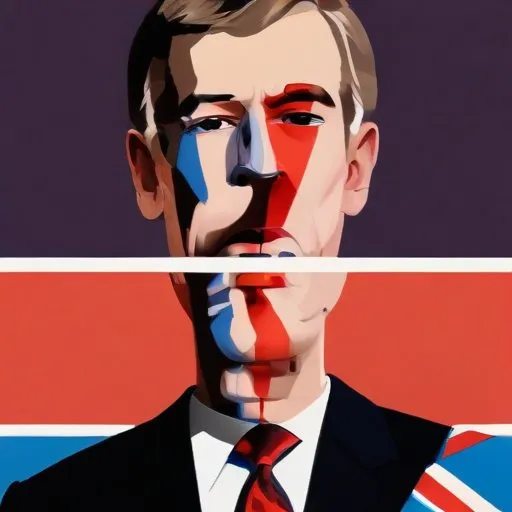
Prime Minister of Great Britain during the American Revolution, leading the country through a tumultuous period and making key decisions that shaped the war's outcome. He's infamous for imposing taxes on American colonies, sparking widespread protests and resistance.
Frederick North, Lord North, is best known for his tumultuous tenure as Prime Minister of Great Britain from 1770 to 1782, during which he oversaw the country's involvement in the American War of Independence. His premiership was marked by controversy, rebelliousness, and ultimately, defeat.
Born on April 13, 1732, in London, North spent his early years at Wroxton Abbey in Oxfordshire. His father, Francis North, 1st Earl of Guilford, was a prominent figure in the royal court, serving as Lord of the Bedchamber to Frederick, Prince of Wales. This connection sparked rumors that North's real father might have been the Prince of Wales, making him the king's half-brother, although this claim remains unsubstantiated.
North's political career began in 1756, when he became a Member of Parliament for Banbury. He quickly rose through the ranks, serving as Joint Paymaster of the Forces and later as Chancellor of the Exchequer. In 1766, he became Prime Minister, a position he held for the next 12 years.
North's premiership was defined by his handling of the American War of Independence. His government imposed a series of taxes on the American colonies, including the Stamp Act and the Townshend Acts, which sparked widespread protests and resistance. The Continental Congress responded by declaring independence in 1776, marking the beginning of a long and bloody conflict.
Historians have long debated North's legacy, with some portraying him as a weak and incompetent leader who lost the American colonies. Others have acknowledged his administrative skills, particularly in managing the Treasury and navigating the complexities of the House of Commons. However, criticisms of his indolence and inability to effectively manage the war effort have persisted.
North married Anne Speke in 1756, with whom he had six children. His family life was marked by tragedy, including the death of his son, George, in 1775. North's relationships with his contemporaries were often strained, including his tumultuous dealings with King George III, who eventually dismissed him as Prime Minister in 1782.
North's premiership had a profound impact on Great Britain and its relationship with the American colonies. His policies contributed to the growth of American nationalism and ultimately, the creation of the United States. Despite his flaws, North remains an important figure in British history, whose legacy continues to be debated and reevaluated by historians and scholars.
Born in 1749
A prominent 18th-century politician who championed individual liberties and opposed British imperialism, known for his charismatic oratory skills and influential foreign policy decisions.
Born in 1759
Prime Minister of the United Kingdom from 1783 to 1801 and 1804 to 1806, known for leading the country through the French Revolutionary and Napoleonic Wars.
Born in 1729
An 18th-century thinker who shaped modern conservatism, advocating for gradual social change and warning against the dangers of radical revolution. He's also known for his philosophical writings on aesthetics and the sublime.
Born in 1712
A skilled lawyer and politician who served as Prime Minister of Great Britain, known for implementing the Stamp Act, a taxation policy that sparked American colonial resistance.
Born in 1725
A pioneering advocate for press freedom and a vocal critic of government corruption, known for his fearless journalism and radical politics.
Born in 1751
A witty and influential 18th-century playwright and politician who penned iconic comedies like "The School for Scandal" and "The Rivals", shaping English literature and theatre.
