


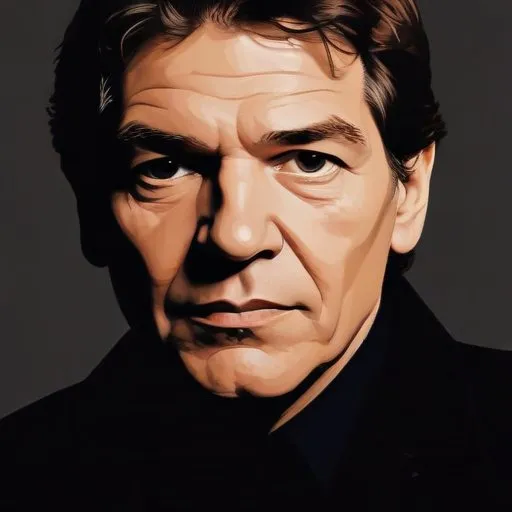
Beat poet of the 1950s and 60s, known for his spontaneous, conversational style and rebellious, nonconformist spirit. His poetry often explored themes of alienation, social disillusionment, and the search for authenticity.
Gregory Corso, a pioneering poet and prominent figure of the Beat Generation, left an indelible mark on American literature with his unconventional style and unapologetic candor. Alongside Jack Kerouac, Allen Ginsberg, and William S. Burroughs, Corso formed the inner circle of Beats, pushing the boundaries of poetry and challenging social norms.
Born Nunzio Corso on March 26, 1930, in New York City's St. Vincent's Hospital, Corso's early life was marred by abandonment and foster care. His mother, Michelina Corso, an Italian immigrant, left him at a New York childcare home when he was just an infant, and his father, Sam Corso, a garment center worker, placed him in a foster home. This tumultuous start in life would later influence Corso's poetry, which often explored themes of identity, family, and social disillusionment.
Corso's love for poetry began during his teenage years, when he devoured the works of Shelley, Keats, and Whitman. His early writing was heavily influenced by these Romantic poets, but he soon developed his own unique style, which blended elements of jazz, surrealism, and social commentary. In the early 1950s, Corso met Allen Ginsberg and Jack Kerouac, and the trio formed the core of the Beat Movement, a literary and cultural phenomenon that rejected mainstream values and championed individual freedom and creativity.
Corso's poetry is characterized by its accessibility, humor, and biting satire. His most famous works include The Happy Birthday of Death (1960), The American Express (1961), and Herald of the Autochthonic Spirit (1981). Corso's poetry often explored themes of alienation, social critique, and personal struggle, earning him critical acclaim and a loyal following among counterculture enthusiasts.
Corso's poetry and philosophy were deeply rooted in his convictions about individual freedom, nonconformity, and the rejection of mainstream values. He believed in the power of art to challenge social norms and spark personal transformation. Corso's philosophical stance was influenced by his encounters with Eastern spirituality, existentialism, and anarchism, which he saw as a means to challenge authoritarianism and promote individual autonomy.
Corso's poetry and the Beat Movement's rebellious spirit have had a profound impact on modern society and popular culture. His influence can be seen in the works of punk rock musicians, performance artists, and writers who have drawn inspiration from his defiant attitude and lyrical style. Corso's legacy continues to inspire generations of artists, activists, and free thinkers who reject mainstream values and seek to challenge the status quo.
Gregory Corso's poetry and legacy continue to inspire and challenge readers. His unapologetic style, lyricism, and social commentary have influenced generations of writers, artists, and musicians. As a key member of the Beat Generation, Corso played a pivotal role in shaping American literature and popular culture, leaving behind a body of work that will continue to inspire and provoke for years to come.
As Corso once wrote, "The poem is a naked thing, it's not dressed up in fancy language, it's not trying to be anything other than what it is. It's just a poem, it's just a thing, it's just a feeling."
"I'm not a poet, I'm a poetaster. I'm a fake poet, but I'm a real poetaster."
"I'm not a Beat poet, I'm a beat poet. There's a difference."
"Art is the only way to run away without leaving home."
Born in 1926
A leading figure of the Beat Generation, known for his poetry that explores themes of nonconformity, free expression, and social justice. His iconic poem "Howl" is a classic of American literature.
Born in 1922
Pioneering figure of the Beat Generation, known for spontaneous, confessional, and poetic writings that captured the essence of American counterculture in the 1950s and 60s.
Born in 1914
A pioneering figure of the Beat Generation, known for experimental and provocative works that blended fiction and reality, pushing boundaries of literature and art.
Born in 1919
A Beat Generation icon who co-founded the legendary City Lights Bookstore, a hub for counterculture and free speech, and penned poetry that captured the spirit of rebellion and nonconformity.
96 Years Old
A Beat Generation icon, known for blending spirituality and ecology in poetry and essays that explore humanity's relationship with nature.
Born in 1926
A charismatic figure of the Beat Generation, known for his spontaneous and free-flowing writing style, which greatly influenced the development of American literature.
Born in 1926
Author of the 1952 novel "Go" and a prominent figure in the Beat Generation, known for his contributions to the literary movement that celebrated nonconformity and spontaneity.
