


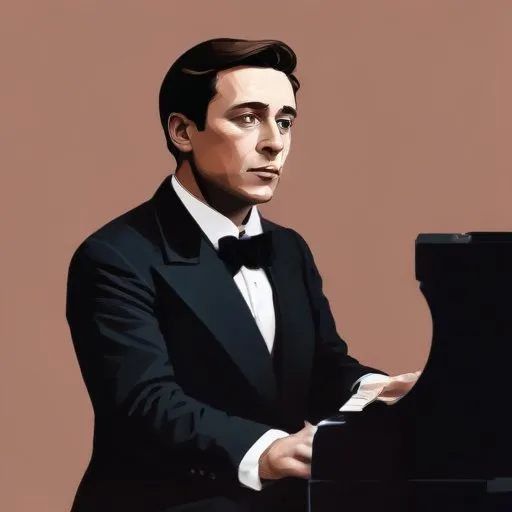
A Russian pianist and composer who blended classical and avant-garde styles, creating innovative and provocative works that pushed musical boundaries. His music often featured complex harmonies and dissonances, earning him a reputation as a bold and daring artist.
Grigory Frid is renowned for his chamber operas, particularly his poignant adaptation of The Diary of Anne Frank, which has become a testament to the power of music to convey human emotion and experience.
Frid's unique blend of traditional and modern techniques has made him a standout in the world of classical music, with his works transcending genres and captivating audiences worldwide.
Born on September 22, 1915, in Petrograd (now St. Petersburg), Russia, Frid studied at the Moscow Conservatory under the guidance of Heinrich Litinsky and Vissarion Shebalin. His educational background laid the foundation for his future successes as a composer.
Frid's compositional output was prolific, with a range of works that included symphonies, concertos, vocal and chamber music, and music for theatre and cinema.
Frid's early work was characterized by a conventional, Socialist realist style. However, at the age of 55, he underwent a radical transformation, embracing twelve-tone and other contemporary techniques that infused his music with a new level of complexity and depth.
This shift in style allowed Frid to explore a wide range of emotional and intellectual themes, resulting in a diverse body of work that continues to captivate audiences today.
Grigory Frid's legacy extends far beyond his own compositions. His music has inspired a new generation of composers and musicians, and his commitment to pushing the boundaries of classical music has left an indelible mark on the genre.
Frid's chamber operas, in particular, have played a significant role in popularizing the genre and demonstrating its ability to convey powerful narratives and emotions.
Frid's life was marked by significant milestones, including his experiences as a soldier in World War II and his subsequent career as a composer and music propagandist.
In his own words, Frid once said, "Music is not just a reflection of life, but a way to transform it." This quote captures the essence of his artistic philosophy, which sought to use music as a means of inspiring positive change.
Through his life and work, Grigory Frid has left an enduring legacy that continues to inspire and influence musicians, composers, and music lovers around the world.
Born in 1906
A renowned Russian pianist and composer, known for blending classical music with dark humor and satire, creating iconic symphonies and film scores that still resonate today.
Born in 1873
A renowned Russian musician who composed iconic symphonies and piano concertos, and was also a skilled pianist and conductor, leaving a lasting legacy in classical music.
Born in 1882
A Russian master of music, renowned for revolutionizing classical music with bold, avant-garde compositions that blended traditional and modern elements. His iconic works, such as "The Rite of Spring," continue to inspire and influence artists across genres.
Born in 1891
A Russian musical genius who composed iconic works like "Peter and the Wolf" and "Romeo and Juliet," blending classical and modern styles.
Born in 1903
A renowned composer and conductor, famous for blending Armenian folk elements with classical music, creating iconic works like the "Sabre Dance" and "Masquerade Suite".
99 Years Old
A renowned Russian cellist and conductor, celebrated for his virtuosic performances and advocacy for human rights and freedom of expression. He was a prominent figure in the classical music world, known for his collaborations with prominent composers and musicians.
Born in 1924
A renowned violinist and educator, celebrated for his technical mastery and emotional depth, inspiring generations of musicians.
Born in 1908
A renowned violinist and educator, known for his technical mastery and emotional depth, influencing generations of musicians with his iconic performances and pedagogical legacy.
