


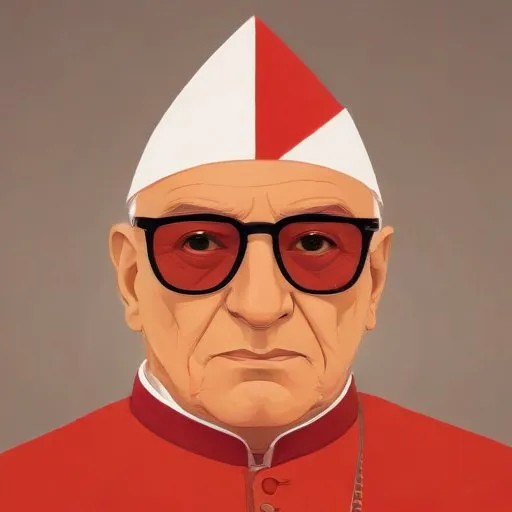
A 17th-century Italian cardinal who played a key role in the Thirty Years' War and wrote influential historical accounts of his time. He's also known for his diplomatic efforts to broker peace between European powers.
Guido Bentivoglio d'Aragona, an Italian cardinal, statesman, and historian, left an indelible mark on the 17th century with his exceptional diplomatic prowess, historical writings, and cultural sophistication. Born on October 4, 1579, into the influential Bentivoglio family of Bologna, he would go on to become a luminary in the Vatican, navigating the complexities of European politics with finesse.
Bentivoglio's educational journey took him to the universities of Ferrara and Padua, where he earned a doctorate in both civil and canon law in 1598. His humanistic studies honed his elegant writing style, which would later become a hallmark of his historical works.
Following his studies, Bentivoglio caught the attention of Pope Clement VIII, who appointed him as his private chamberlain. This position catapulted him into the hub of papal politics, and he soon found himself accompanying the Pope to Rome. Under Pope Paul V, he was appointed titular archbishop of Rhodes in 1607, despite being three months shy of the canonical age and not having received the sacred orders. This appointment propelled him to the role of nuncio at the court of the Archdukes Albert and Isabella in the Habsburg Netherlands.
Bentivoglio's diplomatic tenure in Brussels and Paris was marked by his involvement in pivotal events, including the negotiations to end the Eighty Years War and the Thirty Years War. He was deeply concerned about the plight of Catholics in the Dutch Republic and took a keen interest in the succession of Emperor Rudolf II. His correspondence reveals a skilled diplomatist, polished by constant intercourse with refined society, as he navigated the complex web of European politics.
Bentivoglio's literary pursuits yielded several notable works, including his magnum opus, Relationi, a collection of historical treatises that offer a unique window into the politics and society of 17th-century Europe. His writings demonstrate a mastery of historical narrative, as well as a deep understanding of the cultural and intellectual currents of his time.
Guido Bentivoglio's legacy lies in his multifaceted contributions to the world of politics, history, and culture. His diplomatic acumen, historical writings, and intellectual pursuits have left a lasting impact on our understanding of the 17th century. As a cardinal, statesman, and historian, Bentivoglio embodied the Renaissance humanist ideal, bridging the gap between faith, politics, and culture.
In conclusion, Guido Bentivoglio's remarkable life and achievements serve as a testament to his intellectual and cultural sophistication, as well as his diplomatic prowess. His legacy continues to inspire historians, scholars, and cultural enthusiasts to this day.
Born in 1615
The pope who reformed the Catholic Church's finances and ended nepotism, promoting a more austere and humble papacy. He's also known for his bull "Romanum decus" which regulated the discipline of bishops.
