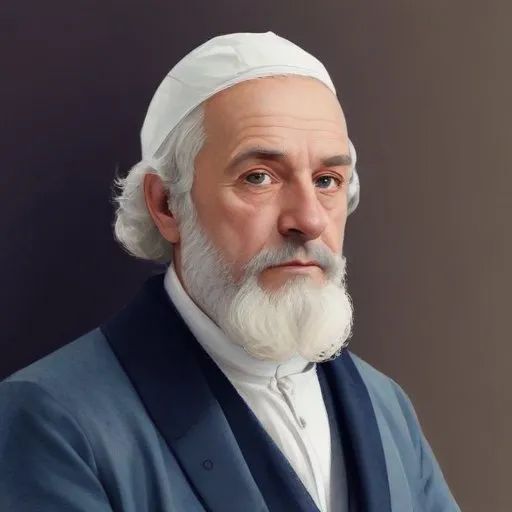
Guillaume Le Gentil: The French Astronomer Who Paved the Way for Modern Astronomy
Guillaume Le Gentil, a French astronomer, is famously known for his tireless efforts to observe the transits of Venus in the 18th century, which ultimately contributed to our understanding of the distance between the Earth and the Sun. His remarkable discoveries of nebulae, including the Messier objects M32, M36, and M38, solidified his position as a pioneer in the field of astronomy.
Early Life and Career
Born on September 12, 1725, in Coutances, France, Le Gentil initially intended to enter the church before his fascination with astronomy led him to pursue a career in the field. He was elected to the Royal Academy of Sciences in 1760, a testament to his dedication and expertise.
The Quest for Measuring the Distance to the Sun
In the early 18th century, astronomer
Edmond Halley proposed the idea of measuring the distance to the Sun by observing the transit of Venus from different points on the Earth.
Mikhail Lomonosov, a Russian astronomer, organized an international collaborative project to achieve this goal. Le Gentil was part of the French expedition, tasked with observing the transit from Pondicherry, a French possession in India.
| Expedition Timeline |
| March 1760: Le Gentil sets out from Paris for Isle de France (now Mauritius) |
| July 1760: Le Gentil reaches Isle de France, awaiting further passage to India |
| March 1761: Le Gentil boards a frigate bound for India's Coromandel Coast |
| June 1761: The frigate is blown off course, and Le Gentil misses the transit of Venus |
Challenges and Setbacks
Le Gentil's journey was plagued by bad luck and unforeseen circumstances. The Seven Years' War between France and Britain hindered his passage to India, and he was eventually forced to return to Isle de France without observing the transit of Venus.
Astronomical Contributions
Despite the setbacks, Le Gentil made significant contributions to the field of astronomy. He discovered the Messier objects M32, M36, and M38, as well as the nebulosity in M8. He was also the first to catalogue the dark nebula known as Le Gentil 3 in the constellation Cygnus.
Legacy
Le Gentil's tireless efforts and groundbreaking discoveries paved the way for future astronomers. His work on the transit of Venus laid the foundation for understanding the distance between the Earth and the Sun, a crucial milestone in the development of modern astronomy.
Personal Milestones and Key Life Events
- 1725: Born in Coutances, France
- 1760: Elected to the Royal Academy of Sciences
- 1761: Failed expedition to observe the transit of Venus from Pondicherry
- 1769: Failed again to observe the transit of Venus due to bad weather
- 1792: Died on October 22, leaving behind a legacy in the field of astronomy
Guillaume Le Gentil's remarkable story is a testament to his dedication, perseverance, and contributions to the field of astronomy. Despite facing numerous challenges, he remained committed to his work, leaving behind a lasting legacy that continues to inspire astronomers today.
FAQ
What was Guillaume Le Gentils contribution to astronomy?
Guillaume Le Gentil made significant contributions to astronomy, including the discovery of several celestial bodies, such as comet C/1743 X1, and the measurement of the transits of Venus to calculate the distance between the Earth and the Sun.
What was Guillaume Le Gentils role in the French Academy of Sciences?
Guillaume Le Gentil was a prominent member of the French Academy of Sciences, serving as its president from 1765 to 1766. He was instrumental in promoting scientific research and development in France.
How did Guillaume Le Gentils work influence later astronomers?
Guillaume Le Gentils work influenced later astronomers, including Joseph-Louis Lagrange and Pierre-Simon Laplace, who built upon his discoveries and developed new theories of celestial mechanics.
What were Guillaume Le Gentils observations on the 1761 and 1769 transits of Venus?
Guillaume Le Gentil observed the 1761 and 1769 transits of Venus, making precise measurements that helped to calculate the distance between the Earth and the Sun with greater accuracy.
How did Guillaume Le Gentils work reflect the scientific developments of the Enlightenment?
Guillaume Le Gentils work reflected the scientific developments of the Enlightenment, as he applied empirical observation and mathematical analysis to understand the natural world and expand human knowledge.