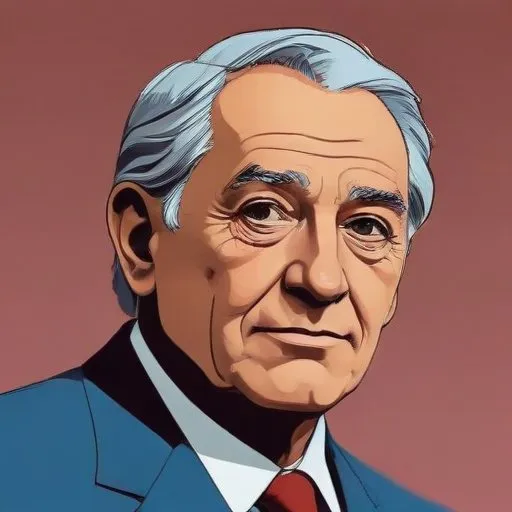
Guillermo O'Donnell

Guillermo O'Donnell

Guillermo O'Donnell was born on February 24th, 1936

Full Name: Guillermo Andrés ODonnell
Place of Birth: Buenos Aires, Argentina
Profession: Political scientist
Nationality: Argentine
Notable Work: Bureaucratic Authoritarianism
Academic Degree: PhD in Political Science
University: Yale University
Research Focus: Comparative politics and democratization

A renowned scholar who developed the concept of "bureaucratic authoritarianism" to describe military dictatorships in Latin America, and made significant contributions to the field of democratization studies.

Written by: Thomas Blackwood Thomas Blackwood

Guillermo O'Donnell: The Pioneering Political Scientist

A Champion of Democratic Theory and Latin American Politics

Guillermo O'Donnell was a towering figure in the realm of comparative politics and Latin American studies, leaving an indelible mark on our understanding of authoritarianism, democratization, and the intricacies of the Latin American political landscape. He is renowned for his groundbreaking work on bureaucratic authoritarianism, a concept that challenged conventional wisdom and sparked a seismic shift in the field of political science.

Early Life and Academic Pursuits

Born on February 24, 1936, in Buenos Aires, Argentina, to a family of Irish descent from County Donegal, O'Donnell's fascination with politics and law was evident from an early age. He studied law at the University of Buenos Aires, graduating in 1958 at the age of 22. During his student years, he was actively involved in student politics, serving as Secretary and Acting President of the Buenos Aires University Federation (FUBA), part of the Argentine University Federation, in 1954-1955.

Academic Contributions and Legacy

O'Donnell's magnum opus, Modernization and Bureaucratic Authoritarianism (1973), is a seminal work that pierced the veil of Latin American politics, offering a profound analysis of the region's unique brand of authoritarianism. This pathbreaking book sparked a lively debate among scholars and policymakers, cementing O'Donnell's position as a leading authority on the subject. His work has had a lasting impact on our comprehension of democratization, state-building, and the intricate dynamics of Latin American politics.

In addition to his academic pursuits, O'Donnell was an accomplished educator, having taught at the School of Law at the University of Buenos Aires (1958-1966) and the Pontifical Catholic University of Argentina (1966-1968). His pedagogical approach emphasized the importance of critically engaging with complex political phenomena, inspiring a new generation of scholars to follow in his footsteps.

Philosophical Contributions and Beliefs

O'Donnell's work was deeply rooted in a commitment to democratic values and a profound understanding of the complexities of human relationships. He believed that a nuanced grasp of political institutions, social structures, and cultural contexts was essential for crafting effective policies that promoted social justice and human dignity. His philosophical contributions have had a lasting impact on the field of political science, shaping the way scholars approach the study of democracy, authoritarianism, and the dynamics of power.

Influence on Modern Society

O'Donnell's work has had far-reaching implications for modern society, informing policy debates, shaping academic discourse, and inspiring social activism. His ideas have influenced a wide range of fields, from political science and sociology to economics and international relations. His legacy extends beyond the academic realm, inspiring a new generation of leaders, policymakers, and social activists to critically engage with the complexities of Latin American politics.

Personal Milestones and Key Life Events

Awards and Honors

O'Donnell's contributions to the field of political science have been recognized with numerous awards and honors, including:

Quotes and Memorable Sayings

"Democracy is not just a set of institutions, but a way of living, a commitment to the dignity of every human being."

"The study of politics is not just about understanding the world as it is, but about imagining a world as it could be."

Through his remarkable life and work, Guillermo O'Donnell has left an indelible mark on our understanding of politics, democracy, and the complexities of the human experience. His legacy continues to inspire scholars, policymakers, and social activists, ensuring that his ideas will remain a powerful force for positive change in the years to come.

Timeline
1936
Born in Buenos Aires, Argentina
Guillermo ODonnell was born on February 24, 1936, in Buenos Aires, Argentina.
1958
Graduated from University of Buenos Aires
ODonnell graduated from the University of Buenos Aires with a degree in law.
1964
Earned PhD from University of Oxford
ODonnell earned his PhD from the University of Oxford in political science.
1986
Published Transitions from Authoritarian Rule
ODonnell co-authored the book Transitions from Authoritarian Rule with Philippe Schmitter and Laurence Whitehead.
Guillermo O'Donnell

Guillermo O'Donnell Quiz

What concept did Guillermo O'Donnell develop to describe military dictatorships in Latin America?

Score: 0/5
FAQ
What is Guillermo ODonnells area of research?
Guillermo ODonnell is a political scientist, and his area of research focuses on democratization, authoritarianism, and state-society relations.
What is Guillermo ODonnells most notable contribution to political science?
Guillermo ODonnells most notable contribution is his work on the concept of delegative democracy, which highlights the limitations of democratic institutions in certain contexts.
What awards has Guillermo ODonnell won?
Guillermo ODonnell has won several awards for his research, including the Johan Skytte Prize in Political Science.
How does Guillermo ODonnells research inform our understanding of democracy?
Guillermo ODonnells research informs our understanding of democracy by highlighting the complexities and challenges of democratic consolidation in different regions.
What is Guillermo ODonnells current research focus?
Guillermo ODonnells current research focus is on the impact of globalization on democratic institutions and processes.

Related People:

Eva Perón

Born in 1919

A former actress who used her charisma and influence to advocate for women's suffrage and workers' rights, becoming a beloved and powerful figure in Argentine politics.

Raúl Alfonsín

99 Years Old

The first democratically elected president of Argentina after a period of military rule, known for his efforts to promote human rights and democracy in the country.

Carlos Menem

96 Years Old

The 50th President of Argentina, a lawyer-turned-politician who implemented neoliberal economic policies and pardoned military officers involved in human rights abuses during the country's Dirty War. He's also known for his flamboyant style and corruption scandals.

Fernando de la Rúa

89 Years Old

Led Argentina through a tumultuous period, implementing economic reforms and navigating corruption scandals, while also being a key figure in the country's transition to democracy. Known for his efforts to stabilize the economy and promote human rights.

Néstor Kirchner

76 Years Old

The 51st President of Argentina, who served from 2003 to 2007, is known for his efforts to rebuild the country's economy and restore its international reputation after a severe crisis. He's also recognized for his human rights advocacy and social welfare programs.

Cristina Fernández de Kirchner

73 Years Old

The first female President of Argentina, serving from 2007 to 2015, known for her progressive policies and strong leadership during a period of economic growth. She later became Vice President, continuing to shape the country's politics.

Eduardo Duhalde

85 Years Old

A lawyer and politician who served as President of Argentina from 2002 to 2003, known for navigating the country's economic crisis and defaulting on its foreign debt. He implemented austerity measures to stabilize the economy.