


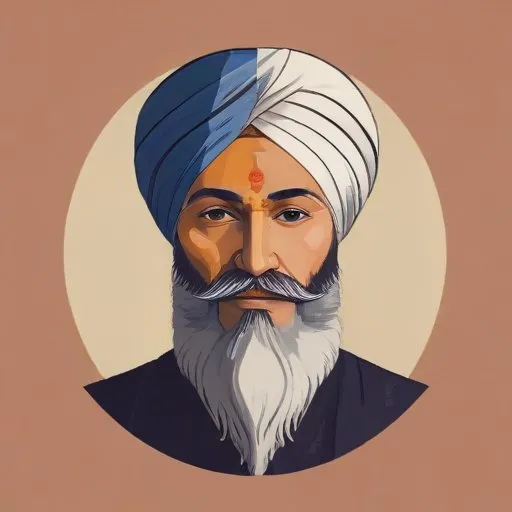
The fifth Sikh leader compiled the Adi Granth, the holy scripture of Sikhism, and sacrificed his life for standing up against religious persecution. He's revered for his courage and contributions to Sikh literature.
Guru Arjan Dev, the fifth Sikh Guru, is revered for compiling the Adi Granth, the holy scripture of Sikhism, and for his unwavering commitment to the principles of selflessness and devotion. His remarkable life, marked by courage, compassion, and wisdom, has left an indelible mark on the Sikh community and beyond.
Born in 1563, Guru Arjan Dev was the son of Guru Ram Das, the fourth Sikh Guru, and Mata Bhani, a devout Sikh woman. From a young age, he was instilled with the values of service, compassion, and devotion, which would shape his future as a spiritual leader. As the first Sikh Guru to be martyred, Guru Arjan Dev's life is a testament to his unwavering dedication to his faith and his people.
Guru Arjan Dev's most significant contribution to Sikhism is the compilation of the Adi Granth, a sacred text that contains the writings of Sikh Gurus, saints, and mystics from various religious traditions. This monumental work, completed in 1604, is a testament to Guru Arjan Dev's vision of creating a unified and inclusive religious community. The Adi Granth is a rich tapestry of spiritual wisdom, poetry, and music, which has guided generations of Sikhs in their spiritual journey.
Guru Arjan Dev's philosophical contributions are reflected in his poetry, which is characterized by its depth, beauty, and spiritual insight. His writings, captured in the Adi Granth, offer a unique perspective on the nature of God, the human condition, and the path to spiritual liberation. His poetry is a powerful expression of his devotion to the divine, and his philosophy emphasizes the importance of self-reflection, compassion, and service to others.
Guru Arjan Dev's legacy has been recognized and cherished by people from diverse backgrounds and faiths. In 1960, the Indian government issued a postage stamp in his honor, commemorating the 400th anniversary of his martyrdom. His birth anniversary, celebrated on May 14, is observed as a national holiday in India.
Guru Arjan Dev's life and teachings have had a profound impact on Indian history and culture. His compilation of the Adi Granth has preserved the spiritual heritage of Sikhism, and his philosophy of selflessness and devotion has inspired countless individuals to lead lives of service and compassion. Today, Guru Arjan Dev is remembered as a champion of religious tolerance, social justice, and human rights.
Guru Arjan Dev's relationships with his followers and contemporaries are marked by stories of compassion, kindness, and wisdom. One famous anecdote recounts his encounter with a Brahmin who had come to him seeking spiritual guidance. Guru Arjan Dev's response, "I am not a Brahmin, nor am I a low-caste Sudra," highlights his rejection of caste-based discrimination and his emphasis on the equality of all human beings.
Guru Arjan Dev's remarkable life, marked by his unwavering commitment to his faith and his people, continues to inspire generations of Sikhs and non-Sikhs alike. His legacy is a powerful reminder of the transformative power of selflessness, devotion, and compassion, and his teachings continue to guide us on the path towards spiritual liberation and human unity.
Born in 1469
Founded Sikhism, a religion that emphasizes spiritual growth, social justice, and equality, and is revered for his poetic hymns and teachings that promote love, compassion, and devotion.
Born in 1504
Developed the Gurmukhi script, a written form of Punjabi, and played a key role in shaping Sikhism's early development.
Born in 1479
The third Sikh Guru, a key figure in Sikhism, is known for establishing the Sikh holy city of Amritsar and introducing the concept of langar, a communal kitchen where people of all faiths and backgrounds can eat together.
Born in 1534
The fourth Sikh Guru is known for composing the Laava, the four hymns of the Sikh marriage ceremony, and for designing the Golden Temple in Amritsar, India. They played a crucial role in shaping Sikhism's spiritual and cultural practices.
Born in 1630
The seventh Sikh Guru, known for his compassion and kindness, healed the son of a Mughal emperor and is revered for his selfless service and devotion to humanity.
Born in 1666
A spiritual leader who founded the Sikh warrior community and wrote poetic compositions that are still revered today, known for his bravery and spiritual guidance.
