


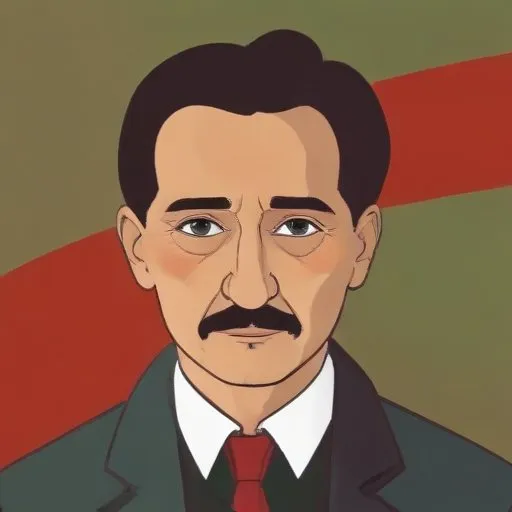
A Hungarian literary giant, celebrated for his avant-garde plays and novels that probed the human condition, often blending absurdity with social commentary. His works are known for their complexity and depth.
György Spir is a renowned Hungarian literary figure, celebrated for his avant-garde style of writing, which has captivated audiences with its bold and unapologetic depiction of reality. As a dramatist, novelist, and essayist, Spir has made significant contributions to post-war Hungarian literature, earning him a place in the prestigious Széchenyi Academy of Literature and Arts.
György Spir was born on April 4, 1946, in Budapest, Hungary, to an engineer from Miskolc. He graduated from Eötvös Loránd University (ELTE) in 1970, with a degree in Hungarian and Slavic literature. Additionally, he pursued studies in journalism and sociology, which would later influence his writing style.
Spir's early career was spent in radio journalism, but he soon transitioned to writing, where he found his true calling. His plays have garnered numerous awards, including several for best Hungarian drama of the year. One of his most notable works is "Csirkefej" (Chickenhead), a powerful and poignant drama that explores the disillusionment of a young delinquent upon reuniting with his drunken father. This play is widely regarded as one of the most important Hungarian plays of the last 20 years.
Another notable work is his historical novel, "Az Ikszek" (The Xs), published in 1981. This novel delves into the world of the National Theatre of Poland in the early 19th century, with Wojciech Bogusławski as the main character. The novel is a testament to the struggle of artists against censorship, a theme that resonates deeply with Spir's own experiences.
Spir's writing often grapples with themes of censorship, rebellion, and the struggles of the marginalized. His work is a testament to his belief in the power of art to challenge societal norms and bring about change.
In recent years, Spir has continued to write and teach, serving as an associate professor at the Department of World Literature and the Institute of Art Theory and Media Studies at ELTE.
Spir's work has had a profound impact on Hungarian literature and beyond. His avant-garde style has inspired a new generation of writers and artists, encouraging them to push the boundaries of creative expression.
György Spir's contributions to Hungarian literature are immeasurable. His bold and unapologetic writing style has left an indelible mark on the literary world, cementing his place as one of the most important and influential writers of his generation.
96 Years Old
A Hungarian writer who won the Nobel Prize in Literature in 2002 for his semi-autobiographical novels about the Holocaust, exploring the psychological and philosophical implications of survival. His works are known for their complex, lyrical prose and nuanced exploration of humanity.
83 Years Old
A Hungarian literary giant, renowned for his sprawling, introspective novels and plays that explore the human condition, love, and the search for identity.
72 Years Old
A Hungarian literary mastermind, celebrated for his complex, lyrical, and often surreal novels that explore the human condition, blending philosophical and psychological insights with a unique narrative style.
Born in 1917
A renowned Hungarian literary figure, celebrated for her poignant and introspective works that explore the human condition, particularly in the context of war and social change.
Born in 1900
A Hungarian journalist and author, known for his lyrical and introspective novels that explore the decline of the Austro-Hungarian Empire and the rise of fascism. His works are celebrated for their poetic prose and nuanced character studies.
Born in 1885
A Hungarian literary mastermind, celebrated for his innovative, psychologically nuanced novels and poetry that probed the human condition, often with a touch of irony and humor.
Born in 1878
A Hungarian-American author and playwright renowned for his witty, satirical plays and novels that often explored the human condition, love, and social class. His works are still widely performed and adapted today.
Born in 1885
A Hungarian philosopher and critic who developed Marxist theory and critiqued capitalism, known for his ideas on reification and the role of class consciousness in shaping society.
