


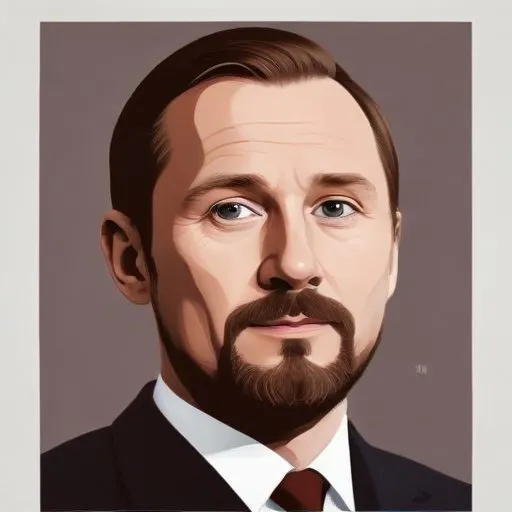
A Norwegian lawyer and politician who served as the leader of the Norwegian Labour Party and played a key role in shaping Norway's post-war politics and economy. He's known for his efforts to rebuild Norway after World War II.
Haakon Lie is widely regarded as the mastermind behind Norway's remarkable post-war success, serving as the party secretary for the Norwegian Labour Party from 1945 to 1969. Alongside Einar Gerhardsen, he is credited with shaping the country's welfare state and propelling the Labour Party to unprecedented heights.
Born on September 22, 1905, in Oslo (then Kristiania), Haakon Steen Lie grew up in a family of Finnish origin. His father, Andreas Lie, was a fireman, and his mother, Karen Halvorsdatter Gunderud, was a homemaker. Despite facing poverty, Lie's childhood was marked by happiness, and he would later change the spelling of his first name to Haakon during World War II.
Lie became involved with the labour movement at the age of 16, in 1921. This is where he met lifelong friends and colleagues Martin Tranmæl, Oscar Torp, and Einar Gerhardsen. When the Labour Party left the Third Communist International in 1923, Lie sided with the social democrats, paving the way for his future success.
During World War II, Lie actively worked for the resistance movement and the exiled government. After the war, he was elected to the second-highest position in the Labour Party, marking the beginning of his 24-year tenure as party secretary. Under his leadership, the party experienced unprecedented success, and Norway's welfare state began to take shape.
Lie was a staunch social democrat who believed in the importance of social welfare and workers' rights. He played a crucial role in shaping Norway's post-war economy, balancing social democratic ideals with pragmatic economic policies.
Lie has faced criticism for organizing surveillance of Norwegian opposition figures, particularly communists. This controversial aspect of his legacy has sparked debate among historians and politicians, underscoring the complexities of Lie's role in Norwegian politics.
Haakon Lie's legacy is multifaceted, marked by both achievements and controversies. However, his contributions to Norway's post-war success and his role in shaping the country's welfare state are undeniable. As a testament to his enduring impact, Lie remains an important figure in Norwegian politics, even after his passing in 2009.
87 Years Old
A physician-turned-politician who championed environmental issues and sustainable development, leading the World Commission on Environment and Development. She's credited with popularizing the concept of sustainable development.
67 Years Old
The 27th Prime Minister of Norway and 13th Secretary General of NATO, known for leading Norway's government and the North Atlantic Treaty Organization, shaping global security and economic policies.
65 Years Old
The first female Prime Minister of Norway, serving from 2013 to 2021, known for her leadership during the European migrant crisis and her efforts to promote economic growth and climate action.
79 Years Old
The 26th Prime Minister of Norway, serving from 1997 to 2000 and again from 2001 to 2005, known for his leadership during a period of significant economic growth and social reform. He's also a Lutheran minister and politician.
75 Years Old
The 25th Prime Minister of Norway, serving from 1996 to 1997, known for his efforts to strengthen the country's economy and his role in the European Union accession talks. He also chaired the Nobel Committee, awarding the Peace Prize.
66 Years Old
Norway's first female Minister of Finance, known for her progressive policies and efforts to reduce economic inequality. She implemented reforms to increase taxes on the wealthy and reduce poverty.
