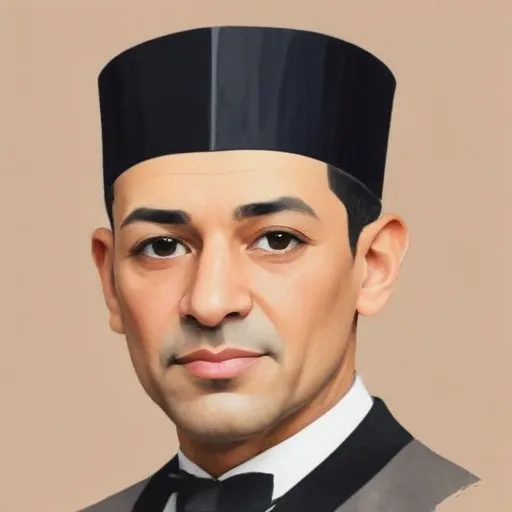
Halim ElDabh: The Egyptian-American Pioneer of Electronic Music
A Sonic Innovator Ahead of His Time
Halim ElDabh is renowned for his groundbreaking contributions to electronic music, earning him a reputation as a true pioneer in the field. Composing one of the earliest known works of tape music, or musique concrète, in 1944, ElDabh's innovative spirit paved the way for future generations of electronic music artists.
Early Life and Influences
Born on March 4, 1921, in Sakakini, Cairo, Egypt, ElDabh grew up in a large and affluent Coptic Christian family. His family's relocation to Heliopolis in 1932 exposed him to a diverse cultural landscape, which would later influence his musical explorations. ElDabh's fascination with music began at a young age, and he informally studied, performed, and composed music while pursuing a degree in agricultural engineering from Fuad I University.
Electronic Music Experimentation in Cairo
In the early 1940s, ElDabh began experimenting with electronic music, capturing outside sounds with wire recorders and manipulating them for musical purposes. His pioneering work predates
Pierre Schaeffer's efforts by four years, with his composition "The Expression of Zaar" (1944) being one of the earliest known works of tape music. This innovative piece was inspired by an ancient zaar ceremony, a type of exorcism conducted in public.
Career Highlights and Major Works
ElDabh's career spanned six decades, during which he produced influential work at the Columbia-Princeton Electronic Music Center in the late 1950s and early 1960s. Some of his notable compositions include:
- " Leiyla and the Poet" (1959), a pioneering work in electronic music
- "Meynston Moods" (1960), an experimental electronic piece
- "It Is Dark and Frost Outside on the Road" (1961), a collaboration with American composer Vladimir Ussachevsky
Influence on Modern Society and Legacy
Halim ElDabh's contributions to electronic music have had a profound impact on modern society, inspiring generations of musicians and composers. His legacy extends beyond the music world, with his innovative spirit and pursuit of new sounds reflecting the essence of human creativity and exploration.
Personal Milestones and Key Life Events
ElDabh's life was marked by several significant events, including his relocation to the United States in the 1950s, where he continued to compose and experiment with electronic music. He passed away on September 2, 2017, leaving behind a rich legacy in the world of music.
Awards and Honors
Throughout his career, ElDabh received numerous awards and honors, including a Guggenheim Fellowship in 1959 and a Fulbright Scholarship in 1961.
Philosophical Contributions and Beliefs
ElDabh's work was driven by a deep passion for innovation and a belief in the power of music to transcend cultural boundaries. His commitment to pushing the boundaries of sound manipulation reflects his philosophical approach to art and creativity.
Trivia and Fun Facts
* ElDabh's family name, which means "the hyena," is not uncommon in Egypt.
* He was an accomplished pianist and composer, recognized in Egypt for his innovative compositions and piano technique from the mid to late 1940s.
Halim ElDabh's life and work serve as a testament to the power of creativity and innovation, inspiring future generations to explore new sounds and push the boundaries of what is possible.
FAQ
What was Halim El-Dabhs contribution to music?
Halim El-Dabh was a pioneering Egyptian-American composer who introduced Arabic music elements into Western classical music, creating a unique fusion of styles.
How did Halim El-Dabh start his music career?
El-Dabh began his music career in Egypt, studying composition and piano before moving to the United States to pursue advanced degrees and develop his distinctive style.
What was Halim El-Dabhs experience as a music educator?
As a music educator, El-Dabh taught at several institutions, including the University of Kentucky and the Cleveland Institute of Music, inspiring generations of composers and musicians.
What awards did Halim El-Dabh receive for his music?
Halim El-Dabh received several awards for his compositions, including a Fulbright Fellowship and the Cleveland Arts Prize.
What was Halim El-Dabhs legacy in music?
Halim El-Dabhs innovative approach to music has left a lasting impact on the development of contemporary classical music, influencing composers and musicians around the world.