


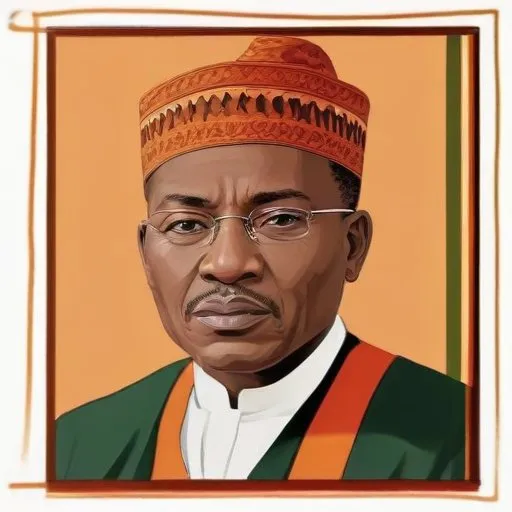
First President of Niger, serving from 1960 to 1974, and a key figure in the country's independence from France. He's known for his efforts to modernize and develop Niger's economy and infrastructure.
Hamani Diori, the first President of the Republic of Niger, is renowned for his pivotal role in gaining independence from France in 1960 and his subsequent presidency until 1974. As a prominent figure in African politics, Diori earned international respect for his diplomatic efforts and arbitration in conflicts, cementing his legacy as a champion of African affairs.
Born on June 6, 1916, in Soudour, near Niamey, Niger, Diori was the son of a public health officer in the French colonial administration. He attended the prestigious William Ponty Teachers Training College in Dakar, Senegal, and later worked as a teacher in Niger from 1936 to 1938. His educational pursuits continued in Paris, where he became a Hausa and Djerma foreign language instructor at the Institute of Study Abroad.
In 1946, while serving as the headmaster of a school in Niamey, Diori co-founded the Nigerien Progressive Party (PPN), a regional branch of the African Democratic Rally (RDA). This marked the beginning of his political career, which saw him elected to the French National Assembly later that year. Although he was defeated by his cousin and political rival, Djibo Bakary, in the 1951 election, Diori persisted, eventually becoming deputy speaker in 1956.
In 1958, following a referendum that granted Niger self-government, Diori became president of the provisional government. His leadership role continued in 1959, when he assumed the position of Prime Minister of the republic.
Niger gained independence from France on August 3, 1960, and Diori was subsequently elected president by the country's national assembly in November 1960. During his presidency, he established a powerful coalition of Hausa, Fula, and Djerma leaders, traditionalists, and chiefs, earning French favor and securing Niger's independence referendum.
As president, Diori's government prioritized the maintenance of traditional social structures and the retention of close economic ties with France. However, his regime was also marred by corruption, which ultimately led to his downfall in a military coup in 1974.
Throughout his political career, Diori demonstrated a strong commitment to African unity and solidarity. He was a vocal advocate for African affairs, often serving as a mediator in regional conflicts. His diplomatic efforts earned him international respect and recognition, solidifying his position as a prominent figure in African politics.
Despite the controversies surrounding his presidency, Hamani Diori's legacy as a champion of African independence and unity endures. His diplomatic efforts and commitment to African affairs continue to inspire future generations of leaders and politicians. As the first President of Niger, Diori's contributions to the country's history and development are undeniable, solidifying his place as a pioneering figure in African politics.
76 Years Old
A charismatic leader who led a revolution to transform Burkina Faso into a self-sufficient nation, promoting pan-Africanism and anti-imperialism. He's known for his radical reforms and empowering the poor.
68 Years Old
The first president in Nigeria to originate from the minority ethnic group, he's known for his efforts to reform the country's electoral system and his handling of the Boko Haram insurgency.
