


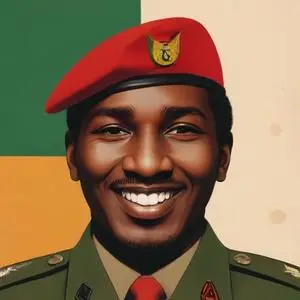
A charismatic leader who led a revolution to transform Burkina Faso into a self-sufficient nation, promoting pan-Africanism and anti-imperialism. He's known for his radical reforms and empowering the poor.
Known as the "Che Guevara of Africa," Thomas Sankara was a charismatic and visionary leader who spearheaded a revolution in Burkina Faso, transforming the West African nation into a beacon of hope for the continent. Through his unwavering commitment to social justice, ecological sustainability, and economic independence, Sankara left an indelible mark on the country and the world.
Born on December 21, 1949, in Yako, Upper Volta (now Burkina Faso), Sankara was a passionate advocate for Pan-Africanism and Marxism. His military training in Madagascar and France prepared him for a life of service, which he began as a lieutenant in the Upper Volta Army. However, his growing discontent with the government's corruption and oppression led him to participate in a coup in 1983, which landed him in prison.
Undeterred, Sankara's supporters staged a successful coup, freeing him from house arrest and propelling him to the presidency at just 33 years old. As the leader of Burkina Faso, Sankara embarked on an ambitious program of reforms, earning him both national and international recognition.
Sankara's foreign policy was guided by his rejection of imperialism and his commitment to African unity. He refused to accept loans and capital from organizations like the International Monetary Fund, instead pursuing alternative sources of assistance to maintain Burkina Faso's sovereignty.
Sankara's Pan-Africanist ideology led him to forge close ties with other African nations, including Ghana's Jerry Rawlings and Libya's Muammar Gaddafi. He also played a key role in the formation of the Economic Community of West African States (ECOWAS).
On October 15, 1987, Thomas Sankara's life was tragically cut short in a coup led by his former ally, Blaise Compaoré. However, his legacy lives on, inspiring generations of Africans and international leaders to fight for social justice, economic independence, and environmental sustainability.
In Burkina Faso, Sankara's ideology continues to shape the country's development, with many of his reforms remaining in place. His commitment to social justice, women's empowerment, and environmental conservation has made him an enduring symbol of hope for a better Africa and a better world.
74 Years Old
The 41st President of Haiti, a notorious dictator who ruled with an iron fist, known for his brutal suppression of opposition and human rights abuses. He fled the country in 1986, ending his 15-year regime.
Born in 1922
First President of Guinea, led country to independence from France in 1958, and implemented socialist policies. Known for his Pan-Africanism and anti-colonial stance.
Born in 1915
First President of Mali, leading the country to independence from France in 1960 and implementing socialist policies. Known for his efforts to modernize and unify the country.
Born in 1918
Led Egypt through a period of rapid modernization and nationalism, becoming a symbol of Arab unity and resistance to Western influence. He nationalized the Suez Canal and implemented socialist reforms.
Born in 1922
First President of Tanzania, led the country to independence from British colonial rule and implemented socialist policies, known for his Pan-Africanism and anti-colonialism efforts.
