


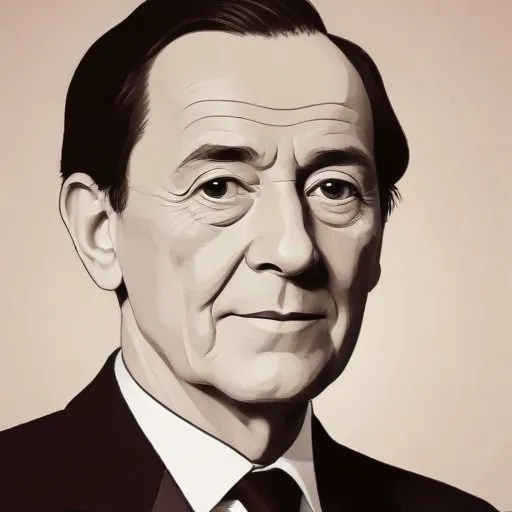
A renowned expert on Italian culture and history, particularly the Renaissance, who wrote extensively on the subject, including novels and biographies.
Harold Acton is renowned for his multifaceted career as a writer, scholar, and aesthete, leaving an indelible mark on the literary and cultural landscape of the 20th century. As a prominent member of the Bright Young Things, a group of fashionable and intellectual socialites in 1920s London, Acton's life was a testament to his boundless curiosity and passion for learning.
Acton's literary pursuits spanned multiple genres, including fiction, biography, history, and autobiography. His writings often reflected his fascination with Italian culture and history, which was deeply rooted in his Anglo-Italian heritage. During his sojourn in China, he delved into the study of the Chinese language, traditional drama, and poetry, even translating some of these works.
Born on July 5, 1904, near Florence, Italy, Acton was exposed to a rich cultural tapestry from a young age. His family's villa, La Pietra, became a hub for intellectuals and artists, shaping his early life and future endeavors. At Eton College, he co-founded the Eton Arts Society, foreshadowing his later involvement in the avant-garde movement.
At Oxford University, Acton read Modern Greats at Christ Church, where he co-founded the avant-garde magazine The Oxford Broom. This venture brought him into contact with prominent literary figures, including Evelyn Waugh, who drew inspiration from Acton's flamboyant personality for the character of Anthony Blanche in Brideshead Revisited.
Acton's magnum opus, a three-volume study of the Medici and Bourbon dynasties, cemented his reputation as a meticulous and erudite historian. This work showcased his mastery of multiple languages, including Italian, French, and Chinese, which he had acquired during his extensive travels.
During World War II, Acton served as an RAF liaison officer in the Mediterranean. After the war, he returned to Florence and dedicated himself to restoring his childhood home, Villa La Pietra, to its former glory. In recognition of his contributions to literature and culture, Acton was knighted in 1974. Upon his passing in 1994, he bequeathed La Pietra to New York University, ensuring that his cultural legacy would endure for generations to come.
Sir Harold Acton's remarkable life serves as a testament to the power of curiosity, creativity, and intellectual pursuits. As a writer, historian, and aesthete, he left an indelible mark on the cultural landscape of the 20th century, inspiring countless individuals to explore the rich tapestry of human experience.
Born in 1885
A pioneering modernist poet and critic who transformed 20th-century literature with innovative styles and provocative ideas, shaping the course of modern poetry.
Born in 1888
A renowned poet, playwright, and critic who reshaped modern poetry with works like "The Waste Land" and "Old Possum's Book of Practical Cats", influencing literature and art with their unique style.
Born in 1874
A pioneering figure in modernist literature, known for experimental writing styles and influential salons that fostered artistic innovation. 82
Born in 1894
Author of dystopian classics like Brave New World, exploring the consequences of technological advancements on humanity. Known for prophetic warnings about government control and manipulation.
Born in 1885
A pioneering writer of the early 20th century, known for exploring themes of human nature, relationships, and the clash between individual desire and societal expectations through novels like "Sons and Lovers" and "Lady Chatterley's Lover".
Born in 1903
A renowned English writer, known for his witty satires and novels of manners, particularly "Brideshead Revisited", which explores the British aristocracy's decline.
Born in 1903
A British literary critic and author, known for his witty and insightful reviews, as well as his own novels and autobiographical works that explored the human condition.
Born in 1905
A British novelist and critic, best known for his 12-volume series "A Dance to the Music of Time", a sprawling, witty, and insightful chronicle of British upper-class life from the 1920s to the 1970s.
