


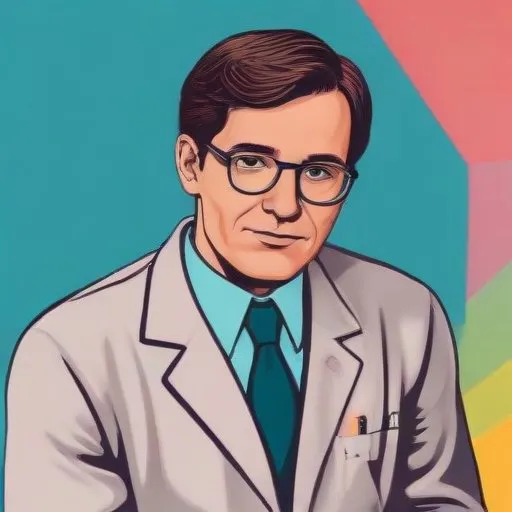
Pioneering microbiologist and educator who broke racial barriers in academia, making significant contributions to the field of microbiology and inspiring future generations of scientists.
Harold Amos is renowned for being the first African American department chair at Harvard Medical School, where he taught for nearly five decades. He made significant contributions to the field of microbiology, and his legacy extends beyond his scientific achievements to his impact on education and minority representation in academia.
Born on September 7, 1918, in Pennsauken, New Jersey, Harold Amos grew up in a family that valued education. His mother, Iola Johnson, was adopted and educated by a Philadelphia Quaker family, which exposed Amos to a plethora of books, including a biography of Louis Pasteur that sparked his interest in science.
Amos excelled academically, graduating at the top of his class from Camden High School in 1936. He then attended Springfield College in Massachusetts on a full academic scholarship, where he earned a degree in biology with a minor in chemistry in 1941. After serving in World War II, Amos began his graduate studies at Harvard University, earning his Ph.D. in 1952 and becoming the first African American to do so from the Division of Medical Sciences, Harvard Medical School.
During World War II, Amos was drafted into the US Army, where he served in the Quartermasters Corps as a warrant officer. His time in the Army took him to the coast of France, where he became fluent in the language and developed a passion for French cuisine and wine. After being discharged in 1946, Amos returned to academia, starting his next career chapter at Harvard University.
In 1947, Amos became the first African American faculty member at Springfield College, where he taught biology. He later returned to Harvard Medical School, earning his M.A. in 1947 and Ph.D. in 1952. His thesis, focused on the infectivity of the Herpes virus, was completed under the guidance of Howard J. Mueller.
Amos's academic achievements were recognized with a Fulbright scholarship, which took him to the Pasteur Institute in Paris. His research and teaching career spanned nearly five decades, during which he mentored numerous students and made significant contributions to the field of microbiology.
Harold Amos's legacy extends beyond his scientific achievements. He paved the way for minority representation in academia, breaking down barriers and inspiring future generations of scientists and educators. His commitment to education and mentoring has had a lasting impact on the scientific community, and his trailblazing spirit continues to inspire.
Throughout his life, Harold Amos demonstrated a passion for learning, a commitment to education, and a dedication to breaking down barriers. His legacy serves as a testament to the power of perseverance and the importance of diversity in academia.
98 Years Old
Discovered the structure of DNA, revolutionizing our understanding of genetics and earning a Nobel Prize. Pioneering work in molecular biology has far-reaching implications for medicine and beyond.
Born in 1916
Pioneering scientist who discovered the structure of DNA, revolutionizing our understanding of genetics and life itself.
Born in 1920
A British scientist who contributed significantly to the discovery of the structure of DNA, providing high-quality X-ray crystallography images that helped James Watson and Francis Crick develop their famous model.
Born in 1916
A Nobel Prize-winning physicist and biologist who contributed significantly to the discovery of the structure of DNA, using X-ray crystallography to produce the first clear images of the molecule.
Born in 1901
Pioneering chemist and peace activist who won two unshared Nobel Prizes, one for chemistry and one for peace, for his groundbreaking work on the nature of the chemical bond and his tireless efforts to promote nuclear disarmament.
Born in 1905
A pioneer in DNA research, this biochemist discovered the base pairing rules of DNA, leading to a fundamental understanding of genetic code.
Born in 1877
Pioneering microbiologist who discovered DNA as the genetic material, revolutionizing our understanding of life and paving the way for major advances in genetics and biotechnology.
Born in 1925
A pioneering geneticist who discovered bacterial gene recombination and transduction, revolutionizing our understanding of genetic inheritance and earning a Nobel Prize.
