


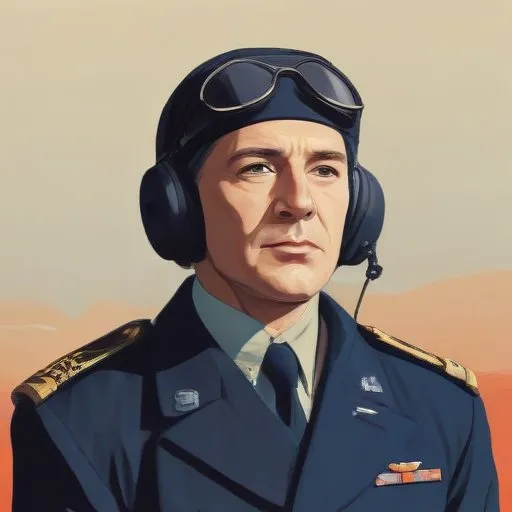
A pioneering aviator who set multiple flying records and was a key figure in the development of American airpower, particularly in the interwar period.
Major Harold Geiger, a trailblazing figure in American aviation, is remembered for his distinction as the sixth military aviator in the United States Army, as well as his remarkable contributions to the development of military aviation and ballooning.
Born on October 7, 1884, in East Orange, New Jersey, to Frederick C. Geiger and Josephine Dodd Squier, Geiger attended East Orange High School before embarking on a cadetship at the United States Military Academy. He graduated as an Army second lieutenant in the Coast Artillery Corps in 1908 and was subsequently promoted to first lieutenant in November of the same year.
In 1913, Lieutenant Geiger commanded the aviation assets of the United States Army Signal Corps in the Hawaiian Islands, marking a significant milestone in the history of military aviation. During his tenure, he oversaw the arrival of the first Army airplanes, pilots, and crews in Oahu, which were based at Fort Kamehameha, near present-day Hickam Air Force Base.
Despite facing challenges due to the poor condition of the aircraft, Geiger managed to conduct short flights in Pearl Harbor and a longer flight to Diamond Head, Hawaii, and back to Fort Kamehameha. Unfortunately, the strong trade winds forced him to cease flying operations in late 1913, and the airplanes were eventually sold locally, with the engines being sent back to the North Island Flying School.
Geiger's expertise extended beyond aviation to ballooning and dirigibles. He completed courses at the U.S. Army Balloon School in April 1917 and later served overseas with the Army's Balloon Section Headquarters in France as a lieutenant colonel during World War I. He also underwent dirigible studies in France and Italy, further solidifying his reputation as a pioneer in military aviation.
In recognition of his outstanding contributions to military aviation, Spokane International Airport is designated with the International Air Transport Association airport code GEG in his memory. Major Harold Geiger's legacy serves as a testament to his trailblazing spirit and his enduring impact on the development of military aviation.
Major Harold Geiger's remarkable story serves as a poignant reminder of the sacrifices made by pioneers in the field of military aviation, and his legacy continues to inspire generations of aviators and historians alike.
Born in 1879
A pioneer in military aviation, credited with developing the concept of air power and advocating for a separate air force, earning him the title "Father of the US Air Force."
Born in 1896
Led a daring bombing raid on Tokyo in 1942, earning the Medal of Honor for his bravery and helping to turn the tide of World War II.
Born in 1891
Led the US Air Forces to victory in World War II, pioneering the use of strategic bombing and playing a crucial role in shaping the US military's air power.
Born in 1886
Led the United States Army Air Forces during World War II, playing a crucial role in the Allied victory, and later became the first General of the Air Force. He's also known as the "Father of the US Air Force".
Born in 1925
Academy Award-winning actor renowned for his rugged, authoritative presence in iconic films like "Cool Hand Luke" and "Airport." He brought depth and nuance to tough-guy roles.
