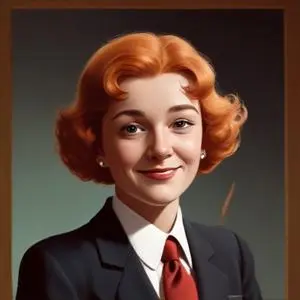
Harold Gray: The Visionary Behind Little Orphan Annie
The Creation of an Icon
Harold Gray, an American cartoonist, is best known for creating the beloved newspaper comic strip Little Orphan Annie. Launched on August 5, 1924, this iconic strip has been a staple of American pop culture for nearly a century. Gray's creation has not only entertained generations of readers but has also left an indelible mark on the world of comics and beyond.
Early Life and Influences
Born on January 20, 1894, in Kankakee, Illinois, Gray grew up on farms in Illinois and Indiana. After losing his parents before finishing high school, he worked in construction to pay his college tuition at Purdue University, where he graduated with a degree in engineering in 1917. Gray's early career took a detour when he enlisted in the military for World War I, serving as a bayonet instructor for six months.
A Career in Cartooning
After the war, Gray approached cartoonist John T. McCutcheon for advice on breaking into the cartooning field. Although he couldn't immediately secure cartooning work, McCutcheon's influence helped him land a job as a reporter for the Chicago Tribune. Gray eventually left the Tribune in 1919 to freelance in commercial art. In 1921, he began working on the lettering for
Sidney Smith's The Gumps, which eventually led to the creation of Little Orphan Annie.
The Evolution of Little Orphan Annie
Initially titled Little Orphan Otto, Gray's strip was renamed by Chicago Tribune editor
Joseph Medill Patterson to Little Orphan Annie. The strip's early years were marked by crude drawings and melodramatic storylines, but by the 1930s, Gray's artistic style had matured, and the strip had evolved into a crisply rendered atmospheric story with novelistic plot threads. Gray's deeply conservative political philosophy was reflected in the dialogue, which often featured meditations on his own beliefs.
Personal Life and Philosophical Contributions
Gray's personal life was marked by tragedy, including the loss of his first wife, Doris C. Platt, in 1925. He later married Winifred Frost in 1929 and moved to Greens Farms, Connecticut, where he spent winters in La Jolla, California. Gray's conservative political views and philosophical contributions are evident in his work, which often explored themes of individualism, self-reliance, and traditional values.
Legacy and Impact
Harold Gray's creation, Little Orphan Annie, has had a lasting impact on the world of comics and popular culture. The strip's influence can be seen in numerous adaptations, including films, television shows, and stage productions. Gray's work has also inspired generations of cartoonists and artists, cementing his place as a pioneer in the world of comics.
Awards and Honors
Gray's contributions to the world of comics have been recognized with numerous awards and honors, including:
- The National Cartoonists Society's Milton Caniff Lifetime Achievement Award (1972)
- The Academy of Comic Book Arts' Hall of Fame (1972)
Trivia and Fun Facts
* Gray was a Freemason, initiated in 1923.
* He could trace his American ancestry back to 17th-century settlers.
* Gray's original title for Little Orphan Annie was Little Orphan Otto.
Conclusion
Harold Gray's legacy is a testament to the power of creativity and innovation. Through his beloved character, Little Orphan Annie, Gray has left an indelible mark on the world of comics and beyond. His story serves as a reminder of the impact one person can have on the world, and his work continues to inspire generations of artists, cartoonists, and fans alike.
FAQ
What was Harold Grays most famous comic strip creation?
Harold Gray created the beloved comic strip Little Orphan Annie, which debuted in 1924 and became an American classic.
How did Harold Grays comic strip reflect his own life experiences?
Harold Gray drew inspiration from his own life, incorporating elements of his childhood and relationships into the characters and storylines of Little Orphan Annie.
What themes did Harold Gray explore through his comic strip?
Harold Grays comic strip explored themes of poverty, foster care, and the struggles of urban life, resonating with readers of all ages.
How did Harold Grays work influence the development of comic strips?
Harold Grays innovative storytelling and artwork raised the bar for comic strips, paving the way for future creators and shaping the medium.
What impact did Harold Grays work have on popular culture?
Harold Grays Little Orphan Annie has become an iconic part of American popular culture, inspiring adaptations in film, stage, and television.