


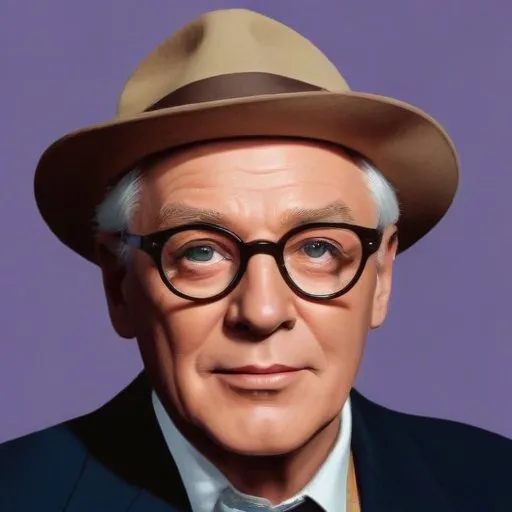
A pioneering figure in Hollywood's early days, he was a prolific actor, director, and screenwriter, starring in over 200 films, including many classic Westerns. He's most famous for his rugged, macho screen presence and iconic roles in silent films.
Harry Carey was one of the earliest superstars of silent films, known for his rugged, stoic portrayals of Western heroes. With a film career spanning over three decades, he remains an iconic figure in the early days of American cinema, earning him a permanent place in the annals of Hollywood history.
Born Henry DeWitt Carey II on January 16, 1878, in the Bronx, New York, Carey grew up on City Island, Bronx. His father, Henry DeWitt Carey, was a prominent lawyer and judge of the New York Supreme Court. Before venturing into acting, Carey worked as a cowboy, railway superintendent, author, lawyer, and playwright.
After a boating accident led to pneumonia, Carey wrote a play, Montana, while recuperating. He toured the country performing in it for three years, enjoying immense success. However, his next play was a failure, and he lost everything. In 1911, his friend Henry B. Walthall introduced him to director D.W. Griffith, with whom Carey would make many films.
Carey first appeared in a film in 1908, contracted to make four films, not only acting but also doing his own stunt work. He is best remembered as one of the first stars of the Western film genre. In 1909, Carey began working for the Biograph Company, and in 1911, he was signed by D.W. Griffith. His first film for Griffith was The Sorrowful Shore, a sea story.
One of his most popular roles was as the goodhearted outlaw Cheyenne Harry. The Cheyenne Harry franchise spanned two decades, from A Knight of the Range (1916) to Aces Wild (1936). Carey starred in director John Ford's first feature film, Straight Shooting (1917).
In the 1930s, Carey began to transition to talkies, appearing in films like Mr. Smith Goes to Washington (1939), for which he was nominated for the Academy Award for Best Supporting Actor. He continued to act until his death on September 21, 1947.
Carey was married twice, first to Clara B. Johnson and then to Olive Fuller Golden. He had two sons, Harry Carey Jr. and Elliott Carey. Harry Carey Jr. followed in his father's footsteps, becoming a prominent actor in his own right.
In 1960, Harry Carey was awarded a star on the Hollywood Walk of Fame for his contributions to the film industry.
In conclusion, Harry Carey was a true pioneer of American cinema, leaving an indelible mark on the Western genre. His rugged, authentic performances continue to captivate audiences to this day, cementing his place as one of the most beloved actors of Hollywood's Golden Age.
Born in 1892
Half of the iconic comedy duo Laurel and Hardy, he's famous for his rotund figure, bushy mustache, and hilarious misadventures in silent films and talkies.
Born in 1890
A comedic genius and half of the iconic duo Laurel and Hardy, known for his brilliant physical comedy and hilarious on-screen antics.
Born in 1889
A pioneer of silent film, he is renowned for his iconic "Little Tramp" character and groundbreaking work in writing, directing, and starring in his own movies.
Born in 1895
A pioneering silent film comedian, known for his deadpan expression and ingenious physical comedy, who wrote, directed, and starred in his own films.
Born in 1893
Pioneering silent film star and stunt master, known for performing daring physical comedy and iconic scenes, such as hanging from a clock tower.
Born in 1880
Pioneering filmmaker and comedian who developed the Keystone Kops and introduced Charlie Chaplin to the screen, revolutionizing silent comedy.
Born in 1880
A legendary comedian and actor who brought laughter to millions with his witty one-liners, sarcastic humor, and iconic film roles, leaving a lasting impact on American comedy.
