


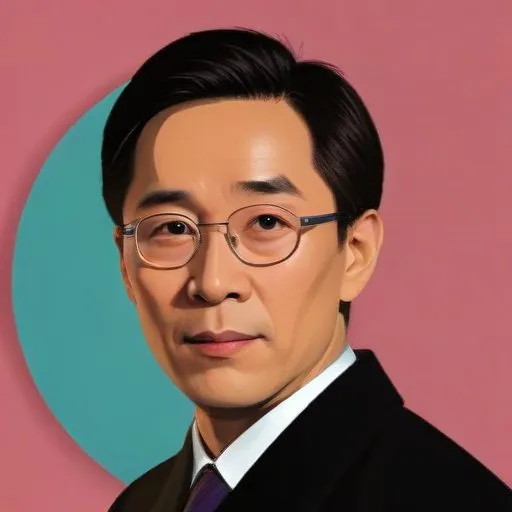
A Chinese dissident who exposed the country's forced labor camps and human rights abuses through his activism and writings, earning him international recognition and awards.
Harry Wu, a Chinese-American human rights activist, is renowned for his fearless crusade against China's Laogai system, a network of forced labor prison camps, where he spent 19 years of his life. Through his tireless efforts, Wu exposed the atrocities committed within these camps, earning him the title of "China's most famous dissident."
Born on February 8, 1937, in Shanghai, Wu grew up in an affluent family. His father was a banking official, and his mother descended from a family of wealthy landlords. Wu's early life was marked by academic pursuits, and he studied at the Geology Institute in Beijing, where he earned a degree.
In 1956, during the Hundred Flowers Campaign, the Communist Party encouraged citizens to express their true views of the government. Wu, then 19, cautiously voiced his opinions, disagreeing with the Soviet Union's military intervention in Hungary and the practice of labeling people into different categories. This act of dissent marked the beginning of Wu's turbulent relationship with the Chinese government.
In 1960, Wu was arrested and charged with being a counterrevolutionary rightist. He was sentenced to 19 years in 12 different Laogai camps, where he endured forced labor, mining coal, building roads, clearing land, and planting and harvesting crops. Wu's accounts of his imprisonment are stark, describing beatings, torture, and near-starvation, as well as witnessing the deaths of many fellow prisoners.
After his release in 1979, Wu immigrated to the United States, where he became a naturalized citizen. In 1992, he founded the Laogai Research Foundation, a non-profit organization dedicated to exposing the atrocities of the Laogai system and promoting human rights in China. Wu's work led to the publication of several books, including "Laogai: The Chinese Gulag" and "Troublemaker: One Man's Crusade Against China's Cruelty."
Wu's courage and dedication have earned him numerous awards, including the Democracy Award, the Freedom Award, and the Robert F. Kennedy Human Rights Award. He was also nominated for the Nobel Peace Prize in 1996.
Wu's experiences in the Laogai camps profoundly shaped his philosophical beliefs. He advocated for the importance of human rights, democracy, and freedom, and was a vocal critic of totalitarian regimes. Wu's unwavering commitment to exposing the truth earned him recognition as a champion of human rights.
Harry Wu's life serves as a testament to the power of courage and conviction. Through his activism, he brought international attention to the Laogai system, inspiring a new generation of human rights advocates. Wu's legacy continues to inspire, a beacon of hope for those fighting against oppression and for the protection of human dignity.
58 Years Old
A Chinese journalist and activist who led the Tiananmen Square protests in 1989, known for his bold speeches and defiance against the government.
70 Years Old
A Chinese dissident and human rights activist, known for his role in the Tiananmen Square protests and his advocacy for democracy and freedom of speech in China.
