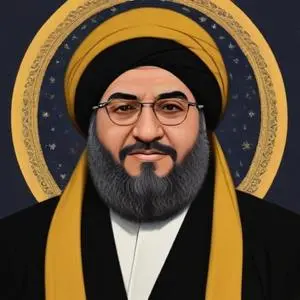
Hassan Nasrallah: The Unyielding Leader of Hezbollah
A Cleric, a Politician, and a Militant: Nasrallah's Rise to Prominence
Hassan Nasrallah is synonymous with Hezbollah, the Shia Islamist political party and militant group that has been at the forefront of Lebanon's turbulent political landscape. As the secretary-general of Hezbollah, Nasrallah has been the driving force behind the organization's military and political strategies, earning him both admiration and criticism from across the globe.
Early Life and Education
Born on August 31, 1960, in Bourj Hammoud, a suburb of Beirut, Nasrallah was the ninth of ten children in a Shia family. His father, Abdul Karim Nasrallah, was a fruit and vegetable seller who instilled in Hassan a strong sense of religiosity. Hassan's interest in theological studies led him to attend the al-Najah school and later a public school in the predominantly Christian neighborhood of Sin el Fil, Beirut.
The Making of a Militant Leader
Nasrallah's journey into the world of militancy began when he briefly joined the Amal Movement, a Shia political party, before moving on to study at a Shia seminary in Baalbek. It was during this period that he was influenced by the Iranian Revolution, which had a profound impact on his beliefs and ideology. Nasrallah's leadership skills and charisma soon caught the attention of Hezbollah's founders, who were impressed by his passion and conviction.
Rise to Power and Leadership
Nasrallah's big break came in 1992, when he became the leader of Hezbollah after his predecessor, Abbas al-Musawi, was assassinated by an Israeli airstrike. Under Nasrallah's leadership, Hezbollah underwent a significant transformation, acquiring rockets with a longer range and striking at northern Israel. This shift in strategy was instrumental in forcing Israel's withdrawal from southern Lebanon in 2000, a move that greatly increased Hezbollah's popularity and solidified Nasrallah's position as a key player in Lebanese politics.
A Controversial Figure
Nasrallah's leadership has not been without its controversies. Hezbollah's role in the 2006 Lebanon War, which was sparked by the group's ambush of an Israeli border patrol unit, drew widespread criticism from across the region. Nasrallah's support for
Bashar al-Assad's regime in the Syrian civil war has also been met with opprobrium, with many accusing him of backing a brutal dictator.
Philosophical Contributions and Beliefs
At the heart of Nasrallah's ideology is a deep-seated commitment to Shia Islam and a strong sense of justice. He believes in the importance of resistance against oppression and has been vocal in his criticism of Israel and the United States. Nasrallah's speeches are often laced with references to Islamic scripture and Shia theology, reflecting his conviction that faith must inform political action.
Influence on Modern Society
Love him or hate him, Hassan Nasrallah is a figure who has left an indelible mark on modern society. His leadership of Hezbollah has helped to shape the course of Lebanese politics, while his militant stance has influenced the trajectory of the Middle East conflict. Nasrallah's ability to mobilize and inspire his followers has earned him a reputation as a skilled orator and a master strategist.
Personal Milestones and Key Life Events
- 1960: Born in Bourj Hammoud, Beirut, Lebanon
- 1975: Forced to flee Beirut due to the Lebanese Civil War
- 1980s: Studied at a Shia seminary in Baalbek
- 1992: Became the leader of Hezbollah after Abbas al-Musawi's assassination
- 2006: Led Hezbollah during the Lebanon War
- 2011: Supported Bashar al-Assad's regime in the Syrian civil war
Nasrallah's Legacy
As Hassan Nasrallah continues to chart his course as a militant leader, his legacy remains shrouded in controversy. While some see him as a hero who has stood up to oppressors, others view him as a dangerous extremist who has brought instability to the region. One thing is certain, however: Nasrallah's impact on modern society will be felt for generations to come.
FAQ
What is Hassan Nasrallahs role in Hezbollah?
Hassan Nasrallah is the Secretary-General of Hezbollah, a Lebanese Shia political and militant organization. He has led the organization since 1992, guiding its military, political, and social activities.
How did Hassan Nasrallah become a prominent leader?
Hassan Nasrallahs rise to prominence began in the 1980s, when he became involved in the Islamic Resistance in Lebanon. He was a key figure in the resistance against the Israeli occupation of southern Lebanon and later became the leader of Hezbollah.
What is Hassan Nasrallahs stance on regional issues?
Hassan Nasrallah is a vocal critic of Israeli policies and actions in the region. He has also been critical of Western intervention in the Middle East and has aligned himself with Iran and other Shia forces in the region.
How does Hassan Nasrallah engage with Lebanons political scene?
Hassan Nasrallah has been a key player in Lebanese politics, participating in parliamentary elections and forming alliances with other political parties. He has also been involved in efforts to reform Lebanons governance and economy.
What is Hassan Nasrallahs approach to social issues?
Hassan Nasrallah has emphasized the importance of social justice, education, and healthcare in Lebanon. He has also worked to promote Shia-Muslim unity and coexistence with other religious communities in the country.