


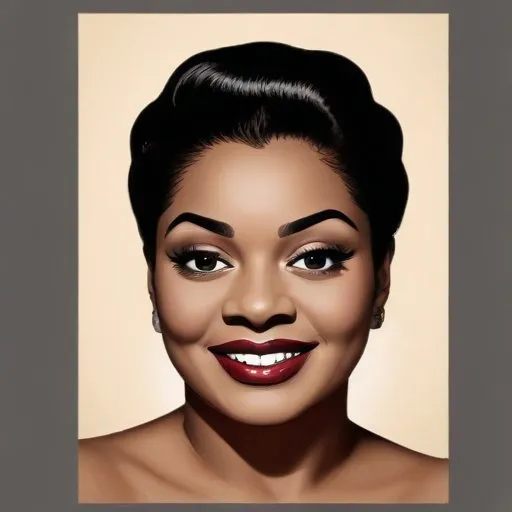
A talented Trinidadian-American singer, actress, and pianist who dazzled audiences with her virtuosic jazz performances and broke racial barriers in Hollywood during the 1940s and 1950s.
Hazel Scott was a Trinidadian jazz and classical pianist and singer who shattered glass ceilings in the music industry with her unparalleled talent, becoming the first black American to host her own TV show in 1950. This trailblazing artist not only mesmerized audiences with her enchanting voice and dazzling piano skills but also fervently advocated for racial equality and social justice, leaving an indelible mark on American cultural history.
Born on June 11, 1920, in Port of Spain, Trinidad and Tobago, Hazel Dorothy Scott was the only child of R. Thomas Scott, a West African scholar, and Alma Long Scott, a classically trained pianist and music teacher. Her family relocated to Harlem, New York City, in 1924, where she grew up surrounded by the vibrant sounds of jazz and classical music.
Under the guidance of her mother, Scott's prodigious talent flourished, and by the age of eight, she began studying with Professor Paul Wagner of the Juilliard School of Music. She was soon labeled a child prodigy, mastering advanced piano techniques and showcasing her extraordinary abilities on the piano and trumpet in her mother's own Alma Long Scott's All-Girl Jazz Band in 1933.
Scott's professional career took off in the 1930s and 1940s, performing on radio programs for the Mutual Broadcasting System and captivating audiences with her unique blend of jazz and classical music. She regularly performed at Cafe Society, a renowned New York City nightclub, while still in her teens.
In the midst of her meteoric rise, Scott remained an outspoken critic of racial discrimination and segregation, using her platform to advocate for greater representation of black Americans in film. Her courageous stance and unwavering dedication to social justice earned her the respect and admiration of her peers and fans alike.
In 1950, Scott made history as the first black American to host her own TV show, The Hazel Scott Show, which showcased her multifaceted talent and infectious charm. However, her career in the United States was marred by her testimony before the House Un-American Activities Committee during the McCarthy era, leading to a decline in her popularity and eventual relocation to Paris, France, in 1957.
In Europe, Scott continued to perform and record, endearing herself to new audiences and cementing her status as an international jazz icon. She returned to the United States in 1967, her career revitalized and her legacy secured as a trailblazing artist and champion of social justice.
Hazel Scott's remarkable life and career serve as a testament to her unwavering dedication to her craft, her people, and her principles. Her pioneering spirit and boundary-pushing artistry paved the way for future generations of musicians, entertainers, and activists, ensuring her place as an American cultural treasure.
Hazel Scott's indelible mark on American cultural history is a testament to the transformative power of art, activism, and determination. Her legacy continues to inspire and empower, ensuring that her trailblazing spirit will be remembered for generations to come.
Born in 1910
A virtuosic clarinetist and innovative bandleader, he revolutionized the swing era with his unique sound and iconic hits like "Begin the Beguine" and "Stardust".
Born in 1904
A legendary jazz pianist and bandleader who led a iconic orchestra, blending swing and blues to create a unique sound that influenced generations of musicians. Known for his distinctive "less-is-more" style and hits like "April in Paris" and "One O'Clock Jump".
Born in 1915
Legendary jazz vocalist and actress known for her expressive, emotive singing style and iconic songs like "God Bless the Child" and "Strange Fruit".
Born in 1917
A virtuosic jazz vocalist known for her pure, expressive tone, impeccable phrasing, and incredible scat singing abilities. She won 13 Grammy Awards and recorded over 200 albums.
Born in 1899
A legendary jazz pianist, composer, and bandleader who revolutionized the genre with his unique style and iconic compositions, such as "Take the A Train" and "Mood Indigo".
Born in 1901
A legendary jazz musician who revolutionized the genre with his unique trumpet playing and raspy vocals, leaving an indelible mark on American music.
Born in 1909
A virtuosic clarinetist and bandleader, known as the "King of Swing," who revolutionized jazz music with his energetic and sophisticated style, leading a racially integrated orchestra in the 1930s.
Born in 1919
A legendary singer, pianist, and TV host who charmed audiences with his smooth, velvety voice and effortless style, leaving a lasting mark on the music industry.
