


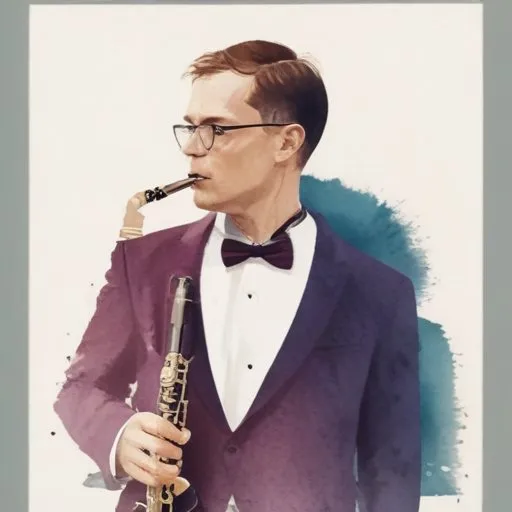
A renowned clarinet virtuoso of the early Romantic era, celebrated for his technical mastery and expressive performances, particularly in Mozart's clarinet concertos.
Heinrich Baermann, a German clarinetist, is renowned for his unparalleled virtuosity and immense influence on the development of the clarinet repertoire during the Classical and Romantic eras. His exceptional skill and mastery of the instrument led numerous composers, including Felix Mendelssohn, Carl Maria von Weber, and Giacomo Meyerbeer, to create works specifically for him, cementing his status as one of the most important clarinetists in history.
Born on February 14, 1784, in Potsdam, Germany, Baermann began his musical journey at a young age. He received his initial training from Joseph Beer at the military school in Potsdam, before catching the attention of Prince Louis Ferdinand of Prussia, who sponsored his further education in Berlin under the guidance of Franz Tausch.
In 1807, Baermann joined the court orchestra of Munich, where he remained until his retirement in 1834. During this period, he became an exponent of the new style of playing the clarinet, using the reed on the bottom lip, and exploited the improved agility and flexibility offered by modern instruments made by Griesling & Schlott. His remarkable dynamic range and technique earned him accolades and recognition across Europe.
Baermann's talent and reputation inspired many composers to create works for him. Some notable collaborations include:
These collaborations not only showcased Baermann's mastery of the clarinet but also contributed significantly to the development of the Romantic clarinet repertoire.
Baermann's impact on the classical music world is still felt today. He is credited with elevating the clarinet to a solo instrument, paving the way for future generations of clarinetists. His performances and commissions helped shape the course of classical music, leaving an indelible mark on the Romantic era.
Baermann's legacy extends beyond his own lifetime, influencing the development of classical music and inspiring future generations of musicians. His story serves as a testament to the power of dedication, hard work, and the pursuit of excellence in the world of music.
Born in 1770
A musical genius who expanded the possibilities of classical music, creating iconic symphonies and piano sonatas that continue to inspire and influence generations of artists.
Born in 1833
A renowned pianist and composer, he crafted complex, expressive works that blended traditional and innovative techniques, leaving an indelible mark on classical music.
Born in 1810
A renowned Romantic-era composer and influential music critic, known for his expressive and emotionally charged works, including symphonies, piano music, and art songs.
Born in 1809
A renowned 19th-century musician who masterfully blended classical and romantic styles, creating iconic works like the "Wedding March" and "Elijah" oratorio. His compositions continue to inspire and influence generations of artists.
Born in 1811
A virtuosic pianist and composer who revolutionized classical music with his technically demanding and emotionally expressive works, blending Hungarian folk influences with Romantic-era drama.
Born in 1813
A renowned composer of iconic operas like La Traviata and Aida, known for his masterful blending of drama and music. His works continue to captivate audiences worldwide.
Born in 1841
A Czech composer and academic who blended folk influences with classical music, creating iconic works like the "New World Symphony".
Born in 1840
A renowned Russian composer and educator, he is best known for his iconic and beloved ballets, such as Swan Lake and The Nutcracker, which continue to enchant audiences worldwide.
