


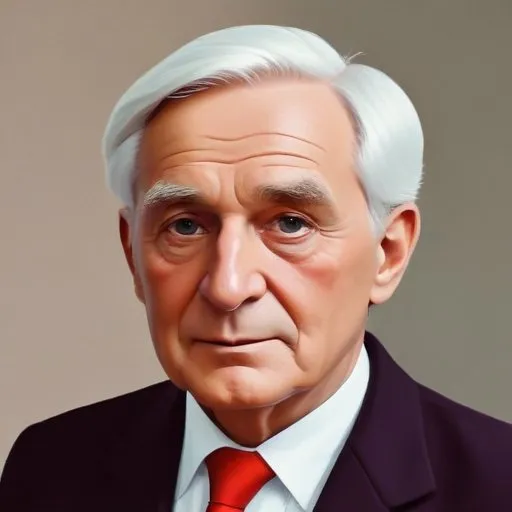
A German-American sculptor and educator who created figurative and abstract works, teaching at institutions like Yale and Harvard, and exhibiting at prominent museums. His sculptures often explored the human form and emotional expression.
Renowned for his exquisite animal sculptures, Heinz Warneke was a German-American artist who played a pivotal role in the direct carving movement, earning him a revered place in the annals of 20th-century American sculpture. His masterpieces, characterized by their realism, elegance, and emotional depth, continue to captivate art enthusiasts to this day.
Born as Heinrich Johann Dietrich Warneke on June 30, 1895, in Hagen bei Leiste, a small village near Bremen, Germany, Warneke's artistic journey began at the Academy of Fine Arts in Berlin. Under the guidance of esteemed teachers, including Karl Blossfeldt, he honed his skills and developed a passion for sculpture.
In 1927, Warneke relocated to Paris, where he spent five years refining his craft. During this period, he was influenced by social realism, Art Deco, and primitivism, which would later become hallmarks of his distinctive style. His sculptures from this era, marked by their fluid lines, dynamic poses, and emotional intensity, showcased his growing confidence as an artist.
Warneke's move to New York in 1923 marked the beginning of a new chapter in his career. In the 1930s, he received multiple commissions from the Works Progress Administration (WPA), which enabled him to create large-scale public sculptures that showcased his talent. These works, often depicting animals in their natural habitats, demonstrated his ability to balance realism with lyricism.
Warneke's commitment to nurturing the next generation of artists led him to teach sculpture at various institutions, including George Washington University and the Corcoran School of Art in Washington, D.C. (1943-1968). His dedication to sharing his knowledge and expertise had a lasting impact on the American art scene.
Heinz Warneke's remarkable body of work, characterized by its beauty, emotion, and technical mastery, continues to inspire artists, art historians, and enthusiasts alike. His legacy serves as a testament to the transformative power of art, reminding us of the importance of preserving our cultural heritage for future generations.
Warneke passed away in 1983 in Connecticut, leaving behind a rich cultural legacy that will continue to captivate and inspire future generations.
Born in 1840
A French sculptor and illustrator famous for creating iconic, emotionally charged figures that capture the human experience, including the iconic symbol of intellectualism, The Thinker.
Born in 1898
A pioneer of modern sculpture, creating abstract, biomorphic forms that evoke a sense of primal emotion, and illustrating books with whimsical, dreamlike drawings.
Born in 1901
A pioneer of modern art, creating elongated, abstract human figures that capture the essence of humanity, and exploring the relationship between sculpture and space.
Born in 1903
A pioneering modernist sculptor, creating abstract, biomorphic forms that explore the relationship between nature and the human experience. Her works often feature smooth, curved surfaces and holes, symbolizing a connection to the natural world.
Born in 1904
A pioneering artist who blended Eastern and Western styles to create innovative sculptures and public spaces that harmonize nature and architecture. Known for iconic designs like the Noguchi coffee table and playgrounds that encourage creative play.
Born in 1890
A pioneer of Constructivist art, creating innovative sculptures that explored space, material, and form, pushing the boundaries of modern art.
Born in 1891
A pioneer of Cubist sculpture, creating abstract, fragmented forms that explored the intersection of art and mathematics. His innovative style paved the way for modernist sculpture.
