


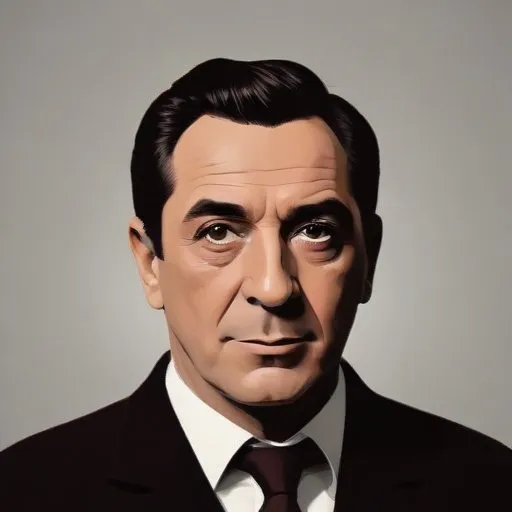
A French filmmaker renowned for crafting suspenseful, psychologically complex thrillers that often explored the darker aspects of human nature, such as in his classic "Les Diaboliques".
Henri-Georges Clouzot, a French film director, screenwriter, and producer, is best known for crafting some of the most iconic thrillers of the 1950s, including The Wages of Fear (1953) and Les Diaboliques (1955). These masterpieces of suspense have stood the test of time, earning Clouzot a reputation as one of the greatest filmmakers of all time.
Born on November 20, 1907, Clouzot's early life was marked by difficulties. After contracting tuberculosis, he spent years bedridden, only to recover and face a new challenge: working in Nazi-occupied France during World War II. Despite these obstacles, Clouzot persevered, eventually finding work as a screenwriter for the German-owned company Continental Films.
Clouzot's breakthrough film, Le Corbeau (1943), sparked controversy with its scathing portrayal of provincial France. The film's critical success was short-lived, as Clouzot was fired from Continental Films before its release. This setback, however, did not deter him. He went on to establish himself as a prominent filmmaker in France, earning critical acclaim and commercial success with films like Quai des Orfèvres (1947) and Miquette (1949).
The 1950s proved to be Clouzot's most fruitful decade, with the release of The Wages of Fear and Les Diaboliques. These thrillers showcased Clouzot's mastery of tension and suspense, earning him international recognition and cementing his status as a master of the genre.
Clouzot's impact extends beyond the world of cinema. His films have inspired generations of filmmakers, including Martin Scorsese, William Friedkin, and Brian De Palma. His legacy is a testament to the power of suspense and the art of storytelling.
Clouzot's personal life was marked by tragedy, including the loss of his wife, Véra Gibson-Amado, who died of a heart attack in 1960. Despite this setback, Clouzot continued to work, albeit at a slower pace, until his death on January 12, 1977. His legacy continues to inspire and thrill audiences to this day.
"The most important thing in life is to stop saying 'I wish' and start saying 'I will'."
"Film is a very powerful medium. It can either confirm the idea that things are wonderful the way they are, or it can reinforce the conception that things can be changed."
| Year | Milestone |
|---|---|
| 1907 | Born on November 20th |
| 1943 | Released Le Corbeau |
| 1947 | Released Quai des Orfèvres |
| 1953 | Released The Wages of Fear |
| 1955 | Released Les Diaboliques |
| 1960 | Lost wife Véra Gibson-Amado |
| 1977 | Died on January 12th |
Born in 1899
Master of suspense, renowned for crafting iconic thrillers that blended psychological complexity with cinematic innovation, leaving an indelible mark on the film industry.
Born in 1889
A renowned French creative force, celebrated for his innovative and surreal works that blurred the lines between literature, art, and cinema, leaving an indelible mark on 20th-century culture.
Born in 1898
A pioneering filmmaker who blended wit, satire, and visual innovation in his movies, leaving a lasting mark on the development of comedy and cinematic storytelling.
Born in 1894
A French cinematic mastermind behind iconic films like "Rules of the Game" and "Grand Illusion", known for his poignant social commentary and innovative storytelling techniques.
Born in 1906
French director and screenwriter behind poetic realist films that captured the essence of working-class life in 1930s-40s France, earning him a reputation as a master of atmospheric storytelling.
Born in 1909
A pioneering filmmaker who explored themes of social class and identity in his critically acclaimed movies, often blending genres and pushing boundaries.
93 Years Old
French New Wave pioneer behind films like "Elevator to the Gallows" and "Murmur of the Heart", known for his lyrical and introspective storytelling style.
94 Years Old
A pioneering filmmaker of the French New Wave, known for directing iconic films like "Jules and Jim" and "The 400 Blows", which redefined cinematic storytelling.
