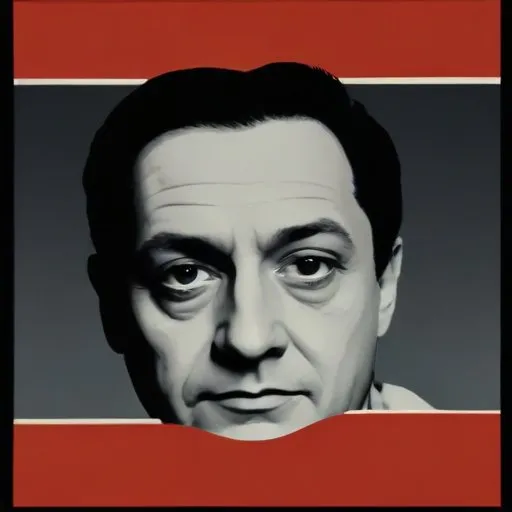
Joseph Losey: The Maverick Film Director and His Enduring Legacy
A Life of Creative Pursuits and Controversy
Joseph Losey, a renowned American theatre and film director, producer, and screenwriter, is best known for his critically acclaimed collaborations with
Harold Pinter, including
The Servant (1963) and
The Go-Between (1971). His distinctive filmmaking style, which often explored themes of social class, identity, and morality, earned him international recognition and numerous awards.
Early Life and Formative Years
Born on January 14, 1909, in La Crosse, Wisconsin, Losey's early life was marked by a keen interest in the arts. He attended Dartmouth College and Harvard University, initially studying medicine before transitioning to drama. This early exposure to the performing arts laid the foundation for his future success.
Rise to Prominence in New York City
In the 1930s, Losey became a prominent figure in New York City's political theatre scene, directing several notable productions. His 1933 production of
Little Old Boy sparked controversy, while his 1935 staging of
Jayhawker, written by
Sinclair Lewis, received mixed reviews. This period saw Losey's development as a bold and innovative director.
Influence of European Theatre and Cinema
Losey's travels to the Soviet Union in 1935 and Germany in the 1940s exposed him to the works of
Bertolt Brecht and
Sergei Eisenstein, respectively. These experiences significantly influenced his approach to theatre and film direction, which would later be reflected in his distinctive style.
Blacklisting and Exile to Europe
The 1950s saw Losey's career take a dramatic turn when he was blacklisted by Hollywood due to suspected communist ties. Forced to relocate to Europe, he continued to work in film, producing some of his most celebrated works, including
The Servant and
The Go-Between.
Major Works and Collaborations
- The Servant (1963) - a psychological drama exploring the complex relationships between a wealthy couple and their manservant
- The Go-Between (1971) - an adaptation of L.P. Hartley's novel, examining the complexities of social class and identity
- Monsieur Klein (1976) - a critically acclaimed drama that earned Losey the César Awards for Best Film and Best Director
Awards and Honors
Throughout his career, Losey received numerous awards and nominations, including:
- Four-time nominee for the Palme d'Or
- Two-time nominee for the Golden Lion
- Two-time BAFTA nominee
- César Awards for Best Film and Best Director for Monsieur Klein
Legacy and Impact on Modern Cinema
Joseph Losey'scontributions to film and theatre continue to inspire contemporary artists and audiences alike. His willingness to challenge social norms and conventions has left an indelible mark on the cinematic landscape.
Final Thoughts
Joseph Losey's life and career serve as a testament to the power of creative vision and perseverance. Despite facing numerous challenges and setbacks, he remained committed to his art, leaving behind a rich and enduring legacy in the world of film and theatre.
FAQ
What was Joseph Loseys most famous film?
Joseph Losey was an American film director, producer, and screenwriter, and his most famous film is arguably The Servant, a 1963 British drama starring Dirk Bogarde and James Fox.
How did Joseph Loseys politics affect his career?
Joseph Losey was blacklisted in Hollywood during the Red Scare of the 1950s due to his alleged communist ties, forcing him to relocate to Europe, where he continued to work in film.
What was Joseph Loseys directing style?
Joseph Losey was known for his meticulous attention to detail and his ability to craft intricate, suspenseful stories that often explored themes of class, power, and morality.
Did Joseph Losey work with any notable actors?
Yes, Joseph Losey worked with many acclaimed actors, including Elizabeth Taylor, Richard Burton, and Harold Pinter, with whom he collaborated on several projects.
What awards did Joseph Losey receive for his work?
Joseph Losey received numerous awards and nominations for his films, including a Palme dOr at the Cannes Film Festival and a BAFTA Award for Best Film.