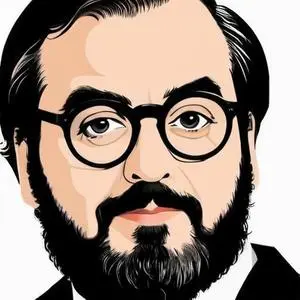
Stanley Kubrick: Visionary Film Director and Cinematic Genius
Unparalleled Attention to Detail and Innovative Storytelling
Stanley Kubrick is widely regarded as one of the greatest filmmakers of all time, known for his meticulously crafted films that pushed the boundaries of storytelling, cinematography, and visual effects. His films were often adaptations of novels or short stories, spanning multiple genres and earning recognition for their intense attention to detail, innovative cinematography, extensive set design, and dark humor.
Early Life and Career
Born on July 26, 1928, in New York City, Kubrick was an average school student but showed a keen interest in literature, photography, and film from a young age. He began teaching himself the aspects of film producing and directing after graduating from high school. Kubrick's early career in photography, working for Look magazine in the late 1940s and early 1950s, laid the foundation for his later success in filmmaking.
Rise to Prominence
Kubrick's breakthrough film,
The Killing, was released in 1956, followed by two collaborations with
Kirk Douglas: the anti-war film
Paths of Glory in 1957 and the historical epic film
Spartacus in 1960. These early successes established Kubrick as a rising talent in Hollywood.
Migration to England and Artistic Freedom
In 1961, Kubrick left the United States due to concerns about crime in the country and creative differences with Hollywood studios. He settled in England, where he would spend the rest of his life, and made his home at Childwickbury Manor. This move allowed him to centralize the writing, research, editing, and management of his productions, giving him almost complete artistic control over his films.
Iconic Films and Collaborations
Kubrick's England-based productions included two films with
Peter Sellers: an adaptation of
Lolita in 1962 and the Cold War black comedy
Dr. Strangelove in 1964. He went on to create some of his most iconic films, such as
2001: A Space Odyssey in 1968,
A Clockwork Orange in 1971,
Barry Lyndon in 1975,
The Shining in 1980, and
Full Metal Jacket in 1987.
Perfectionism and Artistic Control
Kubrick was known for his perfectionism, taking direct control over most aspects of his filmmaking, including writing, editing, color grading, promotion, and exhibition. This level of control allowed him to craft films that were true to his vision, often pushing the boundaries of cinematic storytelling.
Influence on Modern Society and Legacy
Kubrick's films have had a profound impact on modern society, influencing countless filmmakers, writers, and artists. His innovative storytelling, cinematography, and visual effects have raised the bar for filmmaking, and his legacy continues to shape the film industry today.
Philosophical Contributions and Beliefs
Kubrick's films often explored complex philosophical themes, such as the nature of humanity, technology, and existence. His work on
2001: A Space Odyssey is particularly notable for its exploration of existentialism and the intersection of technology and human evolution.
Personal Milestones and Key Life Events
- 1928: Born on July 26th in New York City
- 1956: Released debut feature film, The Killing
- 1961: Moved to England and settled at Childwickbury Manor
- 1968: Released 2001: A Space Odyssey, a groundbreaking sci-fi film
- 1999: Passed away on March 7th, leaving behind a legacy of cinematic excellence
Trivia and Fun Facts
- Kubrick was a voracious reader, consuming over 10,000 books in his lifetime
- He was known for his intense attention to detail, often requiring dozens of takes for a single scene
- Kubrick was a skilled photographer and took many of the still photos used in his films
Awards and Honors
- Academy Award nominations for Best Director and Best Adapted Screenplay for 2001: A Space Odyssey
- BAFTA Awards for Best Film and Best Direction for A Clockwork Orange
- Golden Lion for Best Film at the Venice Film Festival for A Clockwork Orange
Visual Timeline and Milestones

Kubrick's legacy continues to inspire new generations of filmmakers, writers, and artists. His innovative storytelling, cinematography, and visual effects have left an indelible mark on the film industry, cementing his place as one of the greatest filmmakers of all time.
FAQ
What was Stanley Kubricks filmmaking style?
Stanley Kubricks filmmaking style was characterized by his meticulous attention to detail, innovative use of special effects, and exploration of complex themes and ideas.
What are some of Stanley Kubricks most famous films?
Stanley Kubricks most famous films include 2001: A Space Odyssey, A Clockwork Orange, The Shining, and Full Metal Jacket, which are considered some of the greatest films of all time.
Did Stanley Kubrick have a background in photography?
Yes, Stanley Kubrick started his career as a photographer for Look magazine, which influenced his visual style and approach to filmmaking.
What awards did Stanley Kubrick win for his work?
Stanley Kubrick won numerous awards, including an Academy Award for Best Visual Effects for 2001: A Space Odyssey, as well as several BAFTA and Golden Globe awards.
How did Stanley Kubrick influence filmmaking?
Stanley Kubricks work has had a profound influence on filmmaking, inspiring generations of directors and pushing the boundaries of cinematic storytelling and visual style.