


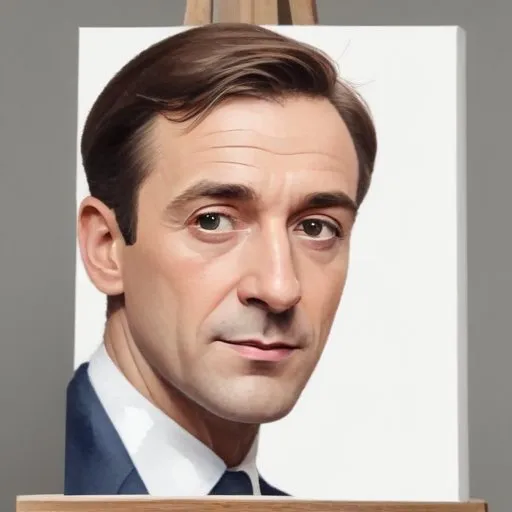
French director and screenwriter behind poetic realist films that captured the essence of working-class life in 1930s-40s France, earning him a reputation as a master of atmospheric storytelling.
Marcel Carné, the renowned French film director, is best known for his poignant and evocative works that exemplify the poetic realism movement. His magnum opus, Children of Paradise (1945), is widely regarded as one of the greatest films of all time, and his other notable films, such as Port of Shadows (1938) and Le Jour Se Lève (1939), continue to captivate audiences with their haunting beauty and fatalistic themes.
Born on August 18, 1906, in Paris, France, Carné's early life was marked by tragedy when his mother passed away when he was just five years old. Despite this, he found solace in the world of cinema, beginning his career as a film critic and eventually working as a camera assistant with director Jacques Feyder.
By the age of 25, Carné had already directed his first short film, Nogent, Eldorado du dimanche (1929), and went on to assist Feyder and René Clair on several films. It was during this period that he met surrealist poet and screenwriter Jacques Prévert, with whom he would collaborate on some of his most iconic films.
Carné's work with Prévert marked the beginning of a successful collaboration that lasted over a dozen years, during which they created some of the most iconic films of the poetic realism movement. This movement, characterized by its fatalistic tragedies and emphasis on the human condition, was a response to the optimism of the preceding French cinema.
Together, Carné and Prévert created films that were both deeply personal and universally relatable. They explored themes of love, loss, and redemption in films like Le Quai des brumes (1938) and Le Jour Se Lève (1939), which are considered some of the greatest classics of the movement.
During World War II, Carné continued to work in the Vichy zone, where he subtly subverted the German occupation's attempts to control art. Despite the challenges, he managed to create some of his most highly regarded films, including Les Enfants du paradis (1945), which was made under difficult conditions and with a team that included several Jewish collaborators.
Carné's influence on modern cinema cannot be overstated. His poetic realism movement paved the way for future generations of filmmakers, including the French New Wave. His films continue to inspire and captivate audiences around the world, and his legacy as a master filmmaker remains unparalleled.
"The cinema is not an art of reality, but an art of unreality."
Carné received numerous awards and honors for his work, including the Grand Prix du Cinéma Français and the Louis Delluc Prize.
Carné's life was marked by both personal and professional milestones. He was openly gay, which was rare for his time, and he was also a vocal critic of the French government's collaboration with the Nazis during World War II.
Throughout his life, Carné remained committed to his art and his vision, leaving behind a legacy that continues to inspire and captivate audiences around the world.
Born in 1900
A French poet and screenwriter who wrote lyrics for iconic songs and scripts for classic films, blending poetry and cinema to evoke powerful emotions.
Born in 1895
A renowned actor of French and Swiss descent, celebrated for his iconic roles in classic films like "Boudu Saved from Drowning" and "The Red Balloon".
Born in 1887
A renowned French actor and producer, known for his unique, expressive acting style and innovative theatrical productions that blended drama and comedy. He founded his own theatre company and produced numerous films and plays.
Born in 1896
A French filmmaker who directed over 70 films, including the classic "Pepe le Moko," and was a key figure in the 1930s-40s French cinema golden age.
Born in 1894
A French cinematic mastermind behind iconic films like "Rules of the Game" and "Grand Illusion", known for his poignant social commentary and innovative storytelling techniques.
Born in 1883
A French politician who served as Prime Minister of France during World War II, known for collaborating with the Nazi regime and implementing anti-Semitic policies. He is infamous for his role in the French Resistance and the Holocaust.
Born in 1889
A renowned French creative force, celebrated for his innovative and surreal works that blurred the lines between literature, art, and cinema, leaving an indelible mark on 20th-century culture.
