


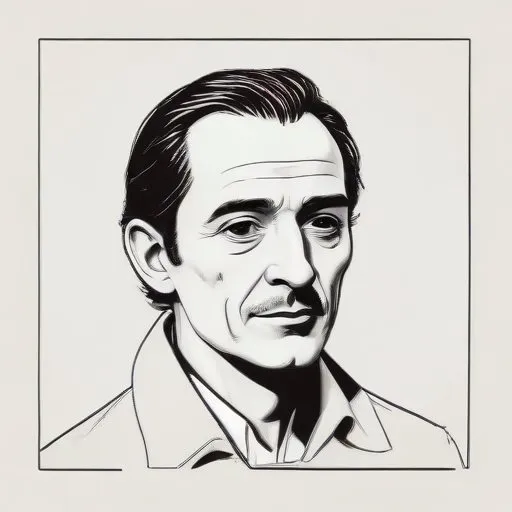
A French poet and screenwriter who wrote lyrics for iconic songs and scripts for classic films, blending poetry and cinema to evoke powerful emotions.
Jacques Prévert is synonymous with French poetry and cinema, best known for his soulful verses and screenplays that continue to captivate audiences to this day. His films, particularly Les Enfants du Paradis (1945), are considered cornerstones of the poetic realist movement, leaving an indelible mark on French cinematic history.
Born in Neuilly-sur-Seine on February 4, 1900, Prévert's early life was marked by a passion for words and a rebellious spirit. After abandoning his studies, he worked at Le Bon Marché department store in Paris before being conscripted into military service during World War I. His experiences during the war and in the Near East would later influence his writing.
Prévert's poetic journey began during his primary school days, where he initially struggled with writing. However, he soon found solace in the Surrealist movement, alongside writers like Raymond Queneau and Marcel Duhamel. His involvement with the agitprop theater company Groupe Octobre further solidified his commitment to left-wing causes and socially conscious art.
Prévert's poetry collections, including Paroles (1946), Spectacle (1951), and La Pluie et le beau temps (1955), showcase his mastery of language and emotional depth. His screenplays, such as Les Visiteurs du Soir (1942) and Les Portes de la Nuit (1946), demonstrate his ability to craft compelling narratives that bridge the gap between poetry and cinema.
Prévert remained a vocal supporter of left-wing causes throughout his life, penning poems in solidarity with figures like Angela Davis. His final project, the animated film Le Roi et l'Oiseau (1980), was dedicated to his memory and features an empty seat at the premiere, reserved for his collaborator and friend, Paul Grimault.
Prévert's work embodies a deep connection with humanity, often touching on themes of love, social justice, and the struggles of the working class. His poetry and films serve as a testament to his unwavering commitment to left-wing ideals and his belief in the transformative power of art.
Prévert's legacy extends far beyond his own creations, inspiring generations of French poets, filmmakers, and activists. His work has been translated into numerous languages, ensuring his poetic voice continues to resonate with audiences worldwide.
"Les feuilles mortes se ramassent à la pelle, / Et les amours mortes aussi." ("Dead leaves are swept away by the bushel, / And dead loves too.") – Jacques Prévert, from the poem "Les Feuilles Mortes"
Prévert's poetic voice continues to echo through the ages, a testament to the power of art to inspire, console, and challenge humanity. His legacy serves as a beacon, guiding future generations of artists, activists, and dreamers.
Born in 1889
A renowned French creative force, celebrated for his innovative and surreal works that blurred the lines between literature, art, and cinema, leaving an indelible mark on 20th-century culture.
Born in 1897
A leading figure of the French Resistance during WWII, he wrote influential poetry and novels that explored the human condition, blending politics and art.
Born in 1880
An Italian-French literary genius who pioneered Cubist poetry, blending fragmented images and multiple narratives to create a new kind of lyrical expression. His work influenced the development of Surrealism and modern art.
Born in 1896
French poet and author who founded Surrealism, a cultural movement that explored the subconscious and the world of dreams. He wrote novels, poems, and essays that continue to influence art and literature today.
Born in 1898
A pioneer of montage editing, he revolutionized filmmaking with his iconic scenes and theories, influencing generations of directors.
Born in 1906
French director and screenwriter behind poetic realist films that captured the essence of working-class life in 1930s-40s France, earning him a reputation as a master of atmospheric storytelling.
Born in 1921
A charismatic actor and singer who starred in iconic films like "On the Waterfront" and "Let's Make Love" alongside Marilyn Monroe, charming audiences with his rugged good looks and smooth vocals.
