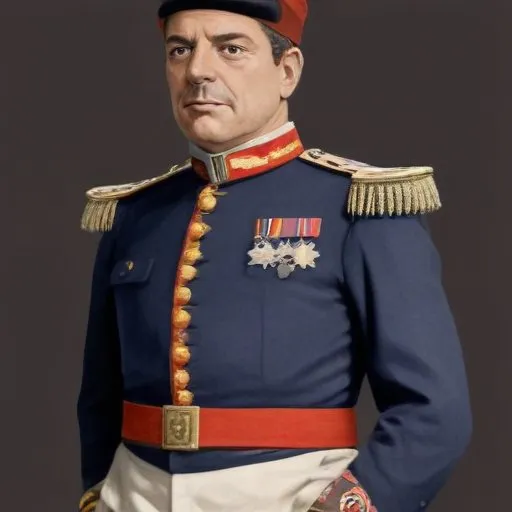
Pierre Laval: The Controversial French Politician Behind Vichy France
A Politician of Contradictions
Pierre Laval, a French politician known for his complex and often contradictory career, served as
Prime Minister of France not once, not twice, but thrice, with his last stint being the most infamous during the German occupation from 1942 to 1944. His life's work is a labyrinth of contrasting ideologies, from his early days as a socialist and defender of the working class to his later years as a fascist sympathizer and collaborator with the Nazi regime.
Early Life and Political Rise
Born on June 28, 1883, in the Auvergne region of France, Laval began his career as a lawyer in 1909, earning a reputation for defending strikers, trade unionists, and leftists against government prosecution. His commitment to pacifism during World War I led him to join the French Section of the Workers' International (SFIO) in 1914, and he was elected to the Chamber of Deputies as a member of the SFIO.
A Shifting Political Landscape
After his defeat in the 1919 election, Laval left the SFIO and became the mayor of Aubervilliers, eventually returning to the Chamber as an independent in 1924. His subsequent rise to the Senate in 1927 marked the beginning of his transformation from a socialist to a conservative. He held various governmental positions, including Minister of Public Works, Minister of Justice, and Minister of Labour, before becoming Prime Minister for the first time in 1931.
The Abyssinia Crisis and Rise to Infamy
Laval's second stint as Prime Minister from 1935 to 1936 was marred by his handling of the Abyssinia Crisis, which was widely criticized as appeasement of
Benito Mussolini's fascist regime. This perceived weakness led to his resignation in 1936. However, his subsequent collaboration with the Nazi regime during World War II cemented his legacy as a controversial figure.
Vichy France and the Darkness of Collaboration
Following France's defeat in 1940, Laval joined
Philippe Pétain's Vichy government, serving as vice-president of the Council of Ministers and later as the head of government from 1942 to 1944. During this period, he displayed brutal treatment towards the French people, sending thousands, including Jews, to forced labor in Poland and Germany. His actions earned him the scorn of the French Resistance and the international community.
Legacy of Controversy
Pierre Laval's life is a testament to the complexity of human nature, marked by contradictions and a series of questionable choices. His legacy serves as a reminder of the dangers of ideological extremism and the importance of moral conviction in politics. His story serves as a cautionary tale, warning against the perils of appeasement and collaboration with oppressive regimes.
Key Life Events and Milestones
- 1883: Born on June 28th in the Auvergne region of France
- 1909: Became a lawyer and started defending strikers, trade unionists, and leftists
- 1914: Joined the French Section of the Workers' International (SFIO) and was elected to the Chamber of Deputies
- 1919: Defeated in the election and left the SFIO
- 1924: Returned to the Chamber as an independent
- 1927: Elected to the Senate
- 1931: Became Prime Minister of France for the first time
- 1935-1936: Served as Prime Minister for the second time, marked by the Abyssinia Crisis
- 1940: Joined Philippe Pétain's Vichy government as vice-president of the Council of Ministers
- 1942-1944: Served as head of government in Vichy France, collaborating with the Nazi regime
- 1945: Executed by firing squad on October 15th for treason
Quotes and Memorable Sayings
"I am a man of the people, and I will always be on their side." - Pierre Laval (1914)
"The future of France lies in the unity of the French people, not in party politics." - Pierre Laval (1931)
"France needs a strong government, and I am willing to provide it." - Pierre Laval (1942)
These quotes, though often contradictory, reveal the complexity of Laval's character and the evolution of his political ideologies throughout his life.
FAQ
What was Pierre Lavals role in the Vichy Government?
Pierre Laval served as the 101st Prime Minister of France and played a key role in the Vichy Government during World War II. He was a strong supporter of collaboration with Nazi Germany and implemented policies that led to the deportation of Jews and other persecuted groups. Sub-question: What were the consequences of Lavals collaboration with Nazi Germany?
What were Pierre Lavals early years and military career like?
Pierre Laval was born in 1883 in France and came from a rural background. He served in the French Army during World War I and was wounded in combat, earning him the Croix de Guerre. After the war, he became involved in politics and eventually rose to prominence as a leader of the French Senate.
How did Pierre Lavals policies impact the French people during World War II?
Pierre Lavals policies as Prime Minister of the Vichy Government had a devastating impact on the French people. He implemented forced labor, rationing, and other measures that hurt the economy and led to widespread suffering. His collaboration with Nazi Germany also led to the persecution of Jews, communists, and other minority groups.
What was Pierre Lavals fate after the liberation of France?
After the liberation of France in 1944, Pierre Laval was arrested and put on trial for treason. He was found guilty and executed by firing squad in 1945.
How is Pierre Laval remembered in French history?
Pierre Laval is remembered as a controversial figure in French history, known for his role in the Vichy Government and his collaboration with Nazi Germany. His legacy is complicated, and he is often viewed as a symbol of French shame and regret during World War II.