


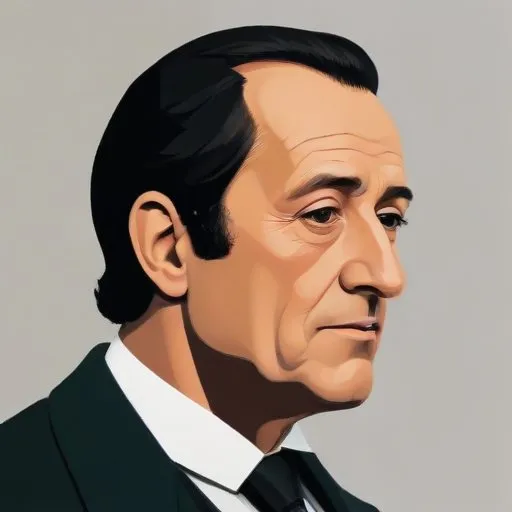
A German-French composer who contributed significantly to the development of classical music, particularly in the genres of opera and symphony.
Renowned for his captivating symphonies, operas, and sacred oratorios, Henri-Joseph Rigel was a German-born composer who left an indelible mark on the Classical era music scene in France. With a repertoire that showcased his mastery of multiple genres, Rigel's compositions continue to enthrall audiences with their elegance, lyricism, and dramatic flair.
Born on February 9, 1741, in Wertheim am Main, Germany, Rigel was fortunate to have a father who was the musical intendant to the local prince, exposing him to the world of music from a tender age. After receiving education in Germany under the tutelage of esteemed composers like Niccolò Jommelli, Rigel moved to Paris in 1767, where he quickly gained recognition in musical circles.
Rigel's Parisian sojourn marked the beginning of a prolific composing career, with a focus on sacred oratorios, operas, and instrumental pieces. Four of his notable oratorios, La sortie d'Égypte (1774), La destruction de Jéricho (1778), Jepht (1783), and Les Macchabées (score lost), demonstrate his skill in blending drama and spirituality. Christoph Willibald Gluck, a prominent composer of the time, praised Rigel's La sortie d'Égypte, solidifying Rigel's reputation as a master of his craft.
In addition to his oratorios, Rigel penned 14 operas, including the opéra comique Le savetier et le financier (1778), which showcased his versatility in the genre. His instrumental works, such as harpsichord pieces, string quartets, symphonies, and concertos, further underscored his mastery of various forms.
Rigel's contributions to Classical era music extend beyond his own compositions. He played a significant role in shaping the musical landscape of 18th-century France, influencing later generations of composers. Today, his works continue to be celebrated for their lyricism, elegance, and dramatic flair, ensuring his legacy as a prominent figure in the world of classical music.
Several recordings of Rigel's compositions have been released, including a 2005 recording of his Six quatuors dialogués, Op. 10, by the Quatuor Franz Joseph, and a 2007 recording of his oratorios La sortie d'Égypte, La destruction de Jéricho, and Jepht by Les Chantres du Centre de Musique Baroque de Versailles. These tributes serve as a testament to Rigel's enduring impact on the world of classical music.
Henri-Joseph Rigel's life's work serves as a poignant reminder of the power of music to transcend time and evoke emotions. As we continue to appreciate his masterpieces, we are reminded of the importance of preserving and celebrating our cultural heritage. Rigel's legacy is a testament to the unwavering dedication of an artist, whose creations continue to inspire and captivate audiences to this day.
Born in 1714
A pioneering opera composer who revolutionized the art form with his innovative and expressive works, blending music and drama in a way that captivated audiences.
Born in 1782
A virtuosic violinist and composer who revolutionized the instrument's technical possibilities, leaving an indelible mark on classical music.
Born in 1756
A child prodigy and master of classical music, he composed over 600 works, including symphonies, operas, and chamber music, that continue to inspire and influence musicians today.
Born in 1770
A musical genius who expanded the possibilities of classical music, creating iconic symphonies and piano sonatas that continue to inspire and influence generations of artists.
Born in 1792
Operatic mastermind behind iconic comedies like "The Barber of Seville" and "William Tell," crafting catchy, witty, and playful music that still delights audiences today.
Born in 1797
A renowned Italian composer of the Romantic era, best known for his operas, particularly "L'elisir d'amore" and "Don Pasquale", which are still widely performed today.
Born in 1801
Operatic mastermind behind bel canto classics like "Norma" and "La Sonnambula", renowned for their beautiful, expressive melodies and dramatic flair.
