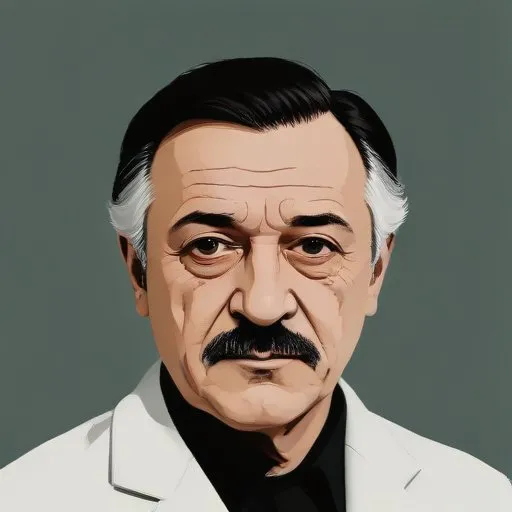
A Master of Mainstream Cinema>
Henri Verneuil, born Ashot Malakian, was a French-Armenian playwright and filmmaker known for his impressive career spanning over four decades. With a filmography boasting over 40 films, Verneuil was a master of creating mainstream, commercial cinema that captivated audiences worldwide.
Early Life and Influences>
Born on October 15, 1920, in Rodosto, East Thrace, Turkey, to Armenian parents, Verneuil's life was marked by turmoil and displacement. In 1924, his family fled to Marseille, France, to escape the Armenian genocide. This traumatic experience would later influence his work, particularly in his novel and subsequent film,
Mayrig, a poignant tribute to his mother.
Rise to Prominence>
After studying at the cole Nationale d'Arts et Metiers in Aix-en-Provence, Verneuil began his career as a journalist and editor of the Armenian magazine,
Horizon. In 1947, he convinced the renowned actor Fernandel to star in his first film, marking the beginning of his prolific career in cinema.
Notable Films and Collaborations>
Verneuil's filmography is characterized by his ability to balance commercial appeal with artistic merit. Some of his most notable works include:
- La Table aux crevés (1951), a black comedy that established him as a rising talent.
- Forbidden Fruit (1952), an adaptation of a Georges Simenon novel, which garnered critical acclaim.
- Le clan des siciliens (1969), a crime drama featuring an all-star cast, including Jean Gabin, Alain Delon, and Lino Ventura.
Awards and Honors>
Throughout his career, Verneuil received numerous awards and nominations, including:
- Oscar nomination
- Palme d'Or nomination
- Locarno International Film Festival award
- Edgar Allan Poe Award
- French Legion of Honor
- Golden Globe Award
- French National Academy of Cinema award
- Honorary César award
Legacy and Influence>
Verneuil's contribution to French cinema is undeniable. He played a significant role in shaping the country's film industry, paving the way for future generations of filmmakers. His ability to create engaging, mainstream cinema that appealed to a broad audience has inspired many, solidifying his place as one of the most prolific and respected filmmakers of his time.
Personal Reflections and Impact>
Verneuil's life and work serve as a testament to the power of perseverance and creativity in the face of adversity. Through his films, he shared his experiences, perspectives, and values with the world, leaving behind a rich cultural heritage that continues to captivate audiences today.
FAQ
Who is Henri Verneuil, the Turkish-French director, producer, and screenwriter?
Henri Verneuil was a Turkish-French director, producer, and screenwriter, born on October 15, 1920, in Rodosto, Ottoman Empire (now Tekirdağ, Turkey). He is best known for his work in French cinema.
What were Henri Verneuils major filmmaking accomplishments?
Henri Verneuil directed and produced over 40 films, including The 400 Blows and The Night Affair, and worked with notable actors such as Jean-Paul Belmondo and Yves Montand.
Did Henri Verneuil have a successful film career?
Yes, Henri Verneuil had a successful film career, earning several César Award nominations and winning the Prix Louis-Delluc in 1959 for his film The Cow and I.
What is Henri Verneuils legacy in French cinema?
Henri Verneuils legacy is one of significant contribution to French cinema, having worked with many notable directors and actors, and producing films that explored themes of identity, morality, and social justice.
What awards did Henri Verneuil receive for his filmmaking career?
Henri Verneuil received several awards for his filmmaking career, including an Honorary César Award in 1996, and a star on the French Walk of Fame.