


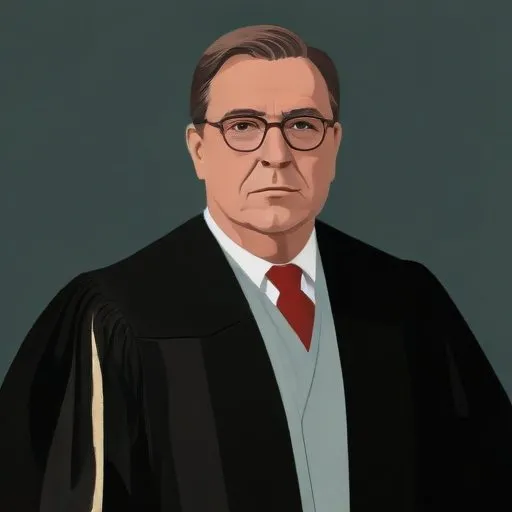
Associate Justice of the US Supreme Court from 1830 to 1844, known for his strong opinions on slavery and states' rights.
Henry Baldwin, a stalwart figure in American history, is renowned for his tenure as an Associate Justice of the Supreme Court of the United States from 1830 to 1844. His judicial acumen and commitment to upholding the law earned him a revered position in the annals of American jurisprudence.
Born on January 14, 1780, in New Haven, Connecticut, Baldwin was a scion of an aristocratic British family with roots tracing back to the 17th century. His parents, Michael Baldwin and Theodora Walcott, instilled in him a strong sense of justice and morality. Baldwin's academic prowess was evident from an early age, and he graduated from Yale College in 1797 at the tender age of 17. He was also an esteemed member of Brothers in Unity, a prestigious academic society.
Following his graduation, Baldwin attended Litchfield Law School and honed his legal skills. He then moved to Pittsburgh, where he established a successful law practice and invested in iron furnaces. This entrepreneurial spirit led him to Crawford County, Pennsylvania, where he became the first district attorney in 1799. Baldwin's juridical expertise and dedication earned him a seat in the United States Congress in 1816, representing Pennsylvania's 14th congressional district. He went on to serve two more terms before resigning in 1822 due to health concerns.
In 1830, President Andrew Jackson nominated Baldwin to the Supreme Court, and he was subsequently confirmed by the Senate. During his 14-year tenure, Baldwin demonstrated a commitment to interpreting the Constitution and upholding the principles of American democracy. His judgments were marked by a keen understanding of the law and a deep respect for the rights of citizens.
Baldwin's judicial philosophy was rooted in a strong belief in states' rights and the limitations of federal power. He advocated for a strict constructionist approach, arguing that the Constitution should be interpreted in accordance with its original intent. This stance often placed him at odds with Chief Justice John Marshall, who championed a more expansive view of federal authority.
Henry Baldwin's legacy is that of a dedicated public servant who devoted his life to upholding the principles of American democracy. His judicial career was marked by a commitment to fairness, justice, and the rule of law. As an Associate Justice of the Supreme Court, Baldwin played a significant role in shaping the course of American history, leaving an indelible mark on the nation's legal landscape.
Baldwin's life was a testament to the power of hard work, perseverance, and dedication to public service. His story serves as an inspiration to generations of Americans, reminding them of the importance of upholding the principles of justice and democracy.
Henry Baldwin passed away on April 21, 1844, leaving behind a legacy that continues to influence American jurisprudence to this day.
Born in 1767
A fiery leader who expanded democracy and shaped the country's economy, known for his populist policies and controversial decisions, including the forced relocation of Native Americans.
Born in 1755
The 4th Chief Justice of the United States Supreme Court, a leading figure in shaping the country's judiciary system and interpreting its Constitution, is renowned for establishing the principle of judicial review. This legacy has had a lasting impact on American law and politics.
Born in 1777
The 5th Chief Justice of the United States, who delivered the infamous Dred Scott decision, ruling that African Americans were not citizens and had no right to sue in court. He's infamous for perpetuating slavery and racism in the US.
Born in 1808
The 6th Chief Justice of the United States, a strong advocate for slavery abolition and a key player in shaping the country's financial system, particularly during the Civil War era.
Born in 1809
Led the United States through its Civil War and ultimately abolished slavery, leaving a lasting legacy in American history.
Born in 1857
The 27th President of the United States was a lawyer and jurist who served as the only person to hold the offices of President and Chief Justice of the United States. He's known for his significant contributions to the country's judicial system.
Born in 1865
The 29th President of the United States, a journalist-turned-politician, led the country through a period of post-war prosperity and scandalous corruption. He's infamous for his administration's numerous scandals and his own extramarital affairs.
Born in 1874
The 31st President of the United States was a humanitarian and politician who led the country through the Great Depression and is known for his humanitarian efforts and infrastructure development. He's also infamous for his inability to mitigate the economic crisis.
