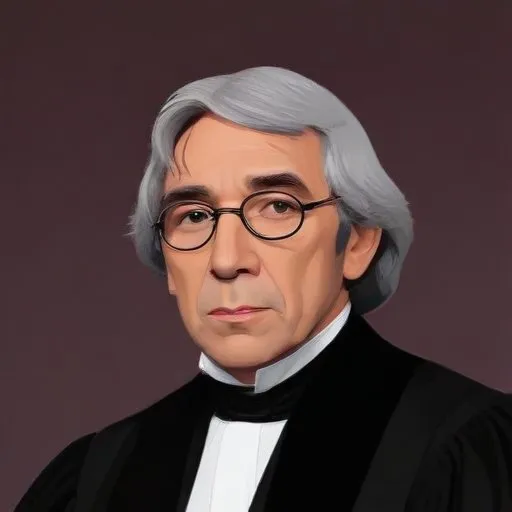
Roger B. Taney: The Controversial Chief Justice
A Legacy of Divisiveness
Roger B. Taney is infamous for delivering the majority opinion in the landmark case of Dred Scott v. Sandford (1857), ruling that African Americans could not be considered U.S. citizens and that Congress could not prohibit slavery in the U.S. territories. This decision sparked widespread outrage and is widely regarded as one of the most reprehensible in U.S. Supreme Court history.
A Life of Public Service
Born on March 17, 1777, in Calvert County, Maryland, Taney was raised in a wealthy, slave-owning family. He was educated at Dickinson College and later studied law at the University of Maryland. Taney's political career began in 1816, when he was elected to the Maryland Senate as a member of the Democratic-Republican Party. He later switched to the Democratic Party and became a key supporter of
Andrew Jackson's presidential campaigns in 1824 and 1828.
Rise to Prominence
Taney's meteoric rise to prominence began when President Jackson appointed him as Attorney General of the United States in 1831. He played a crucial role in the Bank War, a political struggle over the re-charter of the Second Bank of the United States. In 1833, Taney became the Secretary of the Treasury, serving under a recess appointment. Although his nomination was rejected by the Senate, he continued to serve in the cabinet until 1835.
The Taney Court
In 1835, President Jackson appointed Taney as the fifth Chief Justice of the United States, succeeding the late
John Marshall. The Taney Court presided over a significant shift towards states' rights, but did not reject federal authority to the extent that many of Taney's critics had feared. During his tenure, the Court issued several notable decisions, including Charles River Bridge v. Warren Bridge (1837) and Cooley v. Board of Wardens (1852).
Dred Scott v. Sandford
Taney's majority opinion in Dred Scott v. Sandford (1857) sparked widespread outrage and is widely regarded as one of the most reprehensible in U.S. Supreme Court history. The decision declared that African Americans could not be considered U.S. citizens and that Congress could not prohibit slavery in the U.S. territories. This ruling contributed to the growing tensions leading up to the American Civil War.
Taney was the first Catholic to serve on the Supreme Court. He married Anne Phoebe Arundel Key in 1806, and they had six children together. Taney died on October 12, 1864, at the age of 87.
Legacy and Impact
Taney's legacy is marked by controversy and divisiveness. While he played a significant role in shaping the U.S. Supreme Court, his Dred Scott decision is widely regarded as a grave injustice. Despite this, Taney remains an important figure in American legal history, and his contributions to the development of states' rights continue to be studied and debated.
Key Quotes
- "The African is a slave, and is bought and sold, and treated as an ordinary article of merchandise and traffic."
- "The Constitution does not say that all men are created equal."
Fun Facts
- Taney was a member of the Maryland House of Delegates from 1816 to 1821.
- He was appointed as the Attorney General of Maryland in 1827.
- Taney was a strong supporter of Andrew Jackson's presidential campaigns.
Influence on Modern Society
Taney's legacy continues to impact modern society, with many regarding his Dred Scott decision as a turning point in the struggle for civil rights. His contributions to the development of states' rights remain relevant in contemporary debates over federalism and the role of the federal government.
FAQ
Who was Roger B. Taney and what was his significance in American history?
Roger B. Taney was the 5th Chief Justice of the United States, serving from 1836 to 1864. He is remembered for his role in the Dred Scott decision, which ruled that African Americans were not citizens and had no right to sue in court.
What was Roger B. Taneys role in the Dred Scott decision?
Taney wrote the majority opinion in the Dred Scott case, which declared that slavery was protected by the Constitution and that African Americans were not citizens.
How did Roger B. Taneys upbringing influence his views on slavery?
Taney grew up on a Maryland plantation, where his family owned slaves. This upbringing likely shaped his pro-slavery views and influenced his decisions as Chief Justice.
What is Roger B. Taneys legacy in American law?
Taneys legacy is complex and controversial. While he was a respected jurist, his support of slavery and his role in the Dred Scott decision have been widely criticized.
What were Roger B. Taneys early years like?
Taney was born in 1777 in Maryland and studied law at Dickinson College. He served in the Maryland legislature and later became a successful lawyer before being appointed to the Supreme Court.