


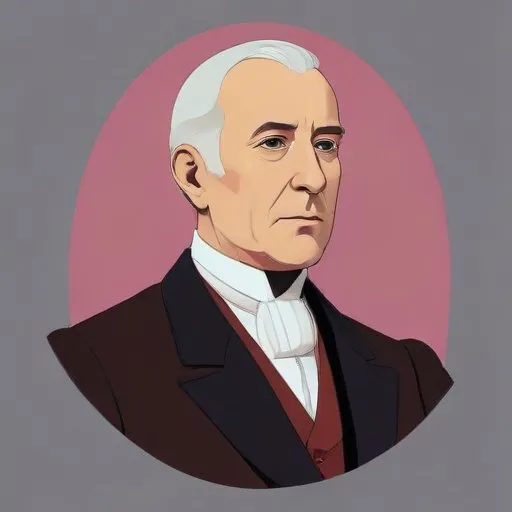
A medieval nobleman and politician who played a significant role in the Wars of the Roses and was a loyal supporter of King Edward IV. He was also a skilled military leader and fought in several battles.
Henry Berkeley, 7th Baron Berkeley, is renowned for his illustrious career as an English peer and politician, serving as Lord Lieutenant and Vice-Admiral of Gloucestershire. His remarkable life, spanning nearly eight decades, was marked by significant contributions to the realm of politics, as well as his notable ancestral lineage.
Henry Berkeley was born on November 26, 1534, just nine weeks and four days after his father's passing. He was the son of Thomas Berkeley, 6th Baron Berkeley, and his second wife, Anne Savage. His father's earlier marriage to Mary Hastings, daughter of George Hastings, 1st Earl of Huntingdon, had yielded no issue.
Berkeley's esteemed career began with his knighting as a Knight of the Bath on September 28, 1553, at the coronation of Mary I. A year later, he witnessed the restoration of Berkeley Castle and its related manors, which had been granted to Henry VII and his heirs male, but had since expired with Edward VI's demise.
In 1555, Berkeley received livery of his lands, despite still being underage. He went on to rebuild Caludon Castle around 1580, which had fallen into disrepair after Thomas Mowbray, 1st Duke of Norfolk, was banished from England in 1398.
Berkeley's most notable appointment came in 1603, when he became Lord Lieutenant of Gloucestershire, a position he held until his passing in 1613.
Henry Berkeley, 7th Baron Berkeley, passed away on November 26, 1613, leaving behind a will dated December 20, 1612. He was succeeded by his grandson, George Berkeley, 8th Baron Berkeley. Although his inheritance was somewhat reduced due to the recent resolution of a 192-year-old legal feud over the estates with the Lisle family, Berkeley's legacy as a prominent peer and politician endured.
Though Berkeley's life and career were shaped by the complexities of 16th-century politics, his contributions to the realm of peerage and his ancestral lineage continue to resonate in modern society. His remarkable story serves as a testament to the enduring legacy of the Berkeley family, whose influence has spanned centuries.
Born in 1685
An Irish bishop and philosopher who argued that reality is purely spiritual and that objects only exist as perceived by the mind. He's known for his idealist philosophy and the phrase "to be is to be perceived."
