


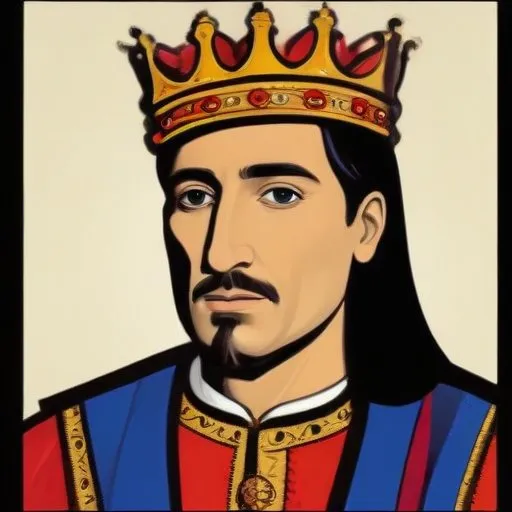
King of Castile from 1214 to 1217, known for his brief and tumultuous reign marked by conflicts with the nobility and the Church. He died at a young age under mysterious circumstances.
Henry I of Castile, also known as Enrique I, left an indelible mark on Spanish history despite his short-lived reign. This young king's life was a flurry of drama, power struggles, and untimely demise, making him one of the most fascinating figures of the medieval period.
Henry's ascension to the throne began in 1211, when his older brother Ferdinand's sudden passing made him the heir apparent. Just three years later, Henry's father, Alfonso VIII of Castile, passed away, leaving the 10-year-old Henry to inherit the crown. Due to his tender age, his older sister Berengaria of Castile, wife of Alfonso IX of León, took on the role of regent.
Henry's romantic life was as tumultuous as his reign. In 1215, he married Mafalda of Portugal, daughter of Sancho I of Portugal. However, the union was short-lived, as Pope Innocent III annulled the marriage in 1216 due to consanguinity. Henry soon became betrothed to his second cousin Sancha, heiress of León, but fate had other plans.
Henry's life was cut tragically short in 1217, when a loose tile from a roof fell, killing him in Palencia at the tender age of 13. His body was laid to rest at Las Huelgas monastery in Burgos.
Following Henry's untimely death, his sister Berengaria succeeded him, only to relinquish the throne in favor of her son Ferdinand III. Despite his brief reign, Henry I's impact on Castilian history is undeniable, serving as a poignant reminder of the turmoil and intrigue that characterized medieval politics.
Henry I's brief reign was marked by the challenges of navigating the complex web of alliances and rivalries that characterized medieval Spain. His tragic demise at such a young age serves as a poignant reminder of the fragility of life and the uncertainties of power.
Born in 1155
King of Castile from 1158 to 1214, known for his military campaigns, particularly the Battle of Las Navas de Tolosa, which marked a significant turning point in the Reconquista.
