


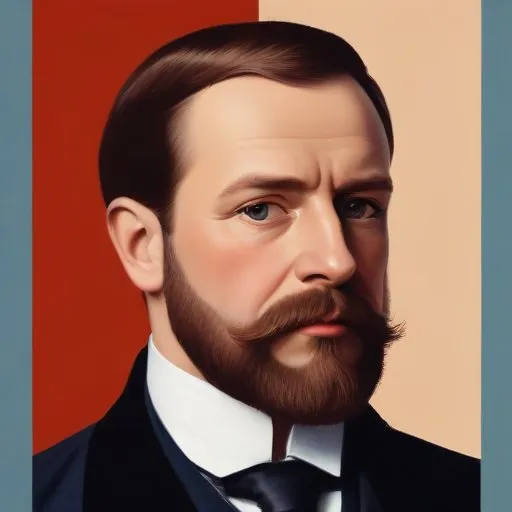
Developed precision engineering techniques and invented the screw-cutting lathe, revolutionizing manufacturing and enabling mass production.
Henry Maudslay, a pioneer in machine tool innovation, is renowned for his groundbreaking invention of a metal lathe that enabled the mass production of standardized screw thread sizes, revolutionizing the manufacturing industry and laying the foundation for the Industrial Revolution. His ingenious creation, circa 1800, facilitated the development of interchangeable parts, transforming the landscape of modern manufacturing.
Born on August 22, 1771, in Woolwich, Kent, Henry Maudslay was the fifth of seven children to Henry Maudslay, a wheelwright in the Royal Engineers, and Margaret Maudslay (née Whitaker). His father's work at the Royal Arsenal, Woolwich, exposed young Henry to the world of machines and tools, sparking an early interest in mechanical innovation.
At the tender age of 12, Maudslay began his apprenticeship as a powder monkey at the Royal Arsenal, filling cartridges and gaining hands-on experience. Over the next few years, he transferred to a carpenter's shop and later to a blacksmith's forge, where he honed his skills as a blacksmith, specializing in complex forge work.
His exceptional talent and dedication caught the attention of Joseph Bramah, a prominent inventor and entrepreneur, who recruited Maudslay to work at his workshop in Denmark Street, St Giles. Bramah's recognition of Maudslay's prowess marked the beginning of a remarkable partnership that would shape the future of machine tool technology.
Maudslay's crowning achievement, the metal lathe, enabled the production of standardized screw thread sizes, paving the way for mass production and interchangeable parts. This innovation had far-reaching consequences, transforming industries from textiles to engineering and beyond.
His contributions to the Industrial Revolution earned him the distinction of being considered a founding father of machine tool technology. Maudslay's legacy extends beyond his inventions, as his work laid the groundwork for subsequent innovators, influencing the development of modern manufacturing.
Maudslay's life was marked by dedication to his craft, and his relentless pursuit of innovation. Despite his remarkable achievements, he remained humble and committed to his work, leaving behind a legacy that continues to inspire generations of engineers, inventors, and innovators.
Maudslay's inventions and innovations have had a profound impact on modern society, from the manufacturing of precision parts to the development of advanced technologies. His contributions to the Industrial Revolution have shaped the course of human progress, making him an unsung hero of modern industrialization.
Although Maudslay did not receive formal recognition during his lifetime, his work has been celebrated by historians and scholars as a testament to his pioneering spirit and innovative genius.
In the annals of history, Maudslay's name is etched alongside other visionaries who shaped the Industrial Revolution. His story serves as a reminder of the power of human ingenuity and the boundless potential of innovation, inspiring future generations to continue pushing the boundaries of what is possible.
Born in 1736
Improved steam engine efficiency, revolutionizing industry and transportation. Known for his innovative designs and patents that transformed the Industrial Revolution.
Born in 1806
A visionary engineer who revolutionized transportation with innovative designs, including the iconic Clifton Suspension Bridge, which transformed urban landscapes.
Born in 1771
Built steam-powered locomotives, revolutionizing land transportation, and pioneered the use of steam engines in mines.
Born in 1781
Designed the Liverpool and Manchester Railway, a pioneering feat that revolutionized transportation and paved the way for modern rail networks.
Born in 1791
Pioneering scientist who discovered electromagnetic induction, formulated the laws of electrolysis, and invented the first electrical generator, revolutionizing our understanding of electricity and its applications.
Born in 1791
A pioneer in computer science, credited with inventing the first mechanical computer, the Difference Engine, and conceptualizing the Analytical Engine, a precursor to modern computers.
Born in 1815
Pioneering mathematician and computer scientist who wrote the first algorithm intended to be processed by a machine, and is often considered the first computer programmer. Her work on Charles Babbage's Analytical Engine envisioned its potential to go beyond mere calculation and perform any task that could be expressed in a series of steps.
