


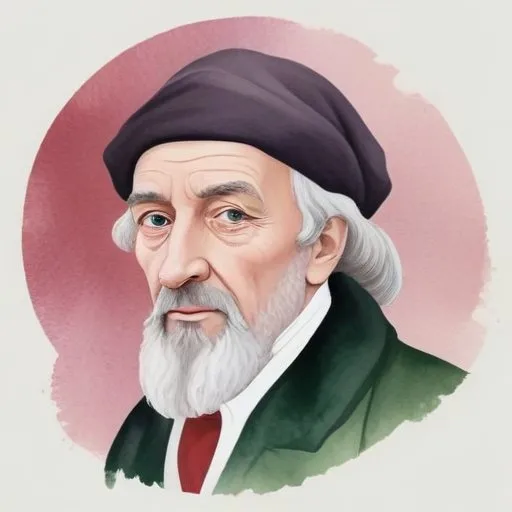
A 17th-century philosopher who developed a philosophical system that combined elements of Neoplatonism, Cartesianism, and Christian mysticism, and is known for his contributions to the development of modern philosophy.
More's philosophical endeavors focused on reconciling faith and reason, attempting to establish the existence of immaterial substance using the principles of mechanical philosophy. His rejection of Cartesian dualism and exploration of spiritualism earned him recognition as a pioneer in his field.
More's academic career was marked by his refusal to accept prominent positions, including the mastership of Christs College, Cambridge. Instead, he chose to focus on teaching and mentoring notable pupils, such as Anne Finch, who later became Lady Conway.
More's philosophical views were shaped by his rejection of Cartesian dualism and his attempt to establish the existence of immaterial substance using mechanical philosophy. He argued that the human soul is a non-material entity, separate from the body.
Henry More's philosophical contributions and spiritual explorations had a significant impact on the development of rationalist theology in the 17th century. His association with prominent figures, such as Lady Conway, further solidified his influence on the intellectual circles of his time.
Through his remarkable life and contributions, Henry More continues to inspire philosophical discussions and spiritual explorations, cementing his place as a prominent figure in the history of rationalist theology.
Born in 1596
Developed influential philosophical and mathematical concepts, including the famous phrase "I think, therefore I am," and laid the foundation for modern Western philosophy.
Born in 1632
A 17th-century thinker who laid the groundwork for modern democracy, arguing that governments derive their power from the people and that individuals have inherent rights to life, liberty, and property.
Born in 1646
Developed calculus independently of Isaac Newton, and made major contributions to the fields of philosophy, politics, and history.
Born in 1632
A 17th-century philosopher and scholar who developed a comprehensive philosophical system that emphasizes God, nature, and human freedom, influencing modern thought on ethics, politics, and religion.
Born in 1561
A 16th-17th century Renaissance figure who pioneered the scientific method and empiricism, and served as a prominent government official.
Born in 1588
A 17th-century philosopher who introduced the concept of social contract, arguing that people voluntarily give up some rights to a sovereign power in exchange for protection and stability. His ideas shaped modern political thought and the nature of government.
Born in 1627
Pioneering scientist who discovered Boyle's Law, which describes the relationship between pressure and volume of gases, and laid foundations for modern chemistry.
Born in 1656
Predicted celestial events, including the return of a comet that bears his name, and made significant contributions to navigation, astronomy, and mathematics.
