


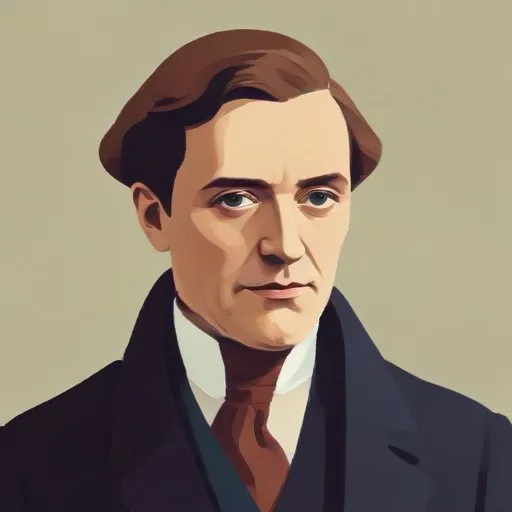
Historian, author, and poet who wrote about British history and naval themes, best known for his patriotic poetry, particularly "Drake" and "Vitai Lampada".
Henry Newbolt is renowned for his stirring poetry, particularly his iconic works "Vita Lampada" and "Drake's Drum", which have become synonymous with British patriotism and naval heritage. As a poet, novelist, and historian, Newbolt's contributions to English literature have left an indelible mark on the nation's cultural identity.
Born on June 6, 1862, in Bilston, Wolverhampton, Newbolt was the son of the Rev. Henry Francis Newbolt, the vicar of St Mary's Church. After his father's death, the family moved to Walsall, where Henry attended Queen Mary's Grammar School and later Caistor Grammar School. He gained a scholarship to Clifton College, where he distinguished himself as head of the school in 1881 and edited the school magazine.
Newbolt's literary career began with the publication of his novel "Taken from the Enemy" in 1892. However, it was his collection of ballads, "Admirals All", published in 1897, that catapulted him to fame. This volume included his most celebrated poem, "Vita Lampada", which has become an anthem of British valor and imperial pride.
Throughout his career, Newbolt published numerous volumes of poetry, including "Drake's Drum" in 1897 and "Songs of the Sea" in 1906. His works often celebrated British naval history, evoking a sense of national pride and patriotic fervor.
In addition to his literary pursuits, Newbolt served as a government adviser on the study of English in England. He was a strong advocate for the importance of English literature in education, believing it to be essential for fostering national identity and cultural heritage.
Newbolt's contributions to education extended beyond his government role. He was a prominent figure in the development of English literature as a academic discipline, and his works continue to be studied in schools and universities today.
Newbolt's literary achievements were recognized with several honors, including the Companion of Honour (CH) in 1921. He was also elected a Fellow of the Royal Society of Literature in 1921.
Newbolt married Margaret Edwina Duckworth in 1892, and the couple had two children, Arthur Francis Newbolt and Margaret Cecilia Newbolt. He resided at 14 Victoria Road in Kensington from 1889 to 1898.
Sir Henry John Newbolt passed away on April 19, 1938, leaving behind a legacy as one of Britain's most beloved poets and a champion of English literature. His works continue to inspire generations, fostering a sense of national pride and cultural heritage.
Newbolt's poetry was deeply rooted in the cultural and historical context of his time. His works reflect the fervor of British imperialism and the nation's pride in its naval heritage. Today, his poetry remains a testament to the power of literature to inspire and shape national identity.
Newbolt's legacy extends beyond his poetry, as his contributions to education and his advocacy for the importance of English literature continue to influence British cultural and educational institutions.
Born in 1865
A renowned author and poet, best known for his imaginative and vivid stories, particularly "The Jungle Book", which have captivated readers of all ages with their timeless themes and memorable characters.
Born in 1809
Poet laureate of the United Kingdom during much of Queen Victoria's reign, famous for patriotic and romantic poems like "In Memoriam A.H.H." and "The Charge of the Light Brigade".
Born in 1850
A Scottish novelist, poet, and essayist who wrote iconic adventure novels, including "Treasure Island" and "Dr. Jekyll and Mr. Hyde", that have captivated readers for generations.
Born in 1859
Creator of the iconic detective Sherlock Holmes, known for his ingenious mysteries and clever plot twists.
Born in 1860
Creator of the beloved character Peter Pan, known for whimsical and imaginative storytelling that has captivated audiences for generations.
Born in 1879
This celebrated author crafted novels and plays that probed the human condition, exploring themes of social class, morality, and personal relationships, with a distinctive wit and insight. Their works continue to captivate audiences with their nuanced portrayals of English society during the early 20th century.
Born in 1873
A pioneering modernist writer, credited with influencing 20th-century literature through experimental novels and poetry that explored the human condition. Known for his impressionistic style and complex characters.
Born in 1874
A renowned writer and thinker who crafted clever essays, poems, and plays that explored the human condition, often with a dash of wit and humor. His works continue to inspire and challenge readers to this day.
