


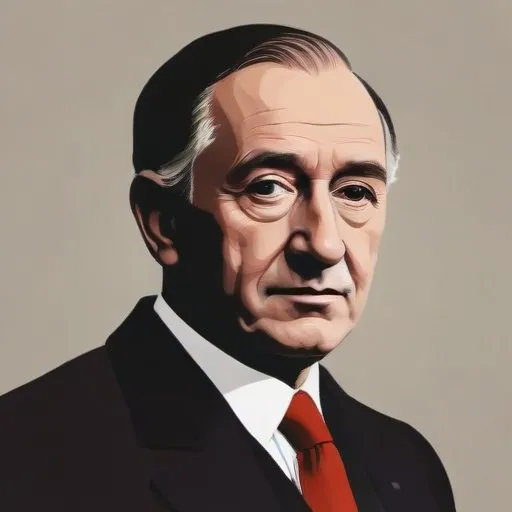
A 17th-century English politician who served as a Member of Parliament and was instrumental in the Glorious Revolution, helping to establish a constitutional monarchy in England.
Henry Powle was a renowned English lawyer and politician who left an indelible mark on the political landscape of 17th century England. As a Member of Parliament and Speaker of the House of Commons, Powle's eloquence and conviction earned him recognition and respect among his contemporaries.
Born on October 18, 1630, at Shottesbrook, Berkshire, Powle was the second son of Henry Powle, who served as sheriff for Berkshire in 1633. He matriculated from Christ Church, Oxford, in 1646 and later admitted to Lincolns Inn in 1647, where he became a barrister in 1654 and bencher in 1659.
In April 1660, Powle was elected Member of Parliament for Cirencester in the Convention Parliament, marking the beginning of his illustrious political career. He was re-elected in 1671 and became a vocal opponent of the court, challenging Lord Chancellor Shaftesbury's practice of issuing writs for byelections during the recess without the speaker's warrant.
In January 1689, Powle's eloquence and leadership skills earned him the position of Speaker of the House of Commons, a role he held until February 1690. During his tenure, he oversaw several crucial debates and played a pivotal role in shaping the country's political landscape.
In addition to his parliamentary duties, Powle was also appointed Master of the Rolls, a prestigious position that further solidified his reputation as a respected lawyer and politician.
Powle was a strong advocate for religious toleration and opposed the Declaration of Indulgence, Charles II's measure to grant Catholics and dissenters greater freedom. Instead, he promoted the passing of the Test Act in 1673, which aimed to maintain the disability for Catholics and dissenters to hold public office.
Henry Powle's life and career were marked by significant historical events, including the English Civil War, the Restoration, and the Glorious Revolution. His contributions to the development of English politics, law, and religion continue to influence modern society, earning him a lasting legacy as one of the most respected figures of 17th century England.
In an era marked by prominent figures such as Oliver Cromwell, Charles II, and John Locke, Powle's unique blend of eloquence, conviction, and political acumen set him apart as a leader who commanded respect and admiration from his contemporaries.
Henry Powle's remarkable journey from a young lawyer to a respected politician serves as a testament to the power of hard work, dedication, and conviction. His unwavering commitment to his principles and his country continues to inspire generations, making him a shining example of leadership and statesmanship.
Born in 1599
Leader of the Parliamentarian forces during the English Civil War, who later ruled England, Scotland, and Ireland as a republican dictator, known for his military victories and radical reforms.
Born in 1584
A renowned 17th-century jurist and scholar who made significant contributions to the fields of law, history, and literature, earning him a reputation as one of the most learned men of his time.
Born in 1623
A 17th-century republican thinker who advocated for individual liberties and constitutional government, influencing the development of modern democratic thought.
