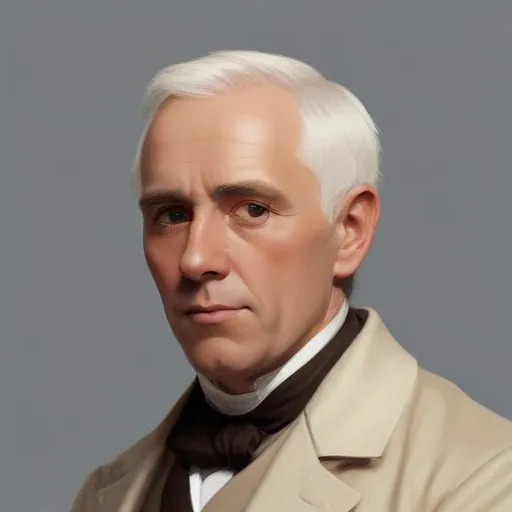
Sir Henry Raeburn: The Scottish Portrait Painter Who Captivated Royalty and Society
A Master of Portraits
Henry Raeburn is renowned for his exquisite portraits that adorned the walls of Scottish and English aristocracy, including that of King George IV. As Portrait Painter to King George IV in Scotland, Raeburn's artistic genius and attention to detail made him a favorite among the elite, earning him a place in the annals of art history.
Early Life and Training
Born on March 4, 1756, in Stockbridge, Edinburgh, Raeburn was orphaned at a young age and placed in Heriots Hospital, where he received an education. His apprenticeship to goldsmith James Gilliland at 15 introduced him to the world of art, where he honed his skills in minute drawings on ivory.
The Rise to Prominence
Raeburn's transition to oil painting was self-taught, but his natural talent and dedication earned him recognition. His earliest known portrait,
George Chalmers (1776), is a testament to his growing skill. The loan of portraits to copy from David Martin, a favorite assistant of
Allan Ramsay, further refined his technique. Soon, Raeburn's artistry was in high demand, and he devoted himself exclusively to painting.
A Royal Appointment and Personal Milestones
Raeburn's marriage to Ann Edgar, a young widow, marked a significant turning point in his life. Her family connections and patronage helped establish him as a prominent portrait painter. In 1802, he was appointed Portrait Painter to King George IV in Scotland, a prestigious honor that cemented his reputation.
Key Works and Contributions
- The Reverend Robert Walker Skating (1790s): A masterpiece that showcases Raeburn's ability to capture the subtleties of human expression.
- The MacNab (1803): A portrait of the chief of the MacNab clan, exemplifying Raeburn's skill in conveying the essence of his subjects.
- Lady Maitland (1812): A stunning portrait that demonstrates Raeburn's use of color and texture to evoke a sense of opulence.
Influence on Modern Society
Raeburn's contributions to Scottish art and culture are immeasurable. His portraits continue to inspire artists and art enthusiasts alike, offering a glimpse into the lives of Scotland's elite during the late 18th and early 19th centuries.
Awards and Honors
Raeburn was elected a member of the Royal Academy in 1815, a testament to his artistic prowess and recognition by his peers.
Legacy
Sir Henry Raeburn's legacy extends beyond his magnificent portraits. He played a significant role in shaping Scotland's artistic identity, leaving behind a rich cultural heritage that continues to captivate audiences worldwide.
FAQ
What style of painting did Henry Raeburn specialize in?
Henry Raeburn specialized in portrait painting, and is considered one of the leading portrait painters of his time. He was known for his use of chiaroscuro and his ability to capture the likenesses and personalities of his subjects.
What were some of Henry Raeburns most famous works?
Some of Henry Raeburns most famous works include The Rev. Robert Walker Skating on Duddingston Loch, The MacNab, and Mrs. Barbara Flucker of Forbes. His portraits are highly regarded for their technical skill and psychological insight.
Who did Henry Raeburn paint portraits of?
Henry Raeburn painted portraits of many prominent Scottish figures, including members of the aristocracy, clergy, and intellectuals. He also painted portraits of ordinary people, including farmers, craftsmen, and women.
How did Henry Raeburns painting style evolve over time?
Henry Raeburns painting style evolved over time, becoming increasingly subtle and nuanced. He experimented with different techniques, including the use of impasto and glazing, and developed a distinctive style that blended realism with romanticism.
What is Henry Raeburns legacy in the art world?
Henry Raeburns legacy in the art world is significant. He is regarded as one of the greatest portrait painters of the 18th century, and his works continue to be admired and studied by art historians and enthusiasts today.