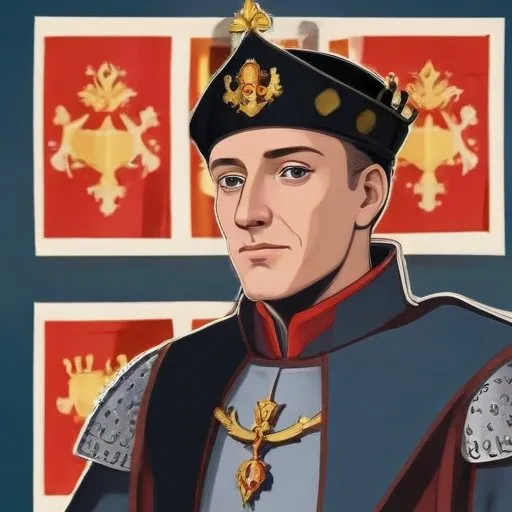
A Life of War and Politics>
Henry V, Duke of Brunswick-Lüneburg, also known as Heinrich der Jüngere, was a prominent figure in the 16th century, known for his numerous military campaigns and his unwavering support for the Catholic Church. As the last Catholic of the Welf princes, Henry V played a significant role in shaping the political landscape of his time.
Early Life and Succession>
Born on November 10, 1489, at Wolfenbüttel Castle, Henry V was the son of Duke Henry IV of Brunswick-Lüneburg, known as Henry the Elder, and his consort Catherine, a daughter of the Griffin duke Eric II of Pomerania. Following his father's death in 1514, Henry V succeeded as the ruling Prince of Wolfenbüttel.
Military Campaigns and Conflicts>
Henry V was involved in several military campaigns throughout his reign, including the Great Diocesan Feud with the Prince-Bishopric of Hildesheim under John IV of Saxe-Lauenburg. Although he lost the Battle of Soltau in 1519, Henry V profited from his support of Charles V in the succession as Holy Roman Emperor, and in 1523, the Bishopric had to cede large territories to Wolfenbüttel.
Loyalty to the Imperial Authority>
Henry V remained loyal to the Imperial authority during the German Peasants' War and assisted Emperor Charles V in the War of the League of Cognac against King
Francis I of France in Italy.
Relationship with Protestantism>
Although Henry V initially leaned towards Protestantism and supported parts of the Augsburg Confession in 1530, he remained a devout Catholic. He was involved in ongoing conflicts with the Protestant Electorate of Saxony and strongly protested when the Calenberg branch of Brunswick-Lüneburg switched to Protestantism.
Personal Life and Controversies>
Henry V's personal life was marked by controversy, particularly his longstanding affair with his mistress, Eva von Trott. He was also involved in a dispute with the Protestant Imperial City of Goslar, which he attacked in 1541 under the pretext of gaining control of the fertile mines of Rammelsberg.
Legacy and Historical Context>
Henry V's legacy is complex and multifaceted, reflecting the tumultuous nature of his time. As the last Catholic of the Welf princes, he played a significant role in shaping the political and religious landscape of his era. His military campaigns and conflicts, as well as his personal controversies, have made him a fascinating and enigmatic figure in history.
Timeline of Major Events>
- 1489: Born at Wolfenbüttel Castle
- 1514: Succeeded as the ruling Prince of Wolfenbüttel
- 1519: Lost the Battle of Soltau
- 1523: Profited from his support of Charles V in the succession as Holy Roman Emperor
- 1528: Assisted Emperor Charles V in the War of the League of Cognac
- 1530: Initially leaned towards Protestantism and supported parts of the Augsburg Confession
- 1541: Attacked the Protestant Imperial City of Goslar
- 1568: Died on June 11
By examining the life and reign of Henry V, Duke of Brunswick-Lüneburg, we gain a deeper understanding of the complexities of the 16th century and the role that individuals played in shaping the course of history.
FAQ
What was Henry V, Duke of Brunswick-Lüneburgs role in the region?
Henry V, Duke of Brunswick-Lüneburg, ruled the region from 1416 to 1461 and played a significant role in the politics and economy of the area.
What was Henry Vs relationship with the German Empire?
Henry V was a loyal supporter of the German Empire and played a key role in Imperial politics, serving as a military leader and advisor to the Emperor.
How did Henry V maintain control over his territories?
Henry V maintained control over his territories through a combination of military strength, strategic alliances, and effective governance, ensuring the stability and prosperity of his domains.
What was Henry Vs legacy in German history?
Henry V left a lasting legacy in German history as a capable and wise ruler who strengthened the position of his dynasty and the region of Brunswick-Lüneburg.
What was Henry Vs relationship with his family?
Henry V was a member of the powerful House of Welf and had close relationships with his family members, including his brother, Frederick II, Duke of Brunswick-Lüneburg.