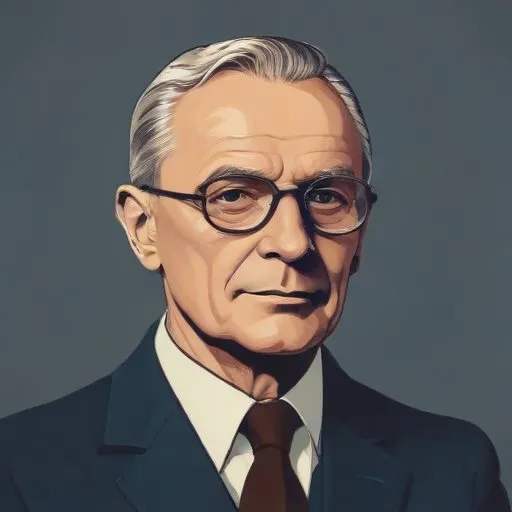
Hermann Glauert: The Pioneering Aerodynamicist Behind Airfoil Theory
A Legacy of Innovation
Hermann Glauert was aBritish aerodynamicist renowned for his groundbreaking contributions to airfoil and propeller theory. His seminal work, "The Elements of Aerofoil and Airscrew Theory," remains a cornerstone of aerodynamic research, shaping the course of modern aviation.
Early Life and Education
Born on October 4, 1892, in Sheffield, Yorkshire, Glauert came from a family of manufacturers. His father, Louis Glauert, was a cutlery manufacturer. Hermann's academic prowess earned him a spot at King
Edward VII School, Sheffield, and later, Trinity College, Cambridge.
Career Highlights and Major Works
Glauert's prolific career at the Royal Aircraft Establishment (RAE) in Farnborough saw him author numerous reports and memoranda on aerofoil and propeller theory. His magnum opus, "The Elements of Aerofoil and Airscrew Theory," published in 1926, became a benchmark for aerodynamic research. This comprehensive treatise introduced the concept of airfoil and wing theory to the English-speaking world, earning him international recognition.
In 1928, Glauert independently developed the Prandtl-Glauert method, an extension of existing aerodynamic theory. He presented his findings in "The Proceedings of the Royal Society," cementing his reputation as a pioneering aerodynamicist.
Academic Supervision and Legacy
In the 1930s, Glauert supervised and mentored the esteemed aerodynamicist and educationalist, Gwen Alston. His guidance and expertise helped shape the next generation of aerodynamicists, ensuring the continued advancement of the field.
Personal Life and Tragic Demise
Glauert's personal life was marked by joy and tragedy. He married fellow RAE aerodynamicist Muriel Barker in 1919, and they had three children: Michael, Audrey, and Richard. Tragically, Glauert's life was cut short in an accident on August 6, 1934, when he was struck by a fragment of a tree being blown up on Aldershot Common. He was just 41 years old.
Glauert's alma mater, King Edward VII School, Sheffield, paid tribute to him, expressing their deep sorrow: "The tragic and incalculable accident which resulted in the death of Hermann Glauert concerned us also, though less intimately."
Legacy and Honors
Hermann Glauert's contributions to aerodynamic research earned him a Fellowship of the Royal Society (FRS). His work continues to inspire and influence modern aerodynamicists, ensuring his legacy endures. Glauert's final resting place is in the Ship Lane Cemetery, Farnborough, alongside his wife Muriel, who passed away in 1949.
Remembering a Pioneer
Hermann Glauert's remarkable life and work serve as a testament to his boundless passion for aerodynamic research. His pioneering spirit continues to propel the aerospace industry forward, leaving an indelible mark on the history of flight.
FAQ
What was Hermann Glauerts contribution to aerodynamics?
Hermann Glauert was a renowned aerodynamicist who made significant contributions to the field of aerodynamics. He is best known for his work on wing theory and his development of the Glauert-Prandtl rule.
What were Hermann Glauerts achievements in aviation?
Hermann Glauerts work on aerodynamics had a lasting impact on aviation. He was a pioneer in the field of wind tunnel testing and his research helped to improve aircraft design and performance.
What was Hermann Glauerts role in the development of the Spitfire?
Hermann Glauert played a key role in the development of the Supermarine Spitfire, a iconic British fighter plane. His expertise in aerodynamics helped to shape the planes design and improve its performance.
How did Hermann Glauerts work influence aircraft design?
Hermann Glauerts work on aerodynamics had a profound impact on aircraft design. His research and theories helped to shape the development of modern aircraft, from the Spitfire to modern commercial airliners.
What is Hermann Glauerts legacy in the field of aerodynamics?
Hermann Glauerts legacy in the field of aerodynamics is immense. He is remembered as one of the pioneers of modern aerodynamics, and his work continues to influence aircraft design and research today.