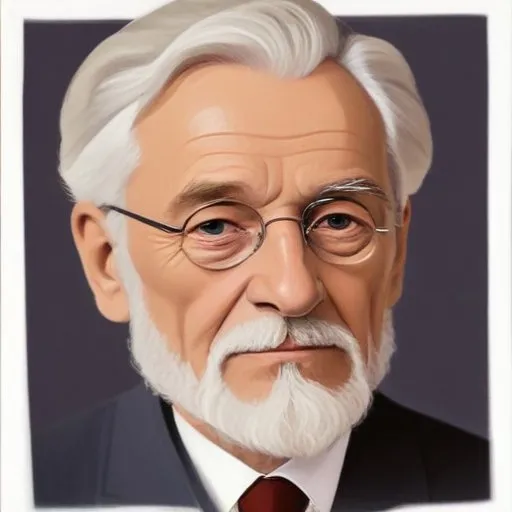
Hermann Grassmann: The German Polymath Who Pioneered Vector Spaces
A Legacy of Mathematical Innovation
Hermann Grassmann was a German mathematician, physicist, and linguist who is best known for his groundbreaking work in developing the concept of vector spaces. His contributions to mathematics, which were largely overlooked during his lifetime, have had a profound impact on modern mathematics, physics, and engineering.
Early Life and Education
Born on April 15, 1809, in Stettin, Prussia (now Szczecin, Poland), Grassmann was the third of 12 children to Justus Günter Grassmann, a minister who taught mathematics and physics at the local gymnasium. Hermann's early education took place at the same gymnasium, where he was an average student until he excelled in his final exams, allowing him to pursue higher education.
Pursuing Multiple Passions
Grassmann studied theology, classical languages, philosophy, and literature at the University of Berlin, but his true passion lay in mathematics and physics. Without formal training in these subjects, he devoted himself to self-study, which ultimately led to his most significant mathematical discoveries.
The Birth of Vector Spaces
In 1844, Grassmann published his seminal work, "Die lineale Ausdehnungslehre, ein neuer Zweig der Mathematik" (The Linear Extension Theory, a New Branch of Mathematics), which introduced the concept of vector spaces. This work, later revised and expanded in 1862, laid the foundation for modern vector calculus and has had a profound impact on fields such as physics, engineering, and computer science.
Contributions to Linguistics
In addition to his mathematical accomplishments, Grassmann made significant contributions to linguistics. He helped to separate language history from language structure, paving the way for modern linguistic research.
Awards and Recognition
Despite his significant contributions to mathematics and linguistics, Grassmann's work went largely unrecognized during his lifetime. It wasn't until the 20th century that his work gained widespread recognition, leading to his being hailed as one of the most important mathematicians of the 19th century.
Personal Milestones and Key Life Events
- 1827: Began studies at the University of Berlin
- 1830: Returned to Stettin and began self-study of mathematics and physics
- 1834: Began teaching mathematics at the Gewerbeschule in Berlin
- 1844: Published "Die lineale Ausdehnungslehre, ein neuer Zweig der Mathematik"
- 1862: Published revised and expanded version of his work, "Die Ausdehnungslehre Vollständig und in strenger Form bearbeitet"
- 1877: Passed away on September 26th
Legacy and Impact
Hermann Grassmann's work has had a profound and lasting impact on modern mathematics, physics, and engineering. His concept of vector spaces has enabled countless scientific and technological advancements, from quantum mechanics to computer graphics. Today, Grassmann is recognized as one of the most important mathematicians of the 19th century, and his work continues to inspire and influence researchers and scientists around the world.
FAQ
What is Hermann Grassmann known for in mathematics?
Hermann Grassmann is known for his work in linear algebra, particularly the concept of vector spaces, and his development of the Grassmann algebra.
What contributions did Hermann Grassmann make to linguistics?
Hermann Grassmann was a German linguist who made significant contributions to the field, including the study of Sanskrit and the development of the Grassmanns law.
What was Hermann Grassmanns most famous work?
Hermann Grassmanns most famous work is his book Die lineale Ausdehnungslehre, which introduced the concept of vector spaces and is considered a foundational work in linear algebra.
How did Hermann Grassmanns work influence other mathematicians?
Hermann Grassmanns work had a significant influence on other mathematicians, including Felix Klein and Henri Poincaré, who built upon his ideas in their own research.
What is Hermann Grassmanns legacy in science?
Hermann Grassmanns legacy in science is as a pioneering mathematician and linguist who made significant contributions to our understanding of language and mathematics.