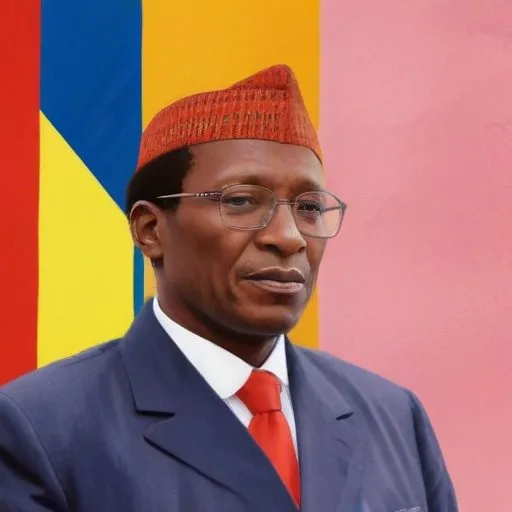
Hissne Habr: The Notorious Chadian Politician and Convicted War Criminal
A Leader Marked by Controversy and Human Rights Abuses
Hissne Habr, a Chadian politician, is known for his ruthless tenure as the 5th President of Chad from 1982 to 1990, during which he oversaw a regime notorious for widespread human rights abuses. His regime was marked by brutal suppression of opposition, forced labor, and numerous atrocities, earning him the distinction of being the first former head of state to be convicted of human rights abuses in the court of another nation.
Early Life and Rise to Power
Born on August 13, 1942, in Faya-Largeau, Chad, Habr came from a Muslim family in northern Chad. He joined the FROLINAT rebels in the first Chadian Civil War against the southern-dominated Chadian government. After a rift with fellow rebel commander Goukouni Oueddei, Habr briefly defected to Felix Malloum's government before turning against him, leading to Oueddei's overthrow in 1982.
Presidency and Human Rights Abuses
As President, Habr established a one-party dictatorship ruled by his National Union for Independence and Revolution. His regime was characterized by
- massacres of political opponents and civilians
- forced labor and forced conscription
- rape, sexual slavery, and other forms of gender-based violence
- arbitrary arrests, torture, and extrajudicial killings
International Support and Libyan-Chadian Conflict
Habr's regime was supported by France and the United States, who provided training, arms, and financing due to his opposition to Libyan leader Muammar Gaddafi. This support enabled Habr to lead Chad to victory in the Libyan-Chadian conflict, culminating in the Toyota War from 1986 to 1987.
Downfall and Conviction
In 1990, Habr was overthrown in a coup d'état led by Idriss Déby and fled into exile in Senegal. In May 2016, an international tribunal in Senegal found Habr guilty of human rights abuses, including rape, sexual slavery, and ordering the killing of 40,000 people, and sentenced him to life in prison.
Legacy and Impact
Habr's regime had a profound impact on Chad, leaving a legacy of
- human rights abuses
- economic stagnation
- political instability
- social unrest
Personal Life and Death
Habr died on August 24, 2021, after testing positive for COVID-19. Despite his controversial life, Habr's legacy serves as a stark reminder of the devastating consequences of human rights abuses and the importance of accountability.
Trivia and Fun Facts
- Habr was known for his colorful and flamboyant attire, often wearing brightly colored suits and hats.
- Despite his brutal regime, Habr was a charismatic leader who was popular among some Chadians.
Philosophical Contributions and Beliefs
Habr's regime was marked by a strong anti-Libyan stance, driven by his opposition to Gaddafi's expansionist policies. However, his human rights abuses and atrocities raise questions about his commitment to democratic values and human dignity.
FAQ
What is Hissène Habrés background in Chadian politics?
Hissène Habré is a Chadian politician and war criminal who served as the President of Chad from 1982 to 1990. He was known for his authoritarian rule and human rights abuses.
What atrocities did Hissène Habré commit?
Hissène Habrés regime was responsible for numerous human rights abuses, including torture, extrajudicial killings, and forced disappearances. He was convicted of crimes against humanity in 2016.
How was Hissène Habré brought to justice?
Hissène Habré was brought to justice through a long and complex process, involving international cooperation and the efforts of human rights organizations. He was arrested in Senegal in 2005 and later extradited to Chad to face trial.
What is Hissène Habrés current status?
Hissène Habré is currently serving a life sentence in a Dakar prison for crimes against humanity. His conviction was upheld by the African Court of Human and Peoples Rights in 2019.
What is the significance of Hissène Habrés case?
Hissène Habrés case is significant because it sets a precedent for holding former heads of state accountable for human rights abuses. It also highlights the importance of international cooperation in bringing perpetrators of serious crimes to justice.