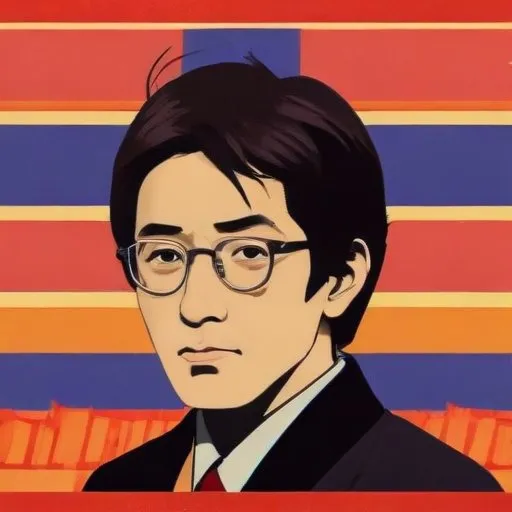
Hitonari Tsuji: Japan's Multifaceted Creative Genius
A Renaissance Man of Words, Music, and Visual Arts
Hitonari Tsuji, born in 1959, is a Tokyo-born Japanese writer, composer, musician, painter, and film director who has left an indelible mark on the world of Japanese literature and arts. With over ten million copies sold worldwide and translations in 20 languages, Tsuji's novels and essays have become bestsellers in Japan and abroad.
Early Life and Career Beginnings
Born and raised in Tokyo, Tsuji's earliest success came as the vocalist, singer, and songwriter for the rock band ECHOS, which he formed in 1981. The band's hit song "ZOO" sold over a million copies, setting the stage for Tsuji's future creative endeavors. In the late 1980s, Tsuji began to focus on writing, publishing his debut novel "Pianissimo" in 1989, which won the prestigious Subaru Prize for Literature in 1990.
Literary Achievements and Accolades
Tsuji's writing career has been marked by numerous awards and recognitions. In 1997, he was awarded the esteemed Akutagawa Prize for his novel "Kaikyo no Hikari" (Light from the Straits). Two years later, he received the prestigious Prix Femina Award, a French literary prize, for the French translation of his novel "Le Boudda blanc" (The White Buddha).
Film Directing and Visual Arts
In addition to his literary pursuits, Tsuji has also made a name for himself in the world of film. He has directed ten films, including "Hotoke" (2001) and "Filament" (2002), which were officially presented at the 51st Berlinale and the 37th Karlovy Vary International Film Festival, respectively. Tsuji's direction of "Filament" earned him a special mention in the Ecumenical Jury Award category.
Teaching and Editing
From 2007 to 2016, Tsuji served as a professor at Kyoto University of Art and Design. In 2016, he launched a web magazine entitled "Design Stories," for which he currently serves as editor-in-chief.
Personal Life and Relationships
Tsuji has been married twice, first to actress Kaho Minami from 1995 to 2000, with whom he had a son. His second marriage was to singer and actress Miho Nakayama from 2002 to 2014, with whom he had another son. After their divorce, Tsuji retained custody of their son and continued to reside in Paris, France.
Legacy and Impact
Through his diverse creative endeavors, Hitonari Tsuji has left an indelible mark on Japanese literature, music, and film. His work continues to inspire and influence new generations of artists and writers, solidifying his position as one of Japan's most multifaceted and innovative creative geniuses.
- Notable Works: "Pianissimo", "Kaikyo no Hikari", "Le Boudda blanc", "Hotoke", "Filament"
- Awards and Honors: Subaru Prize for Literature, Akutagawa Prize, Prix Femina Award, Ecumenical Jury Award
FAQ
What is Hitonari Tsujis most famous work?
Hitonari Tsuji is best known for his novel The World of GOLDEN EGGS, which was adapted into a successful anime series and video game.
What inspires Hitonari Tsujis writing style?
Hitonari Tsujis writing is influenced by his love of science fiction, fantasy, and mystery, as well as his experiences as a composer and director.
Has Hitonari Tsuji worked on other notable projects?
Yes, Hitonari Tsuji has worked on various projects, including video games, manga, and television shows, showcasing his versatility as a creator.
What themes does Hitonari Tsuji often explore in his work?
Hitonari Tsujis work often explores complex themes, such as human relationships, identity, and the intersection of technology and society.
How does Hitonari Tsujis music career influence his writing?
Hitonari Tsujis musical background informs his writing, as he often incorporates musical elements and themes into his stories.