


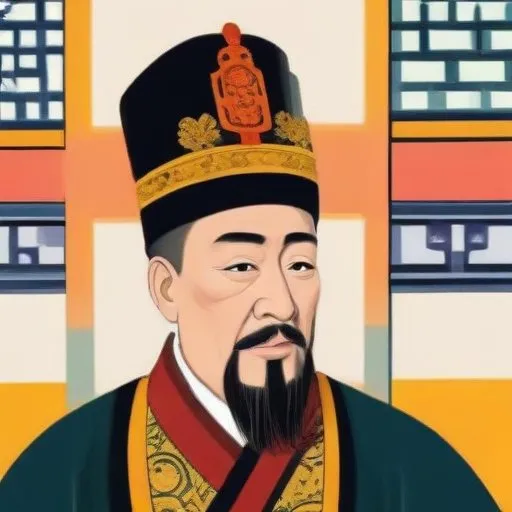
The seventh emperor of the Ming dynasty, known for his wise and benevolent rule, which brought a golden age of peace and prosperity to China. He reformed the government, reduced taxes, and promoted education and the arts.
Hongzhi, also known as the Emperor Xiaozong of Ming, was the tenth emperor of the Ming dynasty, reigning from 1487 to 1505. He is renowned for his wise and peaceful governance, earning him the era name "Hongzhi," meaning "great governance."
Zhu Youcheng, the personal name of Hongzhi, was born on July 30, 1470. His early life was marked by turmoil, as his father, the Chenghua Emperor, and his favorite concubine, Lady Wan, eliminated potential heirs to the throne. Fortunately, the young prince was saved by the former empress and reunited with his father at the age of five, when he was named crown prince.
After ascending the throne, Hongzhi's administration was guided by Confucian ideology. He was known for his diligence and hard work, closely overseeing all state affairs. He implemented measures to
These reforms marked a rare period of harmonious cooperation between the emperor and his grand secretaries and ministers during the Middle Ming period. Hongzhi also encouraged his ministers to openly express their opinions and even criticize his decisions, leading to a more transparent government and revitalized authorities.
Under Hongzhi's order, the Great Ming Code was updated and supplemented. This significant legal reform had a profound impact on the empire's justice system.
The empire's economy thrived under Hongzhi's rule, and the government addressed the shortage of currency by resuming the production of coins that had been abolished in the 1430s. This move helped to stimulate trade and commerce.
Hongzhi's wise and peaceful governance earned him a lasting legacy, marking a golden period in the Ming dynasty's history. His administrative reforms, legal updates, and economic initiatives had a profound impact on the empire's development and prosperity.
Hongzhi was known for his exceptional intelligence, diligence, and wise decision-making. He once said, "A ruler should be like a father to his people, providing for their welfare and happiness." This quote reflects his commitment to his people and his dedication to creating a harmonious and prosperous society.
Hongzhi's remarkable reign left a lasting impact on the Ming dynasty and Chinese history, earning him a place among the most revered emperors in Chinese history.
Born in 1130
A leading figure in Confucianism, he synthesized Confucian classics into a coherent philosophical system, influencing East Asian thought for centuries. His teachings emphasized moral cultivation and self-reflection.
Born in 1355
Eldest son of the Ming dynasty's founder, known for his brief reign as crown prince and his artistic talents, particularly in calligraphy and poetry.
Born in 1476
A high-ranking official during the Ming Dynasty, known for his role in suppressing the Mongol invasion and implementing key administrative reforms.
