


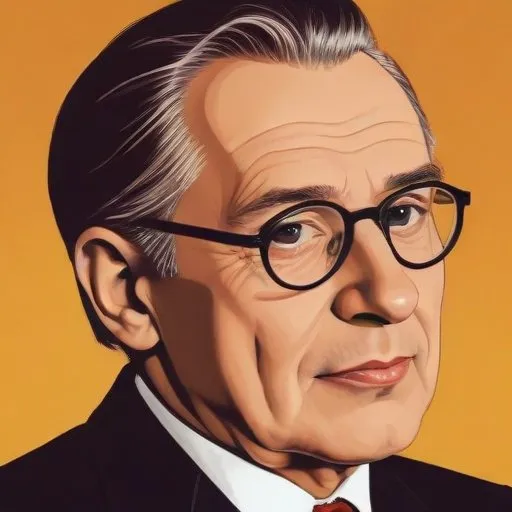
A German physicist and academic who discovered the fractional quantum Hall effect, a phenomenon where electrons behave as quasiparticles with fractional charges. He was awarded the Nobel Prize in Physics in 1998.
German physicist Horst Ludwig Strömer is renowned for his groundbreaking discovery of the fractional quantum Hall effect, a phenomenon that has revolutionized our understanding of quantum fluids. This pioneering work, recognized with the 1998 Nobel Prize in Physics, has had a profound impact on the field of condensed matter physics.
Born on April 6, 1949, in Frankfurt am Main, Germany, Strömer grew up in the nearby town of Sprendlingen. After completing his secondary education at the Goetheschule in NeuIsenburg in 1967, he enrolled in architectural engineering at the TH Darmstadt. However, his passion for physics soon led him to switch to studying mathematics and eventually physics at the Goethe University Frankfurt.
Under the guidance of Werner Martienssen and Eckhardt Hoenig, Strömer qualified for his diploma in physics. It was during this period that he worked alongside another future Nobel laureate, Gerd Binnig. Strömer's academic pursuits then took him to France, where he earned his PhD in 1977 from the University of Stuttgart for his research on electron hole droplets subject to high magnetic fields.
Strömer's move to Bell Labs in the United States marked the beginning of a new chapter in his career. It was here that he, along with Daniel Tsui and Robert Laughlin, made the seminal discovery of the fractional quantum Hall effect. This work, recognized by the Nobel Committee, has far-reaching implications for our understanding of quantum fluids and their behavior under extreme conditions.
After two decades at Bell Labs, Strömer joined Columbia University as the I.I. Rabi professor of physics and applied physics. His remarkable career has been punctuated by numerous accolades, including election to the American Philosophical Society in 2006.
Strömer's work has not only opened up new avenues of research in condensed matter physics but has also had significant implications for the development of advanced materials and technologies. His discovery has inspired a new generation of scientists, engineers, and researchers, ensuring his legacy as one of the most influential physicists of our time.
During his time in Grenoble, Strömer met his future wife, Dominique Parchet. Although the couple eventually divorced, Strömer's personal life has been marked by a deep commitment to his work and a passion for sharing his knowledge with others.
Strömer's groundbreaking research has not only expanded our understanding of quantum fluids but has also led to a deeper appreciation for the intricate and complex nature of reality. His work serves as a testament to the power of human curiosity and the importance of fundamental research.
As an emeritus professor at Columbia University, Strömer continues to inspire and mentor the next generation of physicists. His legacy serves as a beacon, illuminating the path for future discoveries and innovations that will shape the course of human history.
Born in 1901
A pioneer in quantum mechanics, he formulated the uncertainty principle, which revolutionized our understanding of the atomic world. His groundbreaking work reshaped modern physics.
Born in 1885
A pioneer in quantum mechanics, he introduced the concept of wave-particle duality, revolutionizing our understanding of atomic structure. His philosophical approach to science also explored the nature of reality and human understanding.
Born in 1879
A brilliant physicist who developed the theory of relativity and is considered one of the most influential scientists of the 20th century, known for his groundbreaking work in physics and mathematics.
Born in 1858
A pioneer in quantum theory, he introduced the concept of the Planck constant, revolutionizing our understanding of energy and matter.
Born in 1892
A French physicist and Nobel laureate who proposed that particles, such as electrons, can exhibit wave-like behavior, revolutionizing quantum mechanics. His hypothesis led to major breakthroughs in understanding the atomic structure.
Born in 1867
A pioneering scientist who pioneered radioactivity research, discovering elements polonium and radium, and paving the way for breakthroughs in medicine and energy.
Born in 1859
A pioneer in radioactivity research, discovering elements like polonium and radium, and pioneering radioactive isolation techniques. Their groundbreaking work paved the way for advancements in medicine, energy, and materials science.
